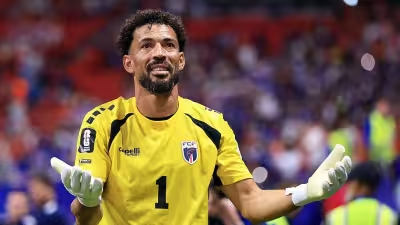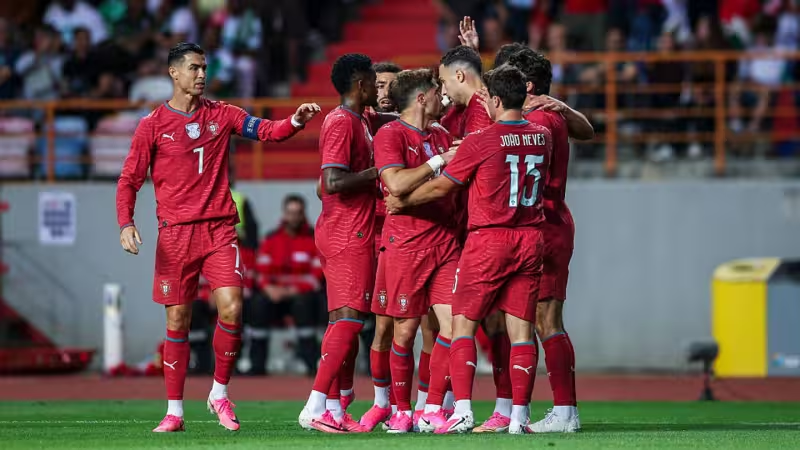
Portugal will meet DR Congo for the first time on Wednesday in Houston, kicking off Portugal’s World Cup campaign with a match that looks likely to be played with a familiar starting eleven rather than a tactical surprise.
Manager Roberto Martínez appears unlikely to make surprises with his first lineup of the tournament, and the projected starters read like Portugal’s spine: Diogo Costa in goal; João Cancelo at right back; Rúben Dias and Gonçalo Inácio as the central defenders; Nuno Mendes at left back; and Cristiano Ronaldo leading the line in what will be his sixth and final World Cup.

The weight of the moment is straightforward: this is Portugal’s tournament opener and Ronaldo’s last chance to add a World Cup chapter to a career that has already reshaped international records. The list of expected starters gives the side experience across the pitch — a goalkeeper trusted for big moments, fullbacks who can push high, and centre-backs intended to blunt DR Congo’s principal threats.
Context sharpens the stakes. Portugal arrive in the tournament as the reigning UEFA Nations League champions, a recent trophy that underscores their quality but also highlights a paradox: despite regional success, they have never won the World Cup. That history sits behind every selection and tactical choice on Wednesday.

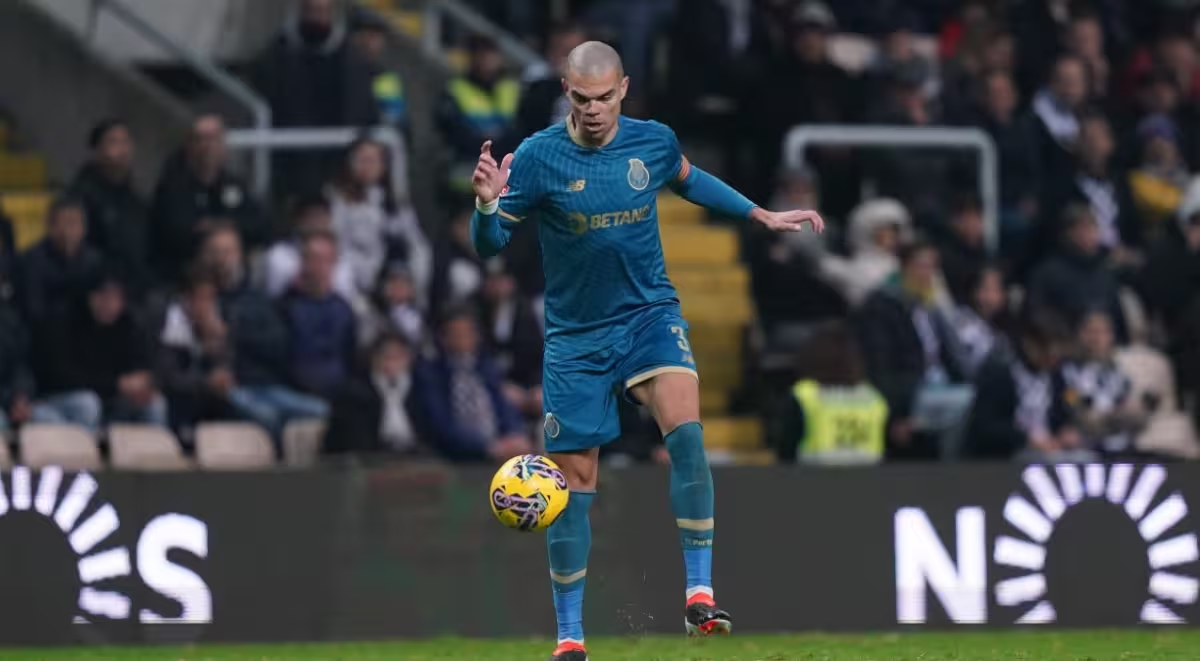
The immediate tactical friction lies in how Portugal’s defence will handle DR Congo’s forwards. Gonçalo Inácio is singled out in the projected plan to help contain Yoane Wissa and/or Cédric Bakambu, two of DR Congo’s most dangerous options in transition and on the break. How effectively Inácio and Rúben Dias neutralise those runners will shape whether Portugal can dominate possession or be forced into a more measured approach.
There are club-level storylines embedded in the projected XI. Nuno Mendes arrives in Houston as a Paris Saint-Germain player, bringing experience from a club used to high-stakes evenings, while João Cancelo’s strong loan spell at Barcelona has left him high on Barca’s transfer wishlist — a detail that matters only because it underlines Cancelo’s current form and the tactical flexibility he offers at right back.
Practical detail for viewers: this preview presents a predicted lineup, not a confirmed team sheet. Martínez’s reluctance to spring surprises makes these starters likely, but the official lineup published before kickoff will be decisive. Fans watching from kickoff should look to the back four’s positioning in the opening minutes — whether Cancelo and Mendes push aggressively, and whether Dias and Inácio step high to squeeze space behind them.
What to watch during the match is simple and specific. First, Ronaldo’s role beyond scoring: will he function as a stationary target to free runners, or drift wide to create overloads? Second, the central defensive duel — Gonçalo Inácio against the directness of Wissa or Bakambu — which will reveal whether Portugal can convert possession into sustained chance-creation. Third, how Martínez’s starting choices set the tone for a tournament where expectation and an absence of a World Cup title sit uneasily together.
The one concrete gap left unresolved before kickoff is the confirmed starting lineup itself. Martínez seems set to open with a predictable side, but only the official team sheet will end the guessing; until then, Portugal’s projected eleven is the best indicator of how they plan to marry Nations League form with a long-unrealized World Cup ambition.