



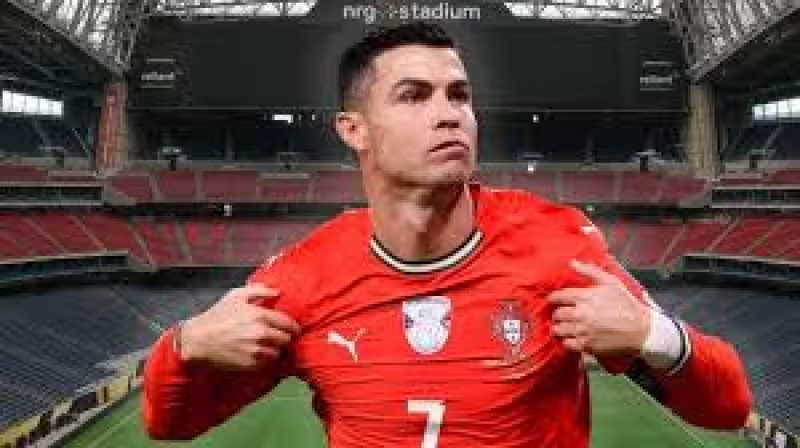
Portugal arrive at the World Cup being cast as genuine contenders, with the pairing of Vitinha and Bruno Fernandes presented as the midfield core most likely to carry them deep into the tournament. Their case is not sentimental: it is rooted in numbers that matter for knockout football and a recent run of form that has raised expectations at home.
The Opta supercomputer leaves Portugal behind the pre-tournament favourites — Spain (16.0%) and France (12.9%) — but still gives them a nontrivial 7.1% chance of winning the title, ahead of several traditional powers. Those percentages frame the debate: Portugal are not fancied to dominate, but they sit in the second tier of teams with a realistic path to the knockout rounds and beyond.

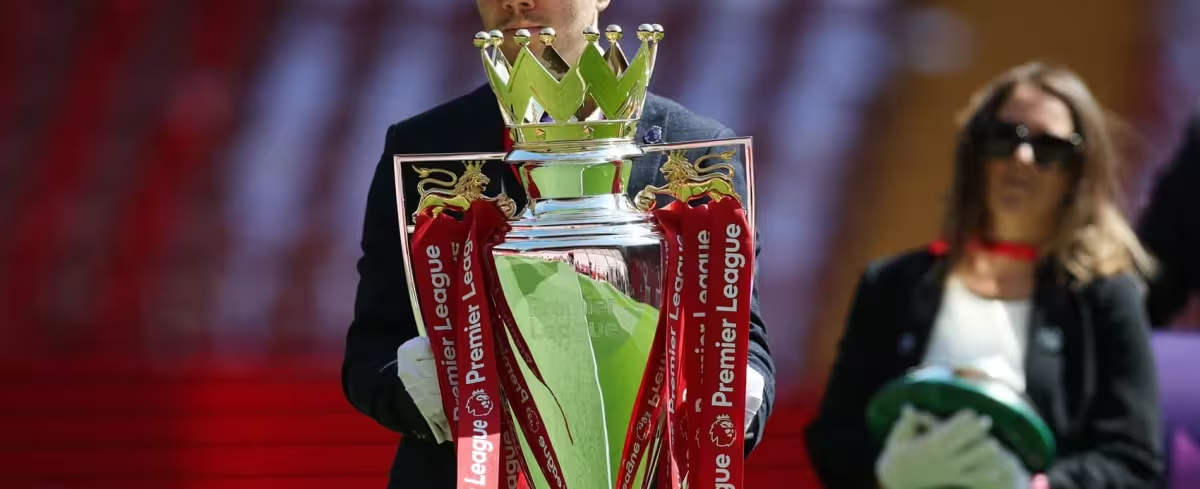
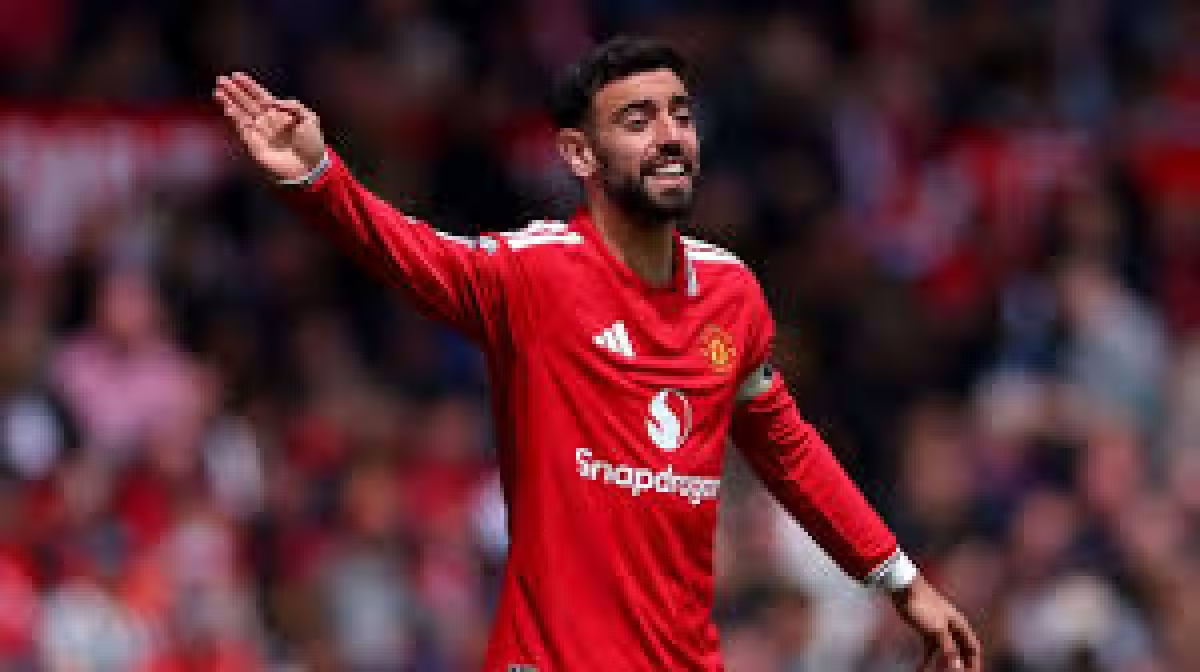
The weight of the argument falls squarely on the midfield. Bruno Fernandes finished his most productive Premier League campaign with nine goals and 21 assists, led the league with 136 chances created and broke the Premier League record for assists in a single season with 21. He carried that threat into qualifying, creating 21 chances for Portugal overall — 10 more than any teammate — and produced a hat-trick while creating eight chances in the 9-1 win over Armenia in their final World Cup qualifying match.
Vitinha supplies the complimentary profile: relentless pass volume and control. He finished third in the most recent Ballon d'Or rankings, provided 11 assists across all competitions for Paris Saint-Germain last season and was named player of the match in the Champions League final after an all-action display in which he completed 141 passes, 75 of them in the opposition half, and registered 162 touches. Across Europe’s top five leagues this season he completed 5,234 passes and 3,001 in the opposition’s half — the kind of sustained possession work that buys tempo and protection for a defence under pressure.
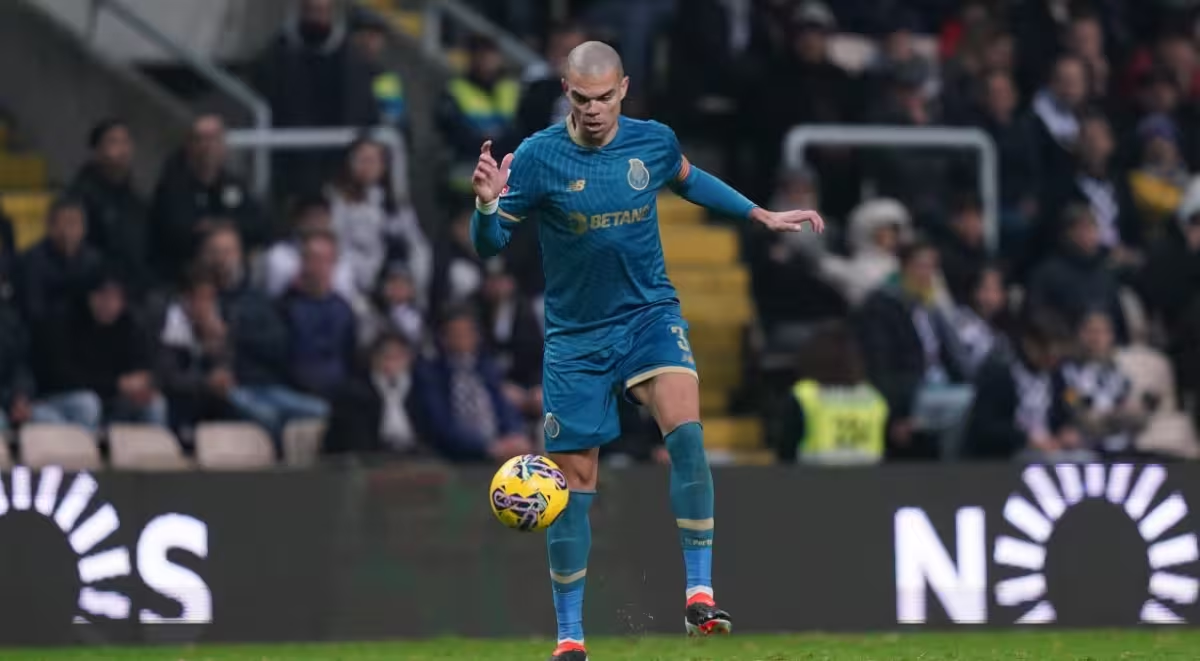
Those club numbers matter because Portugal arrive at their ninth World Cup and seventh in a row with a balance of attacking invention and midfield control that has been missing at previous tournaments. The squad’s recent results underline that balance: a 9-1 qualifying victory over Armenia and wins in the two most recent friendlies — a 2-0 victory over the United States and a 2-1 win over Chile — gave the coach tangible outcomes to back the selection and tactical choices.
Still, there is a historic friction at the heart of the conversation. Portugal have never reached a World Cup final; their best finish remains the third place secured in 1966. You can assemble midfield statistics and individual honours, but knockout football has a habit of neutralising star turns and exposing gaps in depth and experience. That disconnect — between present capability and past tournament ceiling — is the central doubt hanging over the optimistic case.
Practically, what to watch when the tournament begins is straightforward. Track Vitinha’s ability to dominate the middle third: passes completed in the opposition half and touches per game will indicate whether Portugal can hold possession against top opponents. Measure Bruno Fernandes by chances created and his influence on transition play; his club season and qualifying numbers show he can both score and manufacture opportunities. If those two set the rhythm, Portugal’s attack can be fed; if not, the team reverts to a less coherent shape.
Roberto Martínez’s appointment in 2023 set the tactical blueprint, and the presence of a veteran core — with Cristiano Ronaldo making another World Cup appearance as part of the backdrop — gives Portugal leaders on the field. But the single, sharpened question heading into the draw and first whistle remains: can a midfield that looks, on paper and in recent form, among the tournament’s best, translate control into Portugal’s first World Cup final and, ultimately, a first title?



