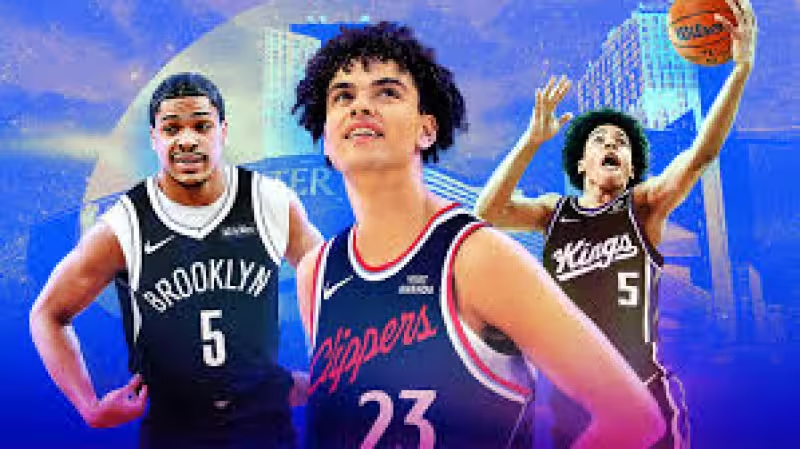
With roughly two weeks until the June 23 draft, Sam Vecenie at The Athletic updated his NBA mock draft 2026, moving the chess pieces on the first two rounds and pegging Caleb Wilson to land at No. 4 in Chicago while league sources say Washington is still weighing — but most believe it will take AJ Dybantsa at No. 1.
The projection matters because this class is considered strong at the top and through the lottery even as its depth has been trimmed by college withdrawals chasing NIL opportunities. Executives sampled for this cycle say they only have first-round grades on about 20 to 25 players, a tight list that turns the final chunk of the board into fertile ground for surprises: those same evaluators think the draft’s final 20 picks could produce some unusual selections.

Wilson is treated as one of the draft’s top players, and Vecenie’s update explicitly slots him to Chicago at No. 4. That placement reshapes how teams in the middle of the lottery will think about trade targets and roster fits — a single fourth-overall call can ripple through the board when the pool of graded first-round talent is that small.
The biggest hinge in Vecenie’s update is Washington’s No. 1 decision. Sources say the team is doing its due diligence and has not made a final choice, yet league contacts believe AJ Dybantsa remains the most likely pick. Dybantsa is described as a rare mix — extremely high upside paired with a surprisingly high floor — a wing who can pressure the rim and who would slide naturally between Anthony Davis and Trae Young in the Wizards’ lineup while blending with the young core of Alex Sarr, Tre Johnson, Will Riley and Kyshawn George.
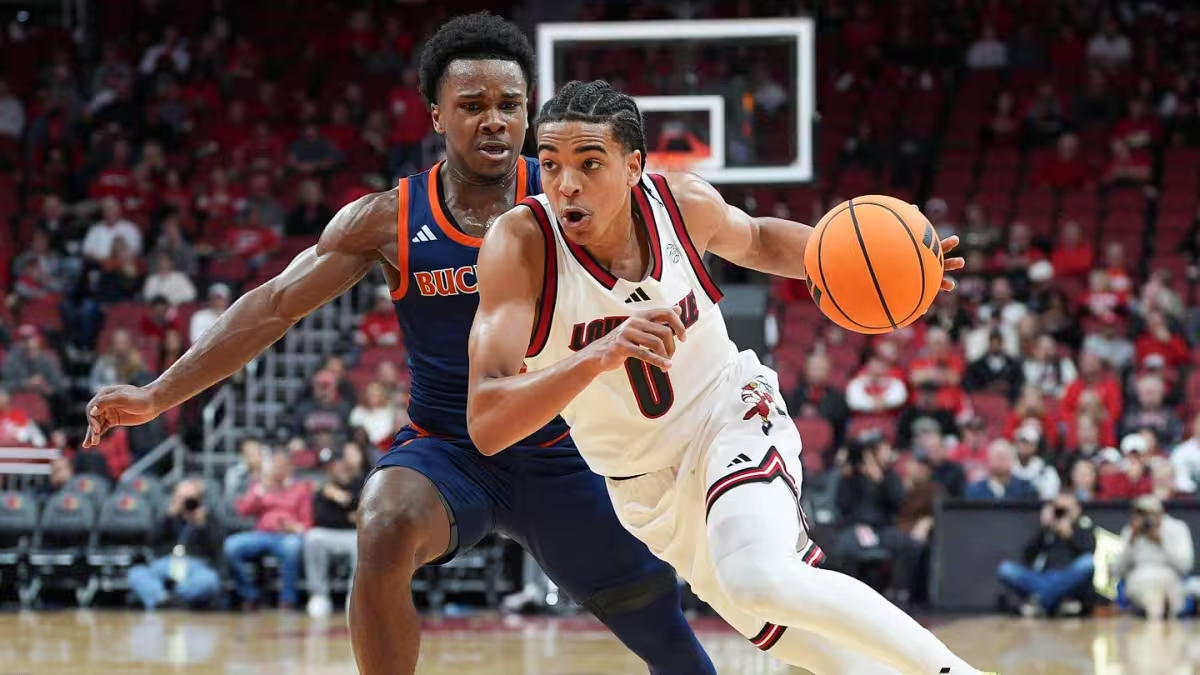
That uncertainty is the draft’s central tension: if Washington confirms Dybantsa, it signals a clear build around switchable wings and athletic rim attack; if it pivots, several teams could be forced into rapid re-evaluations of their plans and trade offers in the moments before pick No. 1 is announced.
Elsewhere in Vecenie’s look at the first two rounds, the Utah Jazz are tracked as a club set up with a loaded frontcourt after the February trade for Jaren Jackson Jr. Their immediate need is a guard who can create — someone to help Keyonte George shoulder the creation load. Ace Bailey is described as a terrific scorer, but his ball-handling is not necessarily his strength; the Jazz need another player who can dribble, pass and shoot alongside Bailey, Lauri Markkanen and, presumably, Walker Kessler.
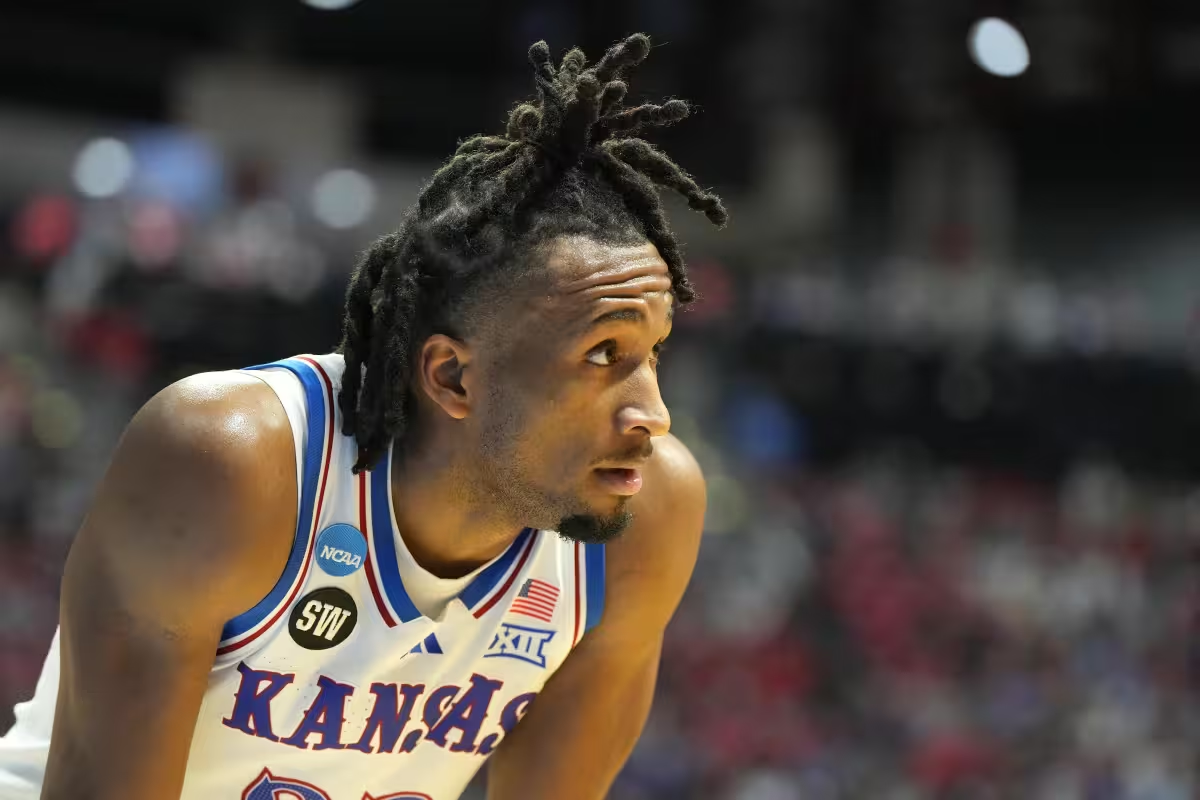
Some prospects carry clearer scouting narratives. Peterson’s time at Kansas did not allow him to fully show his passing and playmaking — a product partly blamed on injuries and partly on the Jayhawks’ spacing issues — and he looked less explosive than in high school. Yet evaluators point to his Prolific Prep senior-year tape where his passing and playmaking out of ball screens made a marked step forward, drawing comparisons in feel to what Anthony Edwards showed at Georgia.
The immediacy of Vecenie’s update is practical: teams and agents now have a firmer blueprint for pre-draft conversations and for maneuvering the last days before June 23. With a compressed list of first-round certainties, franchises could also finalize arrangements to lock players into two-way deals or other pre-draft commitments that protect roster flexibility if the board breaks unpredictably.
Two weeks from the draft night, the clearest thing the updated mock exposes is the single unresolved question that will shape the opening of the event — will Washington formalize the league’s expectation and take AJ Dybantsa at No. 1? That choice will determine whether the top of the board follows the path scouting services now expect or produces the kind of immediate consequential shake-up that forces teams down the draft to improvise on the fly.