



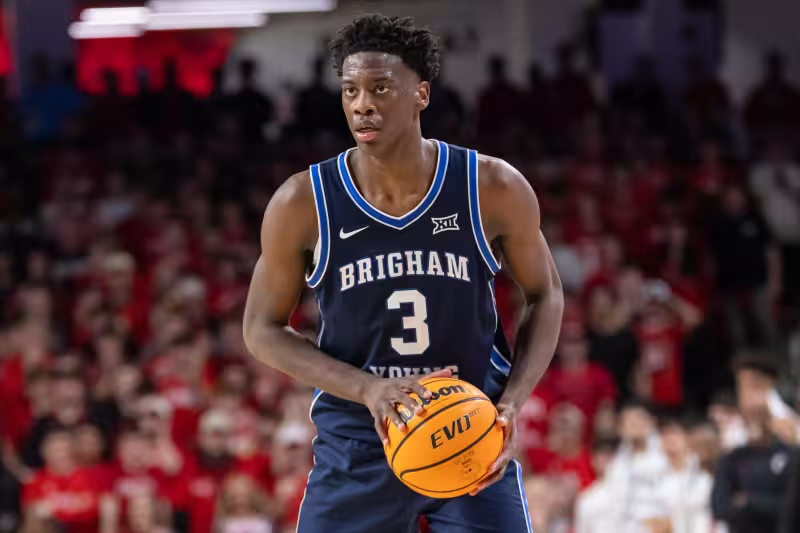
Short answer: AJ Dybantsa largely fits the Washington Wizards’ stated draft profile — size, defensive tools and long-term upside — but his 33.3% three-point clip is the exact kind of shooting question the franchise has repeatedly weighed; he is currently a -450 favorite to be the No. 1 selection on FanDuel Sportsbook. That mix explains why Dybantsa is central to Washington’s pre-draft conversations.
Will Dawkins’ draft pattern makes the evaluation straightforward. In three years on the job he has made six first-round picks, and he has described his approach in plain terms: "We won’t take short-sighted approaches in the draft. We’ll take the guy we think will be the best long-term player, the best long-term fit." Those words map to a checklist Dawkins has used — positional versatility, defensive impact, shooting and long-term upside — when deciding which prospects to back early.

Washington’s recent selections illustrate the checklist in action. Bilal Coulibaly was drafted at No. 7 in 2023 after the team traded up one spot; the move was driven by his defensive upside and projection. Alex Sarr, Washington’s No. 2 pick in 2024, arrived with rim protection and switchable defense, a capable 3-point stroke and the type of two-way ceiling the front office prizes — he posted 2.0 blocks per game in 2025-26 and shot 33.3% from three. Other names linked to Dawkins’ board — Kyshawn George and Will Riley — were similarly described as wings who offered size, positional flexibility, shooting potential and long-term upside.

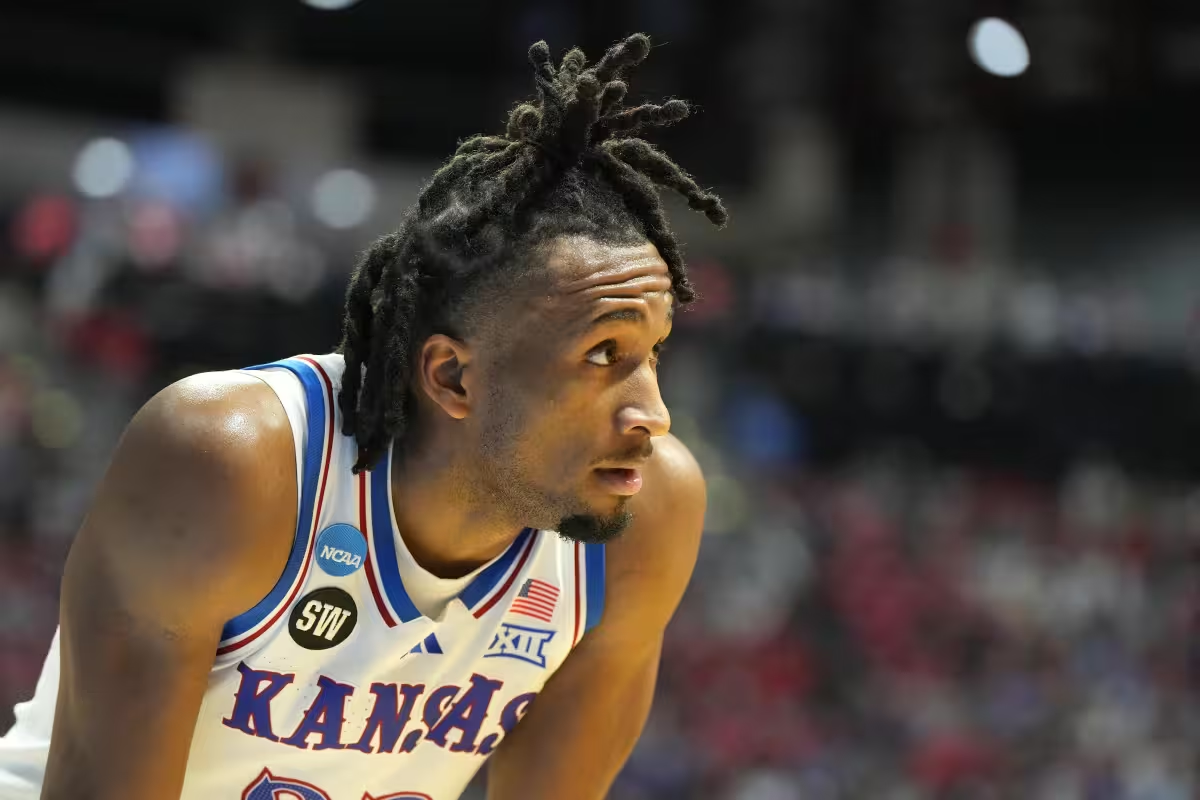
On raw measurements Dybantsa fits that template. He’s listed at 6-foot-10 in shoes with a 7-foot wingspan and a 42.5-inch maximum vertical, physical traits that line up with what Washington has prioritized before; Bilal Coulibaly, for reference, checked three of Dawkins’ four boxes and came with a 7-foot-2 wingspan and 99th-percentile measurements for his group. Those tools are the immediate reason Dybantsa is on the Wizards’ radar for a top pick.
The friction is the one Dawkins has accepted but never entirely solved: the perimeter shot. Dybantsa’s 33.3% 3-point mark mirrors the shooting marks of recent targets — Coulibaly shot 33.6% in 53 games with Mets 92, and Sarr also registered 33.3% from distance — creating a pattern where Washington repeatedly tolerates imperfect long-range accuracy in exchange for size and defense. The question for the front office is how low the team is willing to let the three-point floor sit at the very top of the draft.
Practically, selecting Dybantsa at No. 1 would continue Dawkins’ documented preference: prioritize physical tools and projection, then invest in development. The -450 betting line reflects market consensus that his profile suits the franchise’s tastes and that the Wizards are likely to prefer upside and positional flexibility at the head of the board. But the sportsbooks and scouting reports do not substitute for the front office’s final calculus on draft night.
The single most consequential unresolved question is not whether Dybantsa can be developed — the measurements suggest he can — but whether Dawkins will again accept a three-point efficiency that is merely adequate at the top pick or demand a cleaner shooting floor from the No. 1 selection. Given Washington’s willingness to trade up for perceived upside before, the choice leans toward projection, but the club’s decision on that trade-off will determine whether the next era in Washington is built around defensive length and ceiling or tilted toward a more polished offensive profile.



