



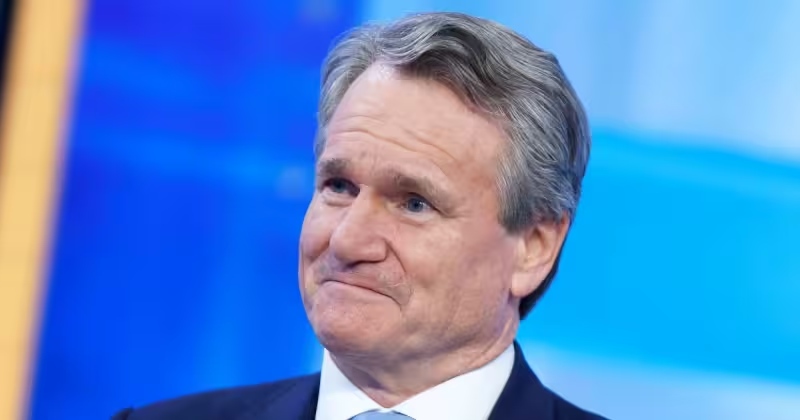
“You know, higher end pet food is not being charged as much on our credit and debit cards as the next brand down,” Brian Moynihan told an interviewer, offering a small but telling detail about how Americans are reallocating household spending right now.
The CEO used that aisle-level example to explain a broader picture Bank of America sees through the wallets of almost 70 million customers: card spending was up 5% overall in May from a year earlier, even as people shifted purchases within categories to cope with higher prices.

Moynihan framed the shifts bluntly: “What you’re seeing is people are shifting, so people shift around and make room for the higher gas prices.” That shift shows up as a pattern of trading down — buying a cheaper pet food brand — while still paying for other discretionary items.
Those discretionary items, Moynihan said, include vacations and dining. “They’re spending money and doing things,” he noted, and added that Americans continue to go out to eat. At the same time, he warned that there is a gap between sentiment and behavior: “What they’re saying is they’re very upset and they’re worried about high prices, affordability. We have to watch that, because if it goes from ‘what they say versus what they do’ to what they’re doing, that’s a real problem for the U.S. economy.”



That gap matters because Bank of America treats card data as a real-time thermometer of household finances. Moynihan reiterated the bank’s posture: “We watch what they do, not what they say.” The bank’s May figures — a 5% year-over-year rise in card spending — underline the friction at the heart of today’s consumer story: widespread pessimism about personal finances, paired with continued spending that keeps parts of the economy moving.
The pressure on budgets is tangible. Inflation outpaced wage growth in May for the second month in a row, and consumers were paying around 40% more at the pump than before the U.S. launched a war against Iran, factors that help explain why shoppers will buy the next brand down on the grocery shelf while still booking trips or dining out.
Moynihan folded a personal memory into that analysis to underscore how families manage money under strain. He said his father was middle class and helped send eight children to college; student loans played a large role. “It was a simple thing: You took all the money you earned, and you put it on a table. And you borrowed all you could, and then basically pushed that on the table. And he would pay the difference, and he had to borrow to do it,” Moynihan recalled.
That anecdote serves as a human anchor for the CEO’s reading of the data: people will reallocate, borrow, or lean on family to preserve certain spending choices. The question Moynihan kept returning to was not whether Americans are anxious — he said they are — but whether their actions will follow their complaints.
Here is the unresolved, consequential question: will selective trade-downs and continued spending on travel and restaurants keep broad consumer demand intact, or will persistent price pressures and falling real wages push behavior from selective shifts to outright retrenchment? Moynihan’s point is procedural: Bank of America will keep watching what customers actually buy, because when “what they do” changes, the U.S. economy will feel it.



