



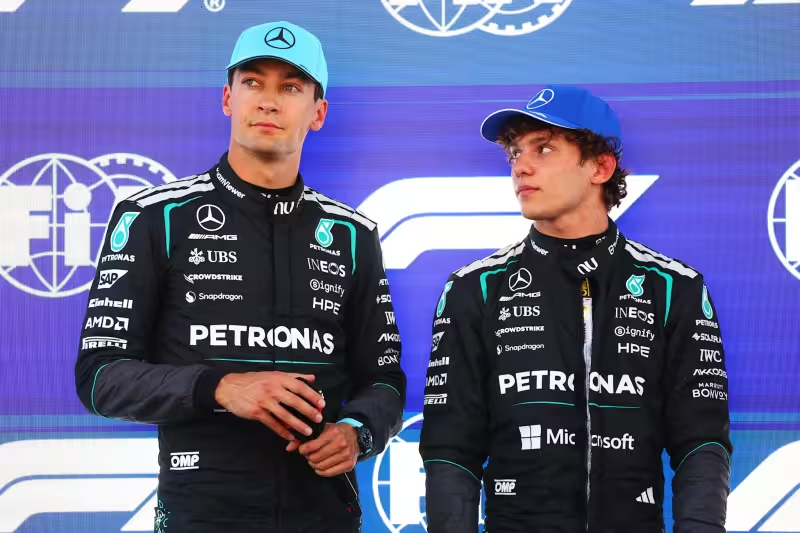
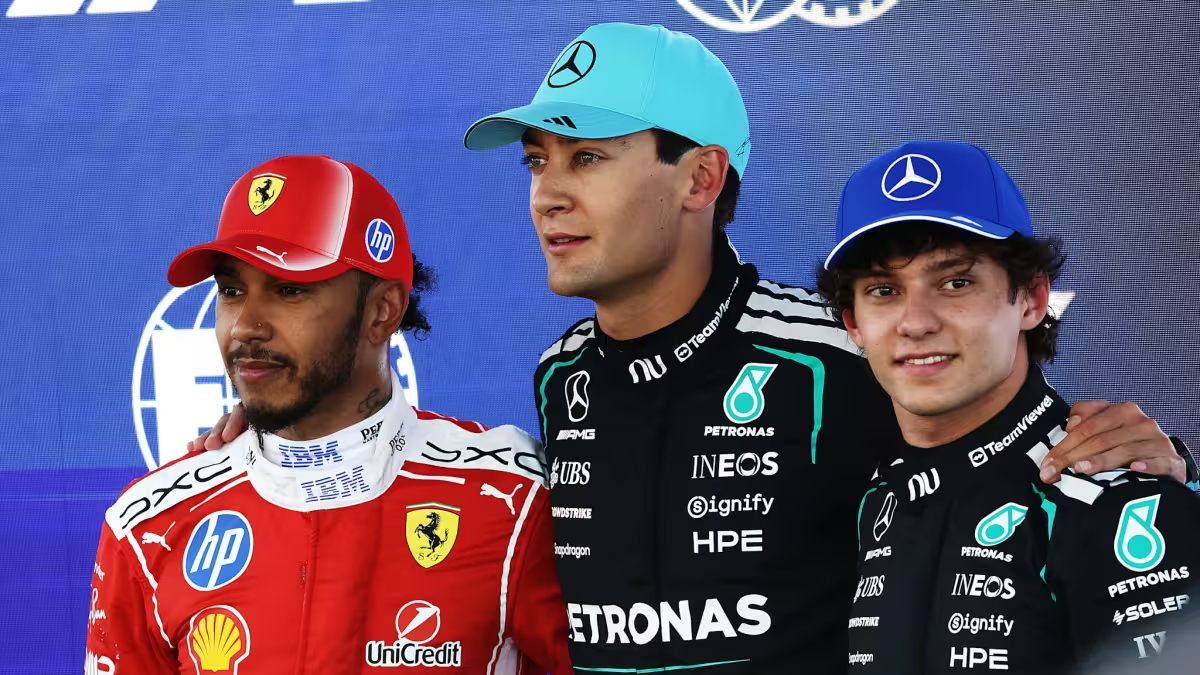
Toto Wolff laid down one simple instruction before the 2026 Barcelona‑Catalunya Grand Prix: no contact between his drivers. George Russell had taken pole in qualifying — his third of the season — beating team‑mate Kimi Antonelli by 0.319 seconds, with Lewis Hamilton between them on the grid.
Wolff made the order with recent memories in mind. Mercedes had already suffered an intra‑team clash in Canada, and Wolff reached further back to the 2016 Spanish Grand Prix, when Lewis Hamilton and Nico Rosberg took one another out. He reminded the team that at Turn 4 in 2016 he had seen two cars stranded in the gravel and told Russell and Antonelli to make it through Turns 1, 2 and 3 cleanly before worrying about the rest of the lap.

The immediate numbers underline the pressure. Russell’s pole margin over Antonelli was 0.319s; Hamilton qualified second and will, after Charles Leclerc crashed out of Q3 and failed to set a lap time, start as Ferrari’s lone front‑runner. Wolff’s calculations put Ferrari roughly half a second off on a single lap, but he warned that the upgrade package brought to Barcelona was “massive” and that Mercedes could not simply match that step because of cost‑cap constraints.
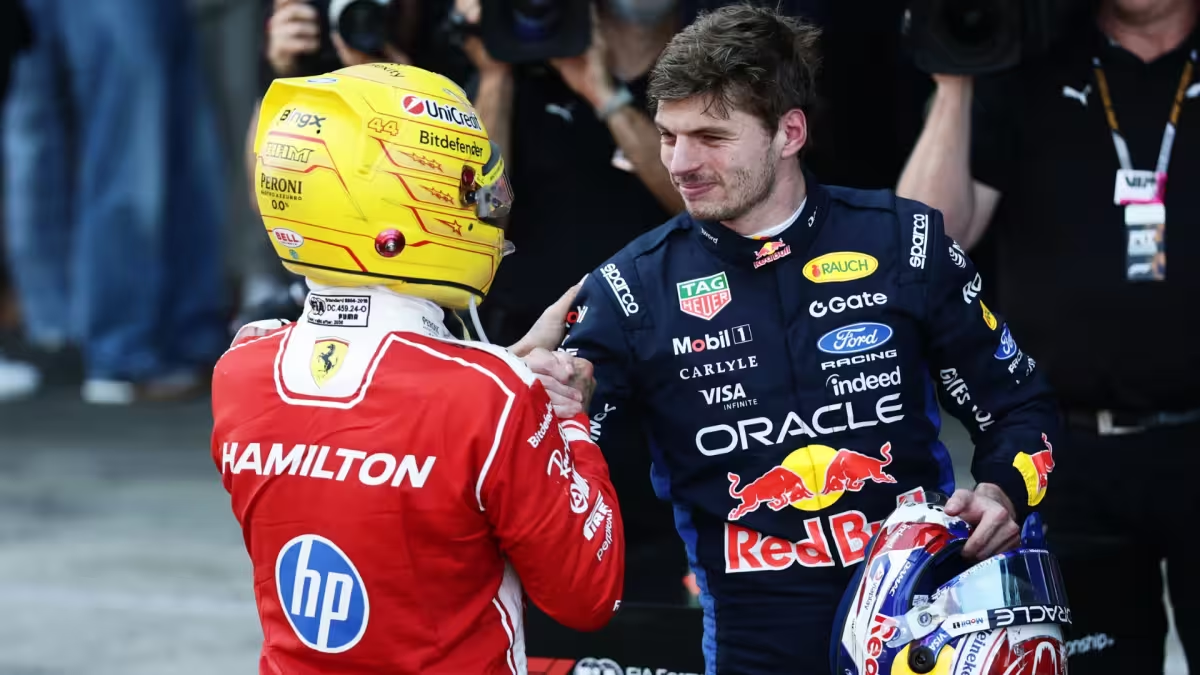
That combination of an internal fight for position and an external threat is the specific problem Wolff was trying to manage. He said Antonelli will be keen to prove himself and that Russell has the same hunger for a result. At the same time he praised Hamilton’s form and made clear Hamilton will be aiming for the win, which complicates any simple team plan to corral track positions.
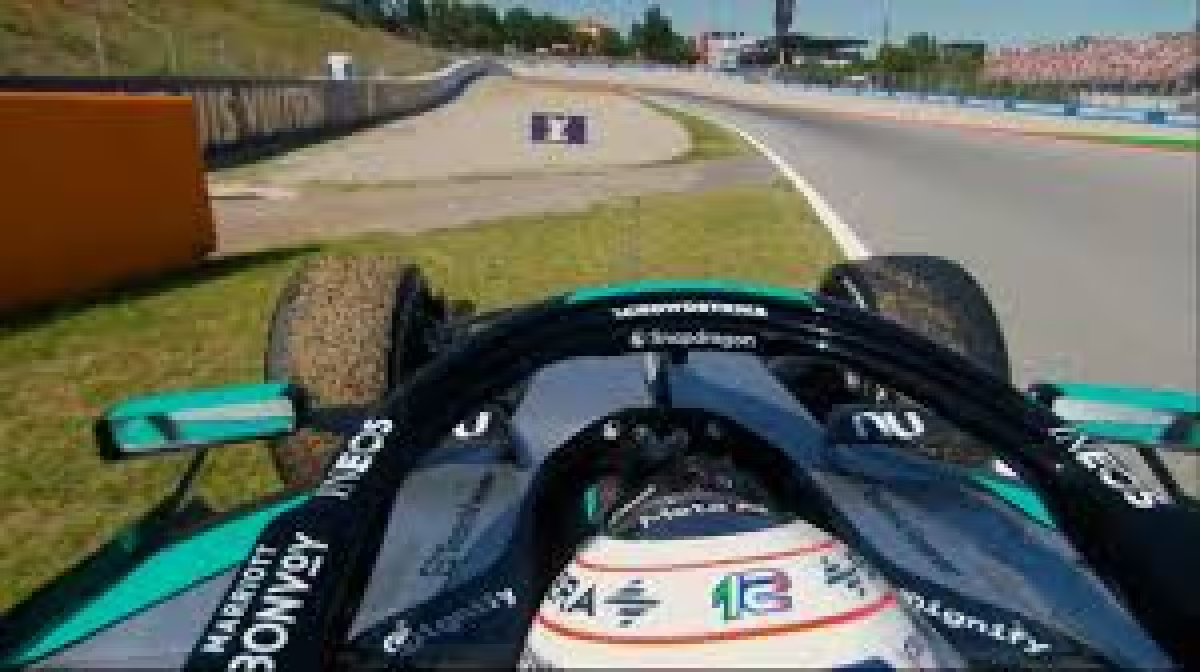
The tightness of the opening laps is the practical issue. Antonelli will start behind Russell and, Wolff noted, will have a useful slipstream into the first sector — an opportunity that both whets an attacking driver and raises the odds of contact. Wolff balanced that by insisting the primary objective was avoiding collisions, then urging the drivers to get through the opening corners intact before letting them race the rest of the lap.
Ferrari’s upgrade is the other shaping factor. Wolff said their pace rebound in Barcelona suggests the upgrade is working; even if single‑lap numbers show a gap, the step forward forces Mercedes to choose between conservative race management and on‑track aggression. Mercedes have won every Grand Prix so far this season, and Wolff knows a costly incident with two cars damaged would hand advantage to a re‑energised Ferrari.
The unresolved tension is obvious: Wolff wants clean running but also expects Antonelli to be aggressive. How the team will translate that instruction into radio calls, pit strategy and on‑track policing over the first lap is not settled. Will Mercedes order a protective position if Antonelli lunges? Or will engineers let the drivers decide and accept the risk in pursuit of maximum points?
The Barcelona race will answer that. The decisive moments come before the first braking at Turn 1 — and then at Turn 4, the right‑hander Wolff singled out as the place where past championship battles broke down. If Mercedes can get both cars through those corners without incident, they preserve a clean one‑two and the championship momentum they have built; if not, the team risks repeating mistakes that have cost titles in the past.



