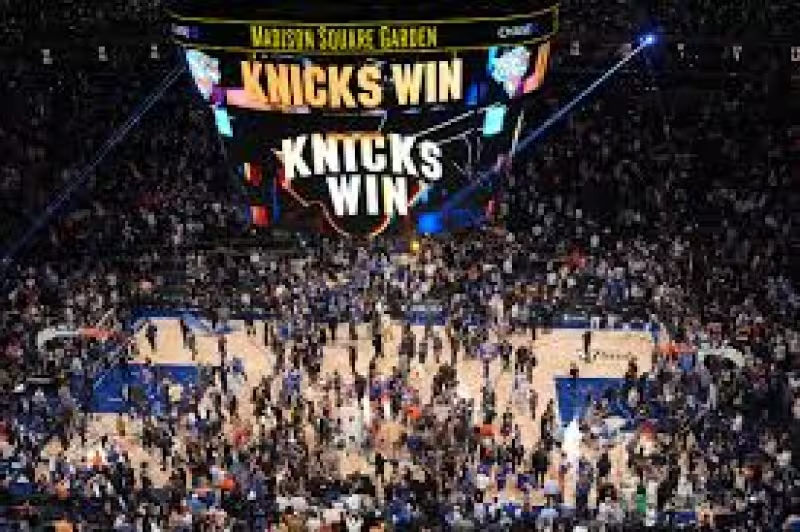
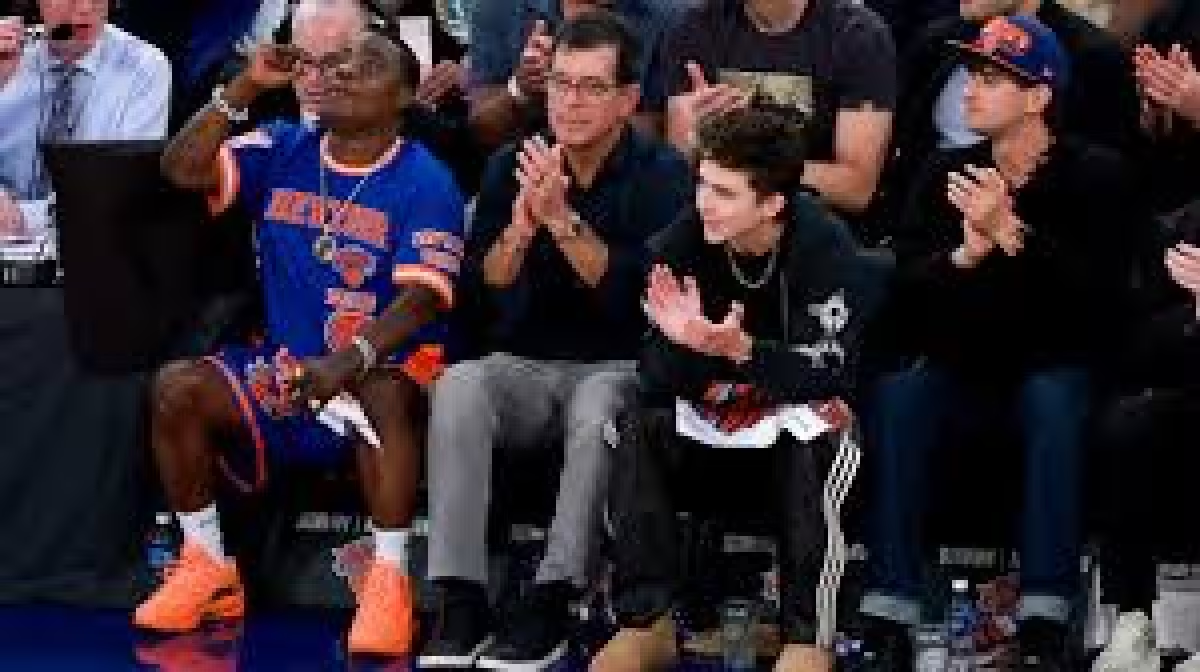
On June 14, 2026, Jesse Watters Primetime walked into Madison Square Garden to do something simple and revealing: ask New Yorkers whether the city could handle the celebration that could come with a Knicks title.
The visit was built around a narrow question — would a Knicks parade be manageable for a city that has staged some of the largest civic gatherings in the country — and Watters’s crew set up at the Garden because the arena is the obvious hinge between a team’s success on the court and any public triumph in the streets.

That hookup — a program anchor physically meeting fans at the franchise’s home — is the story’s weight. It turned a hypothetical trophy into an immediate civic problem: logistics, crowd control, and municipal planning compressed into a TV segment and a conversation on a date. The point of the exercise was explicit: to find out whether New Yorkers are ready for the celebration that could come with a Knicks title.
Context matters here and it comes after the scene. The visit framed a Knicks championship as a possible future, not a done deal. The segment treated the idea of a title and a parade as contingent, an event that would exist only if the team actually clinches a championship.
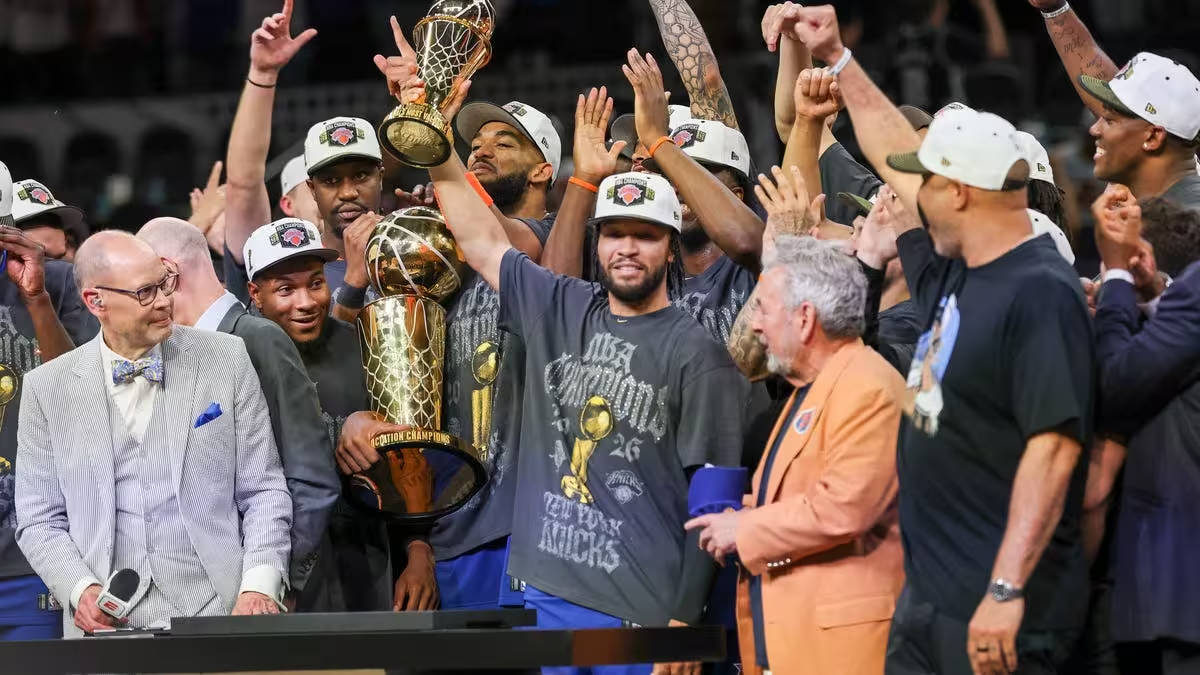
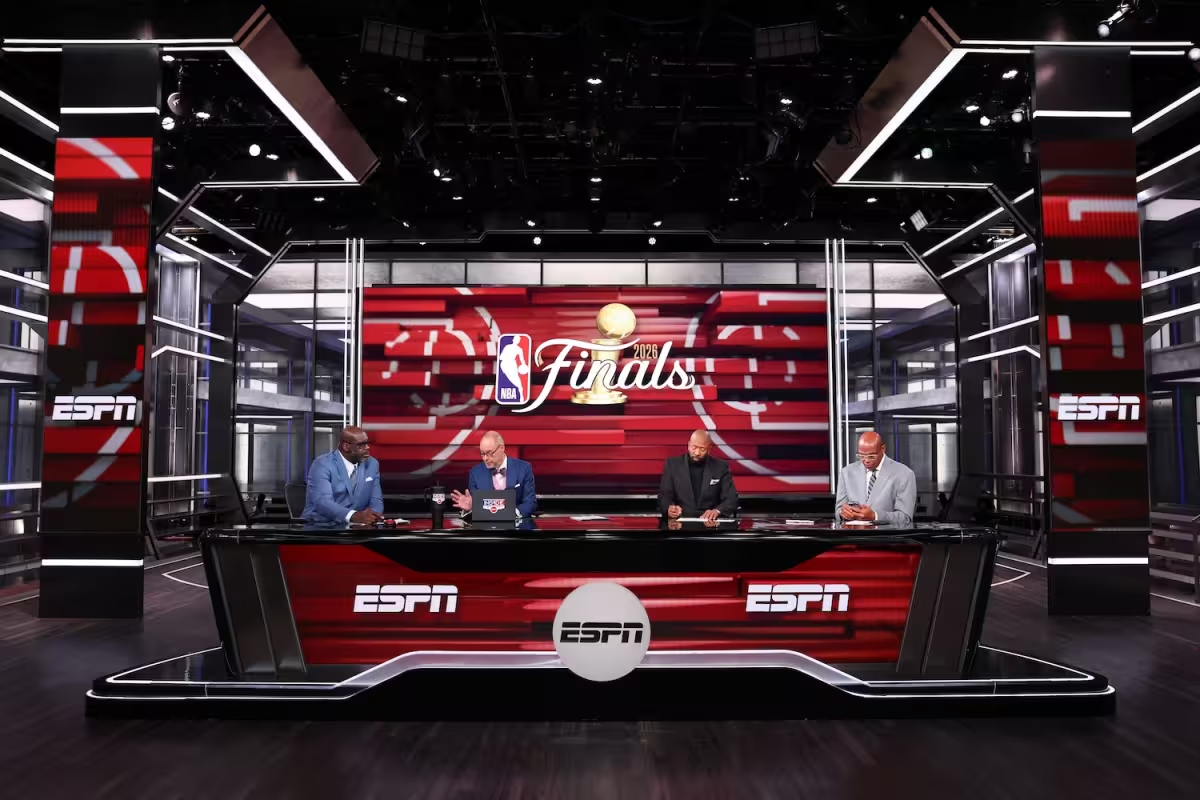
That contingency is the tension. The question Watters asked — can the city handle a Knicks parade? — presumes a result that has not been delivered. The program’s presence at Madison Square Garden converted a political-media exercise into a public litmus test, but the test only applies if the Knicks go on to win. Until then, the spectacle is a what-if tied to the club’s on-court fortunes.
The story is also a small profile of method. Jesse Watters Primetime chose the Garden because it concentrates the fan base and the story in one place. Bringing the question to the Garden collapses the distance between television framing and what would be a municipal event: parades begin at arenas, they move through neighborhoods, and the practicality of one depends on more than enthusiasm. The segment asked that practical question out loud in the arena’s shadow.
New York City appears in the segment not as backdrop but as the subject. The visit treated the metropolis as an actor with capacity limits and political choices — what space to grant a procession, how to route crowds, how to marshal police and sanitation. Because the championship remains hypothetical, those questions are preparatory rather than decisive.
The unresolved fact sits in the middle of the story: a Knicks title is only a possibility in the segment’s framing. That makes the Garden visit notable as a moment of anticipation rather than a celebratory decree. It is a media probe into municipal readiness, not a permit application or a proclamation of victory.
What comes next is straightforward and consequential: whether New York will need to stage a Knicks parade depends entirely on whether the Knicks win the championship that would make such a parade necessary. Until that outcome is decided on the floor of play, the question Watters raised at Madison Square Garden remains the single, decisive one — will the team produce the title that would force the city to respond?