



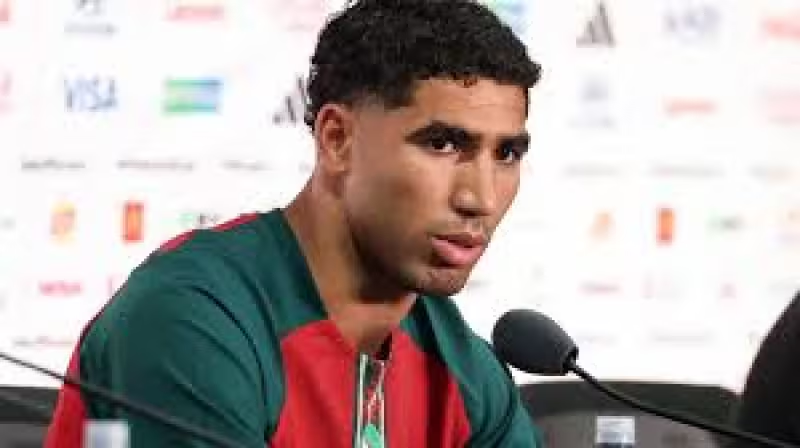
Some Spanish-speaking reporters covering the opening days of the 2026 World Cup said they were limited from asking questions in Spanish at certain national team press conferences.
Journalists described being asked to pose their questions in English at media sessions for teams including Brazil and Morocco, a practice they said was intended to keep conferences running smoothly but which prevented Spanish questions from being heard in the room.

The immediate trigger for complaints was procedural: multiple reporters cited the absence of simultaneous translation services at some venues and said hosts steered Spanish-language queries toward English rather than arranging interpretation.
That lack of consistent translation is the practical mechanism behind the problem. When interpreters were not available, organisers reportedly directed Spanish-speaking correspondents to switch to English or take questions in separate interview slots — an arrangement journalists said functioned as an effective limit on Spanish-language participation during live press conferences.


The detail matters now because the tournament is being held in part in Mexico, where Spanish is widely used by domestic media and audiences. Reporters covering Brazil and Morocco said the restriction reduced the range of voices able to question players and coaches during the first days of the event and narrowed the immediate public record of post‑match and pre‑match remarks.
Organisers’ stated aim — according to reporters on the ground — was to make sessions run more smoothly. What remains unsettled is whether the pattern represents ad‑hoc venue logistics, a temporary staffing shortfall, or a broader operational decision applied unevenly across sites; at the time of this report neither FIFA nor the federations involved had provided an official explanation.
The consequences are practical and immediate for correspondents who rely on on‑the‑record exchanges in their native language. Without an interpreter present, Spanish‑language questions can be deflected to later interviews where broadcasters and readers may not get the same spontaneous answers, and domestic audiences in Mexico are left with fewer opportunities to hear answers in Spanish at official press sessions.
FilmoGaz continues broader tournament coverage alongside this access story; readers following squad news can find match and availability reporting, including a piece by Zaire Emery that mentions Hakimi, at
What happens next is unresolved: it is unknown whether FIFA or the federations will alter press‑conference setups, add simultaneous interpretation, or issue guidance guaranteeing Spanish questions across venues. The single concrete question now is institutional — will organisers change logistics mid‑tournament to ensure Spanish‑language reporters can ask questions in the room rather than being steered to English or separate slots?



