How long is a soccer game at the World Cup? The simple answer: a regulation match lasts 90 minutes, split into two 45-minute halves, with the referee adding stoppage time at the end of each half to make up for delays.
That basic timetable is what fans schedule their nights around. If a match is level at the end of those 90 minutes, what happens next depends on the stage of the tournament: group-stage games may finish as draws, but once the competition reaches the knockout rounds a tied scoreline triggers extra measures.

In knockout matches the game does not end after 90 minutes. Instead, teams play 30 minutes of extra time divided into two 15-minute periods with a short break between them. Added time is also applied to each 15-minute extra-time period. If the score remains even after those 30 minutes, the match is decided by a best-of-five penalty shootout.
The penalty shootout starts with five kicks per side; if the teams are still tied after those first five penalties, each subsequent round becomes sudden death until one team scores and the other does not. The 2022 tournament provided a recent, dramatic example: Argentina and France were tied 3-3 after extra time in the final, and Argentina won the shootout 4-2.

Extra time at the World Cup applies in the round of 32, round of 16, quarterfinals, semifinals, the third-place match and the final. Group-stage matches, by contrast, can end in a draw and therefore generally finish sooner for viewers when the score is level at 90 minutes plus stoppage time.
Rules for resolving ties have not always been the same. The golden goal—sudden death in extra time—was used in the 1998 and 2002 World Cups before the International Football Association Board abolished that rule in 2004.
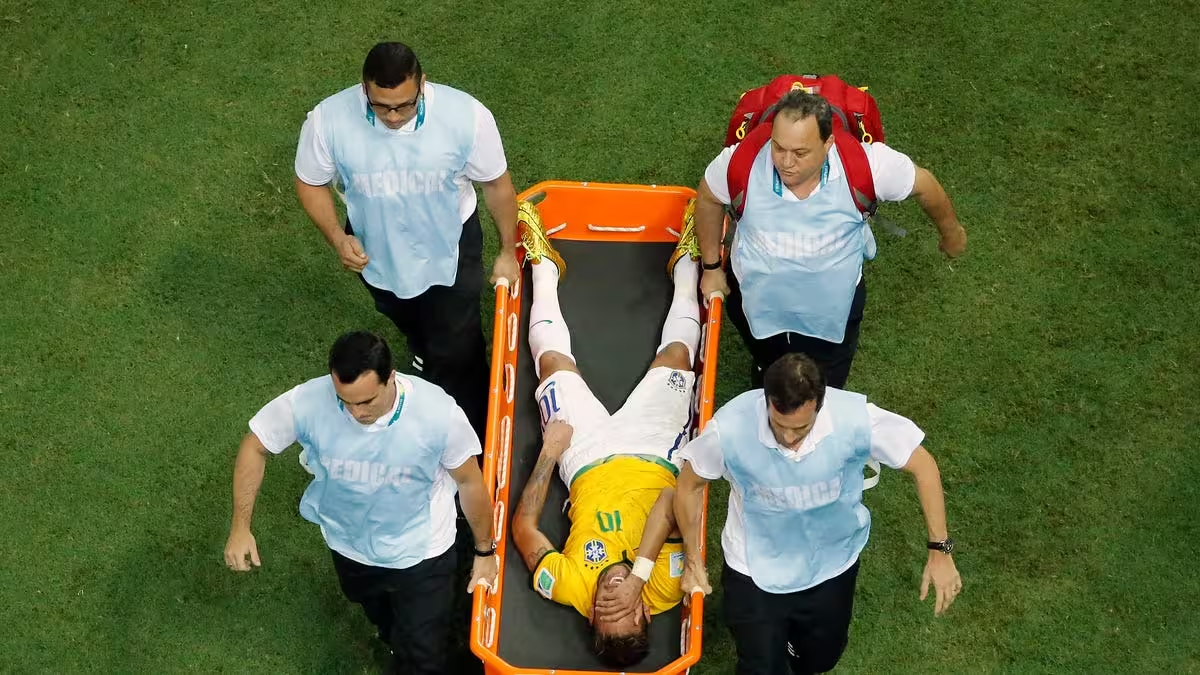
Practical timing has become a growing concern for organizers and broadcasters. The IFAB approved new measures that will apply at the 2026 FIFA Men's World Cup starting Thursday, including a five-second visual countdown for throw-ins and goal kicks that are taking too long; if play is not resumed before the countdown ends, the opposing team will be awarded a corner kick. Substitution procedures and medical treatment also come with tighter clocks: players leaving the pitch after a substitution have 10 seconds to exit, and players treated by medical staff must remain off the field for one minute after play resumes. Players who cover their mouths during a confrontation face automatic red cards.
Those timing controls are intended to speed up play and reduce avoidable stoppages, but they do not change the basic match lengths: 90 minutes of regulation, 30 minutes of extra time where applicable, and penalties if still tied. What remains uncertain for viewers and planners is how much stoppage time referees will typically add at each World Cup match; the approved rules standardize some behaviors but not how many minutes of added time the referee will signal.
For anyone planning to watch the 2026 World Cup kickoff Thursday, the safe bet is to expect at least 90 minutes plus whatever stoppage time the referee deems necessary, and to be prepared for a long night if the game is a knockout fixture—potentially 120 minutes and then a shootout. The one concrete next step: if a knockout match is still tied after extra time, a best-of-five penalty shootout will decide the winner.