



At a crowded Tehran meeting on the country's water resources crisis, Masoud Pezeshkian shrugged off his jackets to ward off the heat rather than switch on the air conditioning — a small, revealing gesture that was seized by opponents and then followed by a far larger political jolt. The next day a report that he had resigned sent panic through the capital; his team moved quickly to deny the claim and Pezeshkian remains Iran’s president.
The immediate fallout was sharp. A London-based outlet reported that Pezeshkian had stepped down, and officials in Tehran dismissed the report as baseless within hours. The denial restored the formal line of authority, but it did not erase the sensation the rumor created among politicians and the public about the durability of his office.

Pezeshkian’s survival of the rumor is not an isolated quirk. He arrived in the presidency as what many saw as an accidental or temporary replacement after his predecessor died in a 2024 helicopter crash. He has since weathered wartime pressures and repeated criticism from hard-line forces, and those strains shape how every public moment — from a climate meeting to a media report — is read inside the capital.
The jacket episode turned into a political wedge. Conservative politicians and activists accused Pezeshkian of double standards, invoking Iran’s strict dress codes to criticize him for removing formal outerwear while ordinary citizens face rigid enforcement. The charge was less about fashion than about symbolism: opponents used the gesture to paint a portrait of a leader out of step with conservative expectations.
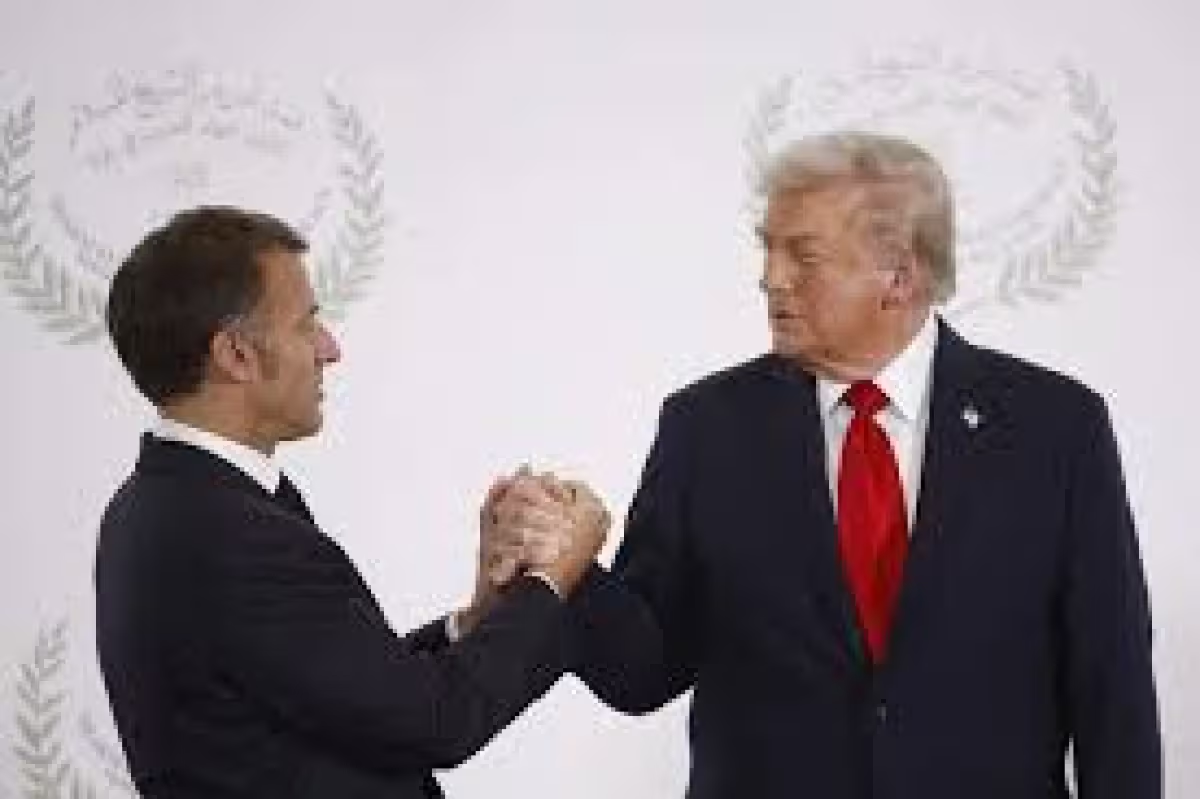
That symbolism arrived amid broader noise. Abroad, the United States’ president declared that Washington "has ended wars with Iran" and that a "very strong memorandum of understanding" had been reached — statements Iran had not officially confirmed. Those cross-border proclamations reinforced a sense that Iran’s political moment is being shaped both by domestic fractures and by external actors broadcasting outcomes before Tehran does.
Inside Iran the deeper strain is institutional. Pezeshkian was drawn into office by an extraordinary sequence of events and set out to blunt hard-line influence by demonstrating overt loyalty to the supreme leader. He pushed his government quickly through parliament, a maneuver that secured immediate functioning but, by some accounts, also weakened the presidency’s independent authority. Meanwhile, the Islamic Revolutionary Guard Corps has strengthened its position in the aftermath of violent upheavals surrounding the supreme leadership, and conservatives look primed to consolidate further once active conflict subsides.
Voices within the system offered a mix of caution and optimism. Ali Ahmadi said, "Pezeshkian, as expected, will go through many post-war questions, but with a greater likelihood of emerging from this period with greater trust in Iran’s political system, since he has served as president during the war." The remark captures the narrower calculation many officials now make: continuity has political value, but continuity does not necessarily mean increased power.
The friction is plain. Rumors of a resignation showed how easily instability can be amplified; the rapid denial restored order but also underscored a deeper uncertainty about what, if anything, the presidency can still accomplish. Pezeshkian kept the title. The pressing unresolved question is whether he can keep any meaningful authority as conservatives and the IRGC tighten their hold in the post-war period — a test that will determine whether his survival so far was endurance or merely the preface to a quieter, circumscribed tenure.



