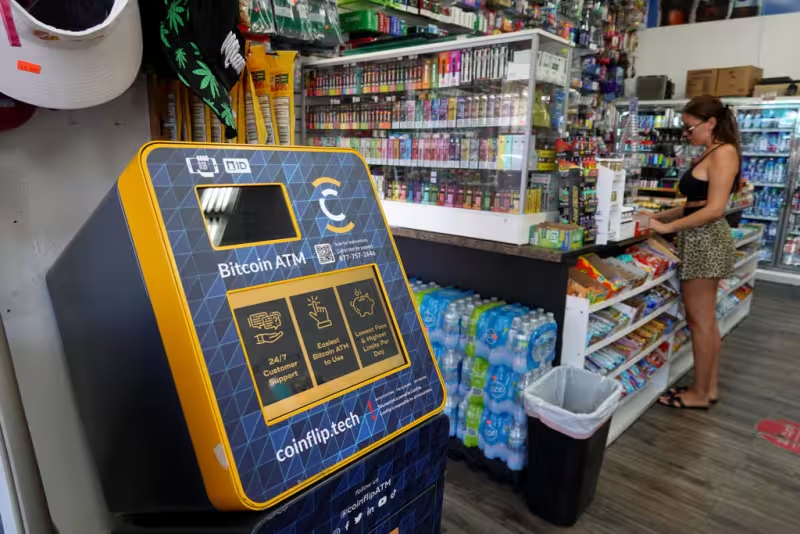
North Carolina lawmakers moved Tuesday to bring unregulated cryptocurrency kiosks under state oversight, advancing House Bill 920 while sharply increasing the fee and transaction limits the bill would impose.
The version that passed out of the House Finance committee raises the fee cap on kiosk transactions to 14% and boosts daily limits to $2,000 for new customers and $5,000 for existing customers — up from the bill’s original 3% cap and $1,000/$2,500 limits. Rep. Tim Longest unsuccessfully offered amendments Tuesday morning to restore the original numbers, saying a 14% cap is too high and that lower daily caps would better protect customers targeted by scammers.

Under the bill, kiosk operators would be brought under the state’s Money Transmitters Act and placed under the supervision of the North Carolina Commissioner of Banks. The proposal would require visible scam-alert signage on machines, live customer service, receipts for transactions, and the ability for a customer to cancel a transaction while it is still in progress until it is finalized. It also creates a 30-day window for customers to claim refunds for fraudulent transactions.
Crypto kiosks — commonly called bitcoin atm machines — let users convert cash into blockchain cryptocurrency. Because cash converted to crypto is difficult to trace or reverse, kiosks have become a frequent tool in scams: victims are sometimes told they must pay a fake fine or face arrest and then directed to a kiosk to complete the transfer. Current kiosks in the state operate without specific state oversight; the bill is aimed at changing that.
The quick committee vote highlights the central friction in the measure. Supporters say the new rules would give scam victims meaningful pathways to redress and create standards operators must follow. Opponents say the Finance committee’s concessions to the industry — the higher fee cap and larger daily transaction limits — dilute those protections. Rep. Neal Jackson emphasized the human cost in committee debate: "More than half of victims are over age 60. Seniors lost $257 million last year to these scams," he said, noting the state recorded more than 4,300 fraud complaints in 2025.
Industry testimony last week reflected support for many protections but discomfort with the proposed numerical limits. Claire Wolfson, representing kiosk operator CoinFlip at the House Commerce hearing, told lawmakers the company backed much of the bill but had "some concerns with some of the numbers." Finance committee changes suggest lawmakers heard that message and stepped back from the stricter caps lawmakers had originally written.
That retreat raises practical consequences. A higher fee cap means kiosk operators could take a much larger percentage of any transaction, increasing the money lost when older adults or other victims are coerced into using a machine. At the same time, the bill’s rule that a transaction can be cancelled while in progress and the 30-day refund window aim to give consumers tools they do not have now — but those protections only matter if victims act before a transfer is finalized or are able to meet the refund-window requirements.
Timeline and procedure remain relevant: the original, tighter limits were heard last week in House Commerce; the Finance committee revised and advanced the bill Tuesday. Whether the full House will adopt the Finance committee’s version or return to the stricter 3% fee cap and lower daily limits is the unresolved question left by Tuesday’s vote, and it will determine whether the measure meaningfully curbs the financial damage scammers inflict on older North Carolinians.