




Public health officials in the 11 U.S. host metros are already preparing for the 2026 FIFA World Cup as a disease surveillance test, with measles leading the list of worries in Philadelphia and other infections expected to move with the crowds. The tournament runs from June 11 through July 19 across the United States, Canada and Mexico, and more than 6.5 million fans are expected to pour into 16 cities for 104 games.
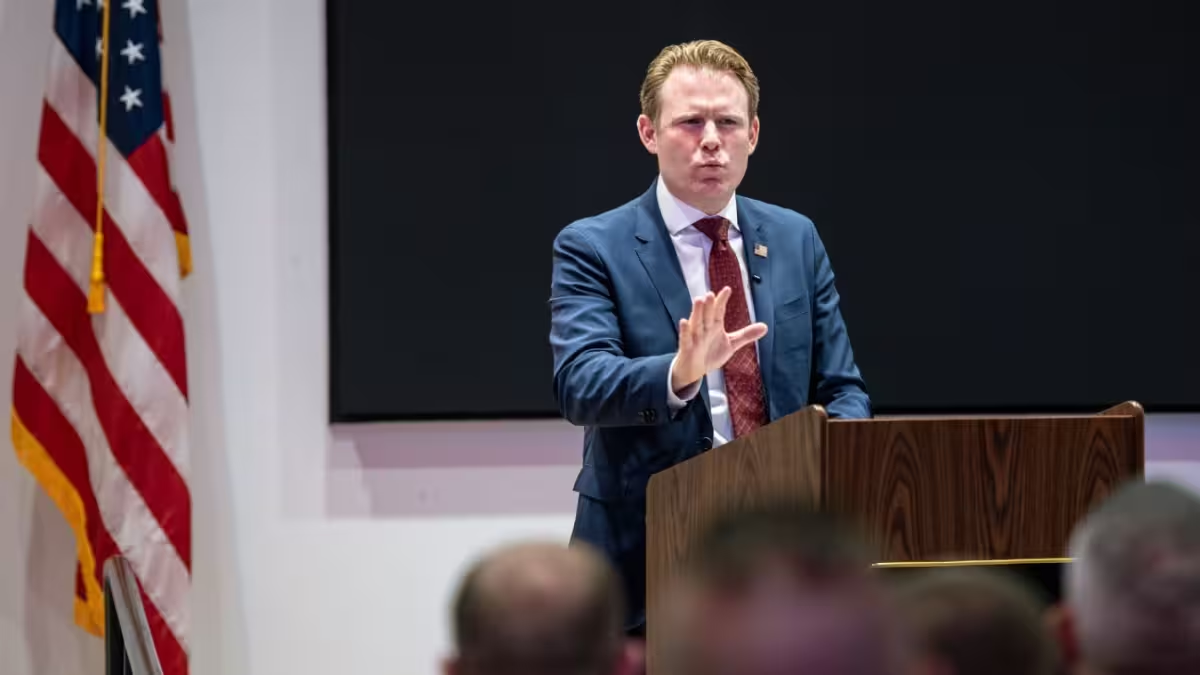
James Garrow, who has spent the past 18 months working with colleagues in Philadelphia on readiness and response, said the city has already sent communications to regional healthcare providers about what to look for. He said the surveillance plan will not be a new system so much as a more intense version of the one already in place, because the scale of the World Cup changes the volume, not the basic method.

“Disease surveillance is disease surveillance every day of the week,” Garrow said, adding that what changes during the World Cup is how intense it becomes. “Measles is probably our top worry,” he said, noting that the virus can linger in the air for up to two hours after an infected person has left a space.
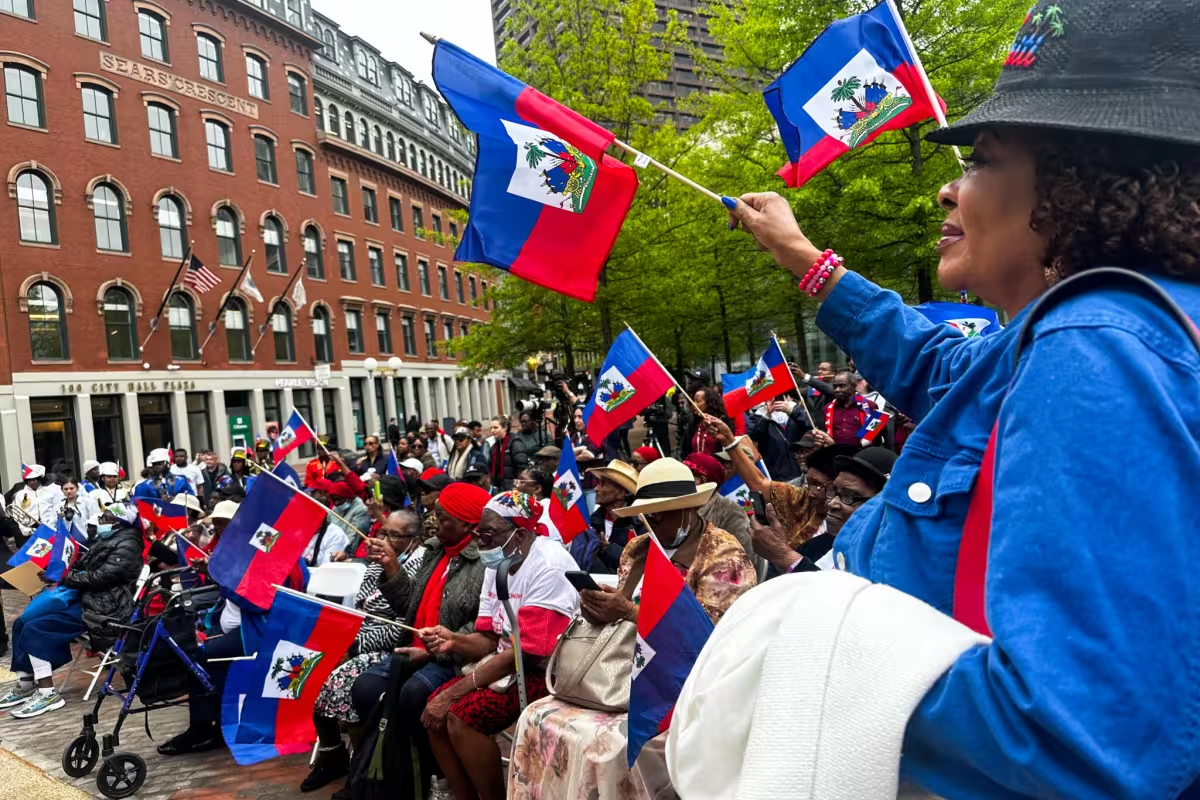
That matters because the tournament is built for spread: packed stadiums, crowded Fan Festivals and constant movement between host cities. Public health experts are also bracing for flu, COVID-19, chlamydia and norovirus as fans converge on the region, and Texas doctors have already been warned to think about unusual possibilities too. In early April, Krutika Kuppalli, co-director for the Texas Department of State Health Services World Cup Infectious Diseases Consultation Hotline, gave a presentation on infections clinicians might encounter during the event.
Kuppalli said hantavirus made her list of things to think about, though she framed it as a diagnosis doctors would consider only in narrower circumstances. “Would it be on the differential if I had a patient from Argentina who was from an area that we know where the vector is found? Yes. But it’s not the most common thing I think about,” she said.
The broader problem is that the World Cup creates the kind of mass gathering where common respiratory and stomach viruses can flourish, and officials are relying on sharper surveillance rather than a fundamentally different response. The unresolved question is how much more protection can be built beyond alerts to providers and closer monitoring once millions of travelers start moving through host cities.
Officials expect surveillance to stay elevated during the tournament and for months afterward, as travel-associated infections such as tuberculosis can surface after the crowds are gone. For public health teams, the World Cup is not just a sporting calendar item; it is a long-running test of how well the current system can spot disease before it spreads.



