




The Cabo Verde government told state employees they may stop working from 13:00 on Monday, June 15, so they can watch the national team’s World Cup debut against Spain, a match scheduled to kick off two hours later at 3pm Cape Verde time in Atlanta.
President Ulisses Correia e Silva framed the measure as a one-off response to a national milestone, calling it "exceptional for an exceptional moment." The timing means public servants, staff at public institutes and local authorities will finish their duties at 13:00 and have two hours before the Blue Sharks take the field.

The decision lands as Cape Verde prepares for its first appearance at a tournament of this level. The squad, coached by Bubista, has been training at its camp in Tampa, Florida, and the country’s president, José María Neves, who has been visiting the United States to support the team and the diaspora, will attend the opening match in Atlanta, Georgia.
Practical detail matters: the match begins at 3pm Cape Verde time — 6pm in Spain — and the government’s cutoff is set exactly two hours before kickoff. The country of just over 4,000 square kilometers and roughly 530,000 inhabitants will be among the smallest nations at this edition of the World Cup, larger only than Curaçao in the tournament’s roster.
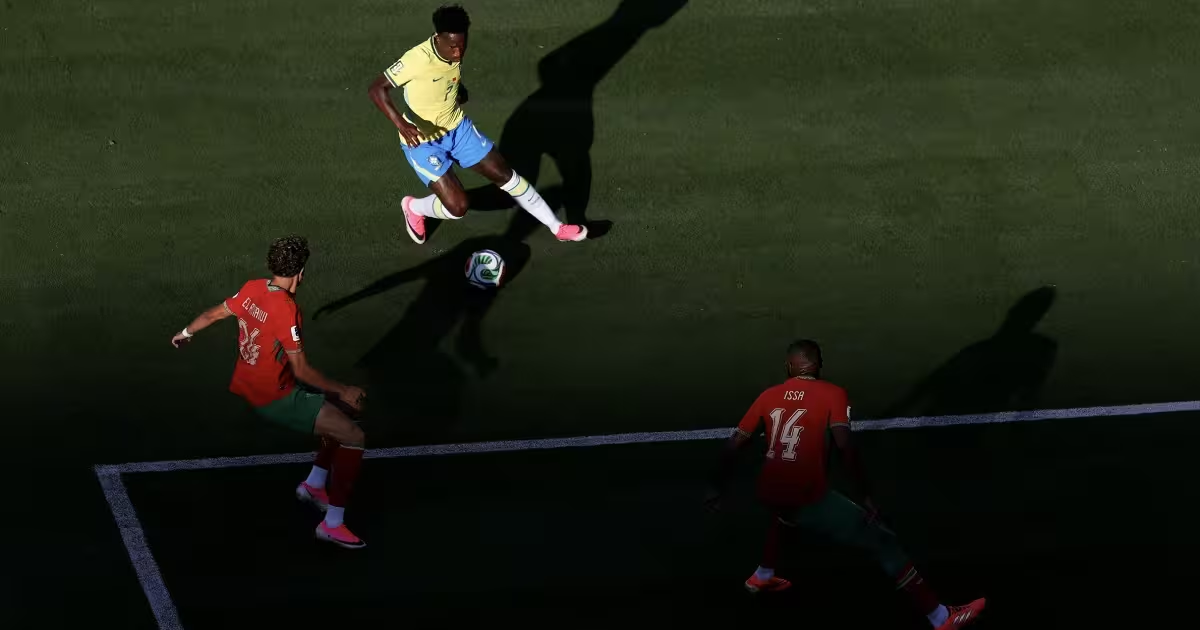
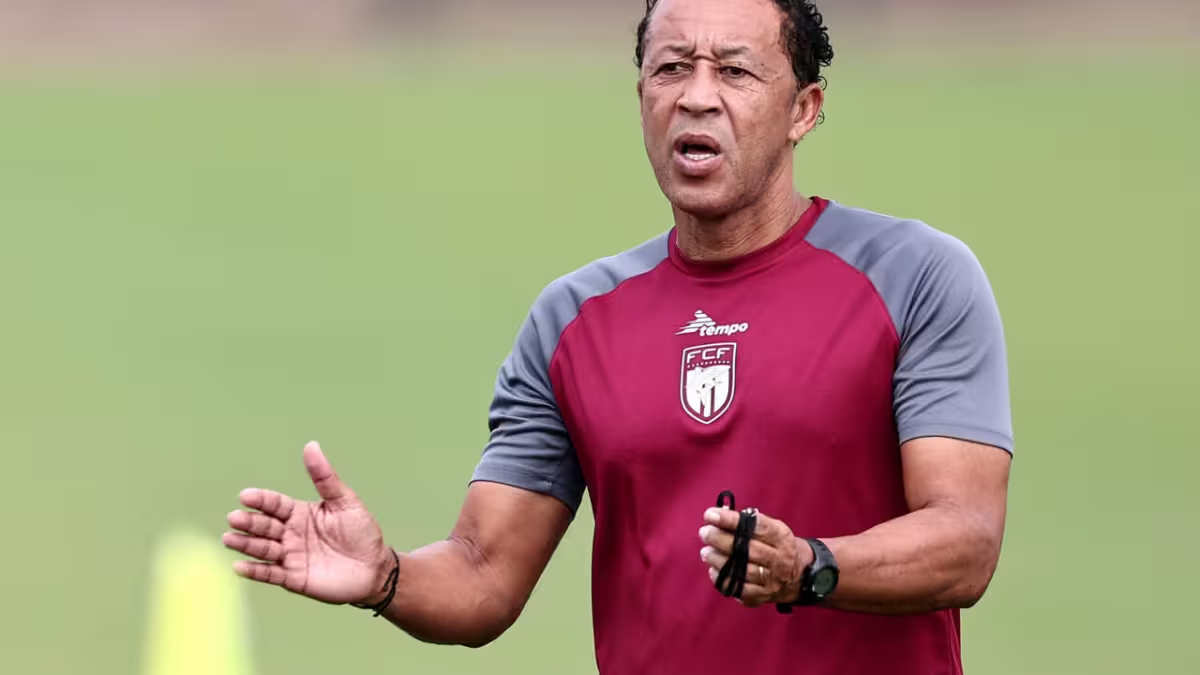
The measure is effectively a short public holiday for state workers. It does not extend to private-sector employees, however, leaving a clear gap between public policy and everyday work life: private firms are not covered, and how many private-sector workers will be able to leave early to watch the game has not been addressed.
That gap is already visible in diaspora communities. At a Dorchester Day Parade gathering, fans said the World Cup is drawing Cape Verdeans together. "Everywhere there’s Cape Verdeans. This World Cup means connecting us all," said Djofa Tavares, who wore Cape Verde gear and flag earrings at the event. "And, you know, we have people that speak other languages. But the Kriolu [language spoken by most Cape Verdeans] connects us and I’m just really excited. Everyone’s excited."
Others in the community are following the logistics closely. Vania Pereira said many will travel to watch the matches in person: "And I think regardless of where it’s located, a lot of Cape Verdeans are going to Houston, they’re going to Miami, they’re going to Atlanta to watch those games." She added, "It would have been nice, though, to have it in Foxborough." Paulo De Barros said he plans to attend all three of Cape Verde’s group stage matches.
On the field, the Blue Sharks face a high-profile opener against Spain in Atlanta next week. The government’s scheduling concession makes watching the match straightforward for the public sector; for everyone else, the usual friction between work schedules and a once-in-a-generation sporting moment remains. The team’s training base in Tampa and the president’s planned attendance in Atlanta underline how the match has been elevated beyond sport to a national event.
What comes next is simple and immediate: Cape Verde plays Spain in Atlanta on Monday, June 15. What remains unanswered — and is now the single sharp question after the government’s announcement — is how private employers will respond. Will companies follow the state’s lead and let staff log off early, or will most private-sector workers have to choose between a day’s pay and watching their country play on the world stage?



