




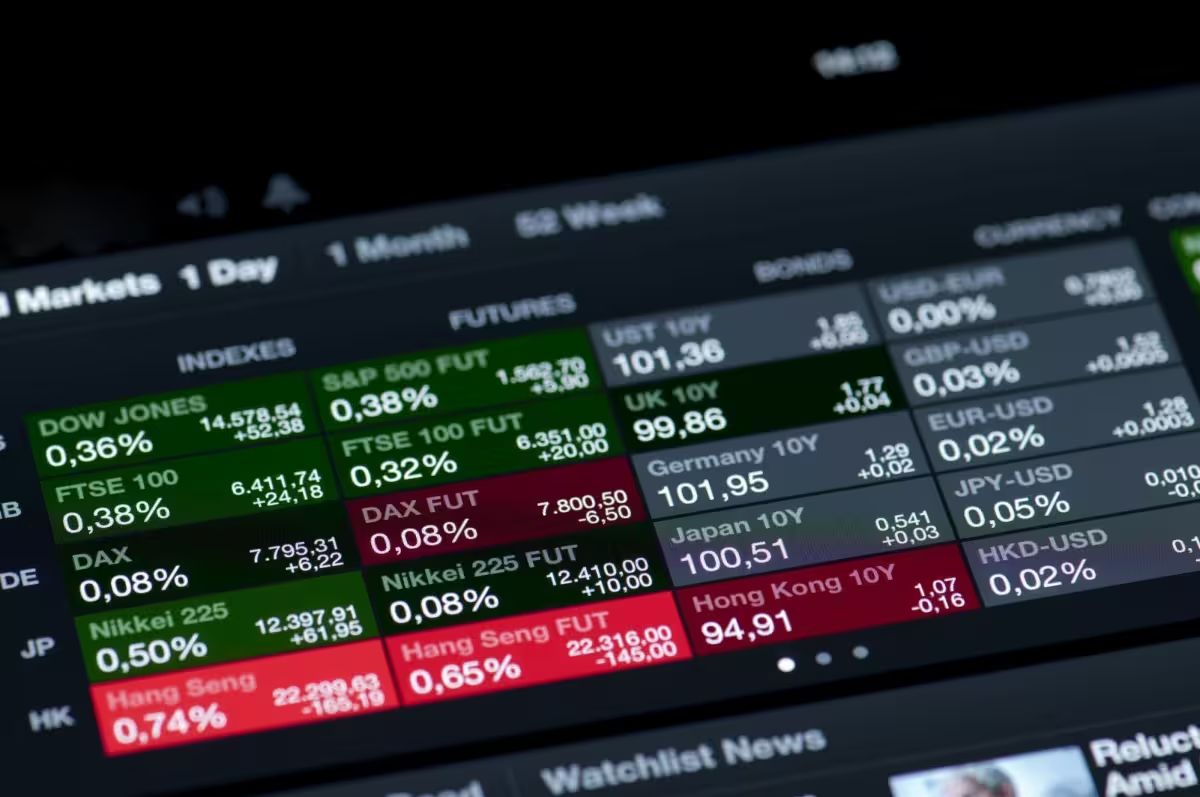
The Dow Jones Industrial Average rose more than 1.8%, or roughly 875 points, to a fresh record high on Thursday as investors rotated into healthcare and financial stocks.
The move lifted the S&P 500 by 0.5%, while the tech-heavy Nasdaq was little changed for the day after earlier slipping as much as 0.7% at the open. Big-cap tech showed mixed results: Nvidia climbed 2.7% and Google advanced 3.8%, even as a slump in chipmakers kept broader tech pressure alive. Broadcom shares sank more than 12% after its AI chip forecast disappointed Wall Street, and semiconductor names felt the fallout even as some chip stocks recovered—Micron rose over 5%, SanDisk added more than 3% and Marvell flipped into the green to gain as much as 5%.

Investors funneled money into defensive and cyclical corners of the market, with healthcare and financials doing much of the heavy lifting for the DJIA's record. The rotation reflected a tactical shift: traders trimmed pure technology exposure while buying firms seen as steady earners or beneficiaries of a firmer economy.

Markets were trading on a mix of political and economic signals. On Wednesday evening the House of Representatives voted to end the war, and investors were also reacting to doubts about President Donald Trump’s ability to end the war with Iran—both developments that influenced risk appetite. At the same time, weekly jobless claims ticked up to 225,000 for the week ending May 30, and layoff notices reported by Challenger, Gray & Christmas showed job cuts rising, feeding caution about the labor picture ahead of Friday’s payrolls.
The most glaring tension on Thursday was the gap between the Dow’s headline performance and the health of the semiconductor complex. Broadcom’s weaker-than-expected outlook and an underwhelming AI-chip forecast knocked the entire chip group, even while some individual names pared losses or rose. Intel, AMD and Arm Holdings trimmed losses, but the sector’s uneven performance left the rally’s breadth narrower than the Dow’s headline number implied.
Thursday’s rally matters now because traders face a compact calendar: the May jobs report, due Friday, June 12, is the next confirmed market-moving event. With fresh labor data showing small deterioration and corporate technology guidance clouding the AI trade, the question for markets is immediate and concrete — whether the shift into healthcare and financials represents a durable rebalancing or a short-lived bid that will reverse if payrolls surprise either way. The jobs print will likely determine whether Thursday’s record becomes the start of a broader advance or a one-day peak driven by sector rotation.



