



Apple will open its Worldwide Developers Conference on Monday at its Cupertino, Calif., headquarters and is expected to use the keynote to debut a long-delayed, AI‑infused version of Siri that the company first promised in 2024.
The new assistant will be the headline item at an event that runs through June 12, and it arrives as Apple pitches a broader AI play: Apple Intelligence, a platform already rolled out with writing tools, image editing and Visual Intelligence features. The Siri revamp is the clearest, dateable sign yet of how Apple intends to stitch those capabilities into everyday iPhone use.

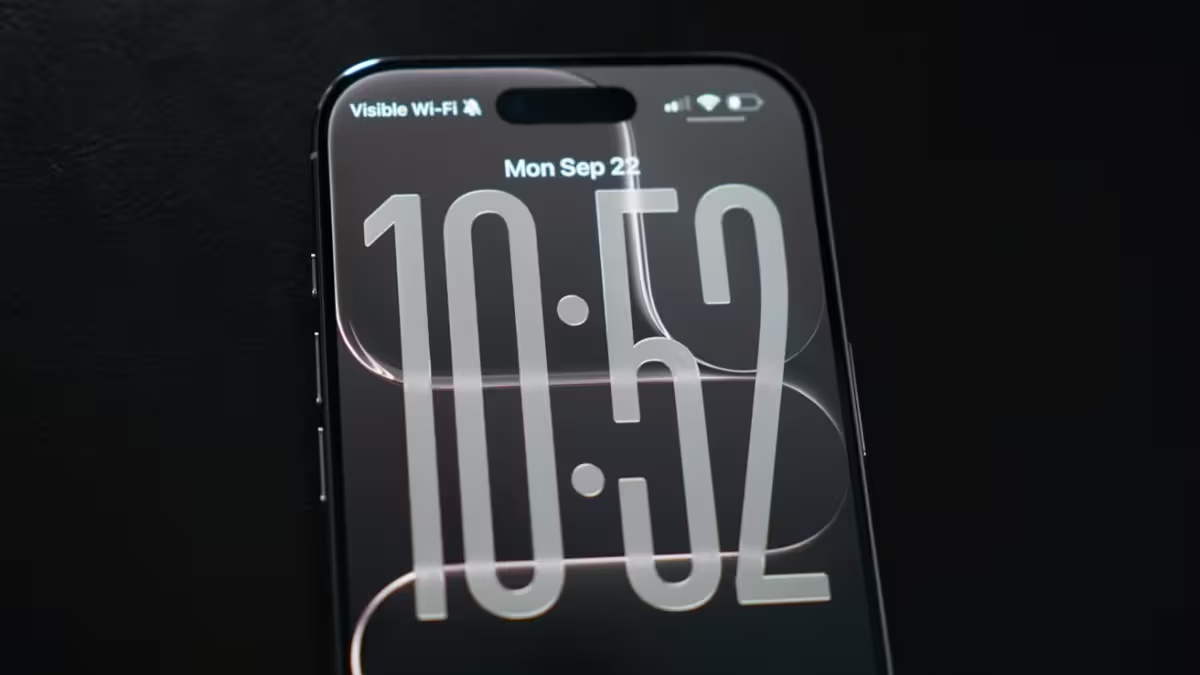
Technically the overhaul is wide: Siri will run on Google’s Gemini AI models rather than Apple’s own, will get its own dedicated app, and will let users interact in a chat-like way similar to modern chatbots. The assistant will handle multi-step requests — telling Siri to perform several tasks in one prompt — and will be able to draft emails. On the iPhone it will appear at the top of the screen in the Dynamic Island, a new search box will allow text queries and commands, and Siri will also be available inside the Camera app to pull nutrition information from labels and import it for meal tracking.
Those product details matter because investors and analysts are still weighing whether Apple’s AI work can translate into faster device turnover and more services revenue. Bernstein analyst Mark Newman framed the opportunity in financial terms, saying Apple Intelligence “presents a huge opportunity to reinvent the company, accelerate product replacement cycles, and drive increased services revenue,” and he estimated a roughly 13% upside to earnings per share from a faster replacement cycle and a further 16% upside from upselling a premium version of Apple Intelligence.
Context sharpens the stakes: Siri first landed on iPhones in 2011, and Apple announced a revamped AI version in 2024, but the company’s AI strategy has lagged behind competing firms. The rise of generative models, chatbots and agents made Siri’s limitations more visible, and although Apple has launched Apple Intelligence, that rollout has not yet quieted investor concerns that Apple has fallen behind in the AI race.
The choice to run the new Siri on Google’s Gemini models rather than an Apple‑built engine is the friction point built into the product itself. Tapping an outside model can accelerate release and offer cutting‑edge capabilities, but it also exposes Apple to questions about control, differentiation and long-term costs — the same investor unease Apple is trying to erase with this WWDC presentation.
For users the upgrades are practical: a dedicated Siri app, chat-style interactions, and multi-step tasking change the assistant from a reactive tool into a more proactive agent across apps. Integration into the Camera app for nutrition lookups and a text search box are concrete examples of Apple grafting AI into everyday workflows rather than treating it as a separate feature.
What remains unresolved is performance in the real world. The feature list answers what Apple plans to ship; it does not prove how well the assistant will understand complicated requests, preserve user privacy while using third‑party models, or behave across different languages and regions. Those are the questions the company will need to answer between Monday’s keynote and whatever rollouts follow.
WWDC runs through June 12, and while the Siri debut is the expected centerpiece, the event is being billed as a reboot of Apple’s AI strategy. The company must now show working examples and availability details that convince both users and investors that the long-promised, AI‑first Siri finally delivers.



