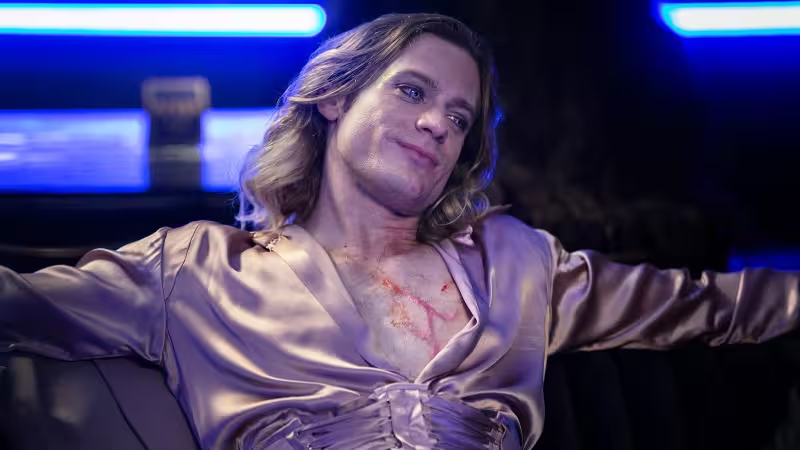
AMC’s Interview With the Vampire returned Sunday, June 7, under a new title — The Vampire Lestat — and with Lestat de Lioncourt installed as the show’s narrator and central figure, driving a season built around a Spring 2025 multi‑city rock tour and a documentary crew trailing him.
The change is immediate and structural: Eric Bogosian’s Daniel is invited to film Lestat on the road as the vampire fronts a band and courts public fame, and the premiere stages a dual movement — Lestat in performance, and a later flash‑forward in which his recorded works are being auctioned while he is believed dead.

The episode piles evidence that this is Lestat’s show. Executive producer Hannah Moscovitch frames him in opposition to Louis — "Lestat isn't like Louis," she says — and explains that Lestat does not excise memory so much as refuse it: "Lestat's version of not dealing with his own memories is just to go forward and to not think about any of it." The season makes that refusal the engine of plot and spectacle, with Lestat using performance as a way to avoid and, paradoxically, reveal himself: "Then he starts to do art, and then all of his memories of his 265 years start to come out of him."
The premiere supplies the particulars that give the new frame weight. Lestat is in the Spring of 2025 on a North American tour captured by Daniel; a Detroit show precedes a violent hotel aftermath where most of a local coven are left strewn in corridors after the concert; Lestat refuses an invitation to join the Fang Gang’s coven after that concert; and the season’s bookends include a future auction attended by Armand, Louis, Daniel and Talamasca agent Raglan James, with Assad Zaman credited as Armand.
There are earned bursts of mythic backstory, too: flashbacks to 18th‑century Europe portray a tormented childhood in which a young Lestat killed eight wolves with a musket and his bare hands, and timelines remind the audience that eighty years before the present action he emerged from exile after breaking with Louis. Those details give context to the songs that dominate the road segments: after centuries of experience, Lestat’s music reads as confession and commodification at once.
The premiere’s friction comes from a small, sharp secret embedded in the bigger reveal — Lestat’s bandmates do not know he is a vampire. On stage he is a charismatic rock frontman channeling centuries of emotional torment into lyrics and spectacle; off stage he is predatory and opaque. That gap between the public performer and the private predator is where the season promises its drama: Daniel’s documentary lens sits between those worlds, and the band’s ignorance guarantees that Daniel’s footage can destabilize both fame and myth.
The episode also leaves an important narrative question open. The finale reunites Lestat with Gabriella, whom he addresses as "fledgling, lover, mother." The show does not explain why he applies the word mother to Gabriella, and that omission is the single most consequential gap in the premiere — it reframes the reunion as less a tidy reconciliation than a hinge for future revelation.
Stylistically, the series leans into spectacle — sex, violence and arena‑scale performance — while using Daniel’s camera to keep a documentary register in play. Moscovitch’s line "Art is undoing him" summarizes the season’s claim: Lestat’s art both unravels and clarifies his selfhood, and the auction flash‑forward, complete with a teased audio memoir titled The Failures, suggests the tour will not contain the damage it produces.
Jennifer Ehle appears at the end of the premiere as the mysterious woman Lestat has been trying to contact, a return that signals the personal stakes beneath the tour’s glamour. What comes next is straightforward narrative pressure: Daniel’s documentary road trip and the rock tour will push Lestat’s secrets into public view, and the show’s immediate task is to explain Gabriella’s place in his life — specifically, why he calls her mother. The Vampire Lestat has recentered the franchise on performance and confession; the season’s worth will hinge on whether those confessions deliver answers or only better songs.