



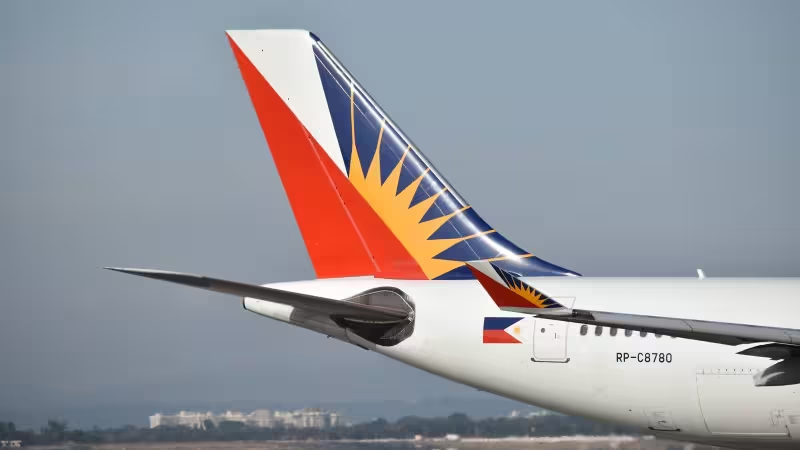
Philippine Airlines announced at the IATA AGM in Rio de Janeiro on June 6, 2026 that it will join the oneworld alliance, becoming the group’s 16th member, with the formal accession process expected to finish in 2027.
The immediate customer payoff is concrete: once membership is completed, Mabuhay Miles members will be able to earn and redeem points across the oneworld network, enjoy eligible priority benefits and access to more than 700 airport lounges, and tap 31 destinations added to the alliance’s global map. The move also folds into years of commercial ties PAL already has with oneworld carriers — long‑standing codeshares with Malaysia Airlines dating to 2001, an extensive codeshare with American Airlines since December 2023, and strategic cooperation with Qatar Airways — plus agreements with Alaska Airlines and Qantas that have eased connecting traffic into PAL’s Manila hub.

Philippine Airlines framed the decision as a defining change. Lucio C. Tan III called it, "This is a defining and transformative moment for Philippine Airlines. Becoming a member of the oneworld Alliance and strengthening Southeast Asia's representation within the group significantly brings the Philippines and the region closer to the world like never before." American Airlines CEO and oneworld Governing Board Chairman Robert Isom said PAL’s inclusion will help strengthen connectivity across key markets in the Asia Pacific region.
Why PAL landed in oneworld is straightforward: the carrier has spent years stitching commercial links with the alliance’s members, and the oneworld Governing Board formally extended an invitation after that cooperation. For passengers the practical change is immediate on paper — reciprocal frequent‑flyer rights, lounges and priority perks — and in network terms PAL brings 31 new destinations into the alliance’s reach. That expands oneworld’s roughly 1,000‑destination network spanning about 170 countries, while making PAL only the second oneworld carrier based in Southeast Asia alongside Malaysia Airlines.
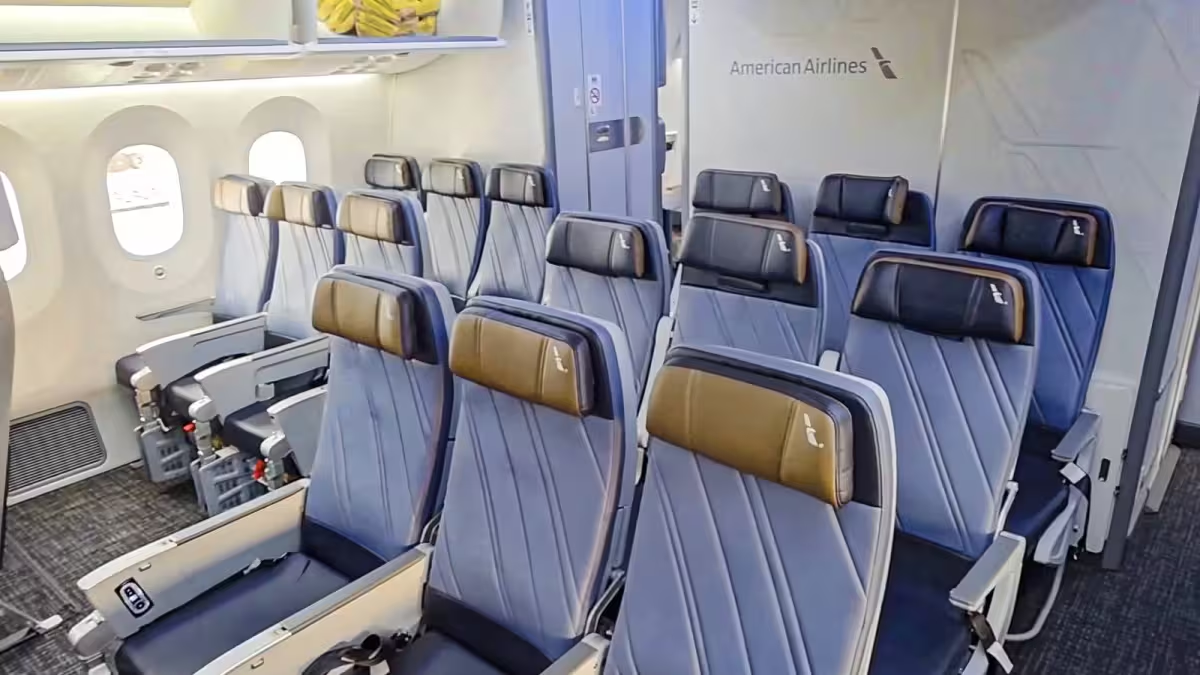
There is, however, an important wrinkle. one world remains the smallest of the three major airline alliances by market share — it ranks third on passenger numbers and has the lowest market share among the big three — so PAL’s choice is not simply a matter of joining the dominant global club. The airline is betting that deeper bilateral ties with established oneworld members will deliver better connectivity for passengers and strengthen its position in Asia Pacific more effectively than joining a larger alliance would.
The operational effects that will determine whether that bet pays off are not yet spelled out. The announcement sets a deadline only for the formal membership process, not for changes to schedules, feeder services or newly reworked codeshares that would smooth onward connections. Airline alliances typically require network adjustments from incoming members — coordinated timetables, lounge access arrangements, and revenue‑sharing tweaks — and PAL has not published a timetable for those specifics ahead of the 2027 entry.
For customers, the most tangible near‑term milestones will be when PAL and the alliance announce which Mabuhay Miles tiers qualify for immediate lounge access and which routes will carry reciprocal earning and redemption from day one. For the carrier and for airports that rely on Filipino traffic, the real test will be whether Philippine Airlines reconfigures its connections to feed key oneworld hubs in a way that turns the added 31 destinations into new, usable itineraries rather than nominal network additions.
The formal accession due in 2027 is the clear next step; what remains unresolved is how quickly PAL will translate alliance membership into timetable changes, expanded codeshares and lounge or ground‑service rollouts that passengers can use. That sequence — not the announcement itself — is what will determine whether joining oneworld reshapes PAL’s international competitiveness and how deeply passengers across the philippines feel the change.



