



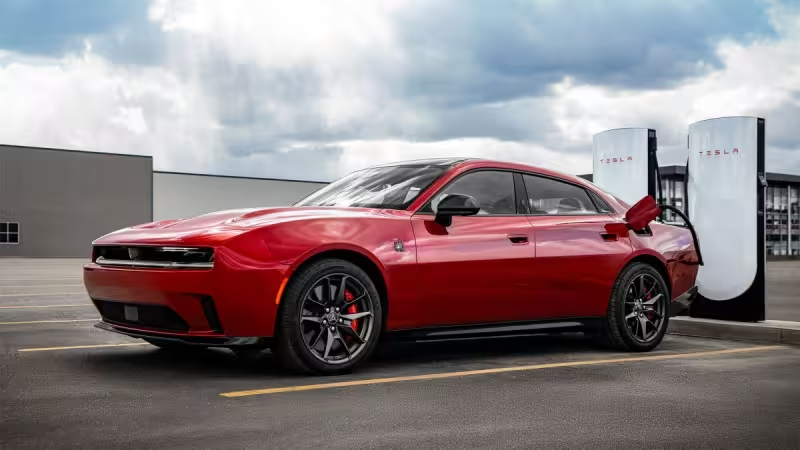
Dodge released pricing for the 2027 Charger lineup on Wednesday, June 3, 2026, and raised the starting price of the Charger Daytona electric coupe by $12,500 to $72,495 before destination.
Last year the Daytona coupe began at $59,995 before destination; the new $12,500 increase moves the entry price well above the previous mid‑$50,000s threshold and alters the model’s immediate competitiveness across electric sport coupes.

The change is material: the Daytona has been repositioned from a sub‑$60,000 entry point to a model that now starts at $72,495, a shift that will affect shoppers who budgeted against last year’s price and could change leasing and incentive calculations for dealers and buyers.
Dodge’s release noted that the only significant change to the Daytona for 2027 was the addition of a NACS charging port. No other equipment revisions or mechanical changes were listed in the pricing announcement.
A correction appended to the release clarifies that last year’s starting price was $59,995, not a previously misstated $49,995; that corrected figure underscores how large the 2027 increase is in absolute and percentage terms.



That contrast — a steep, six‑figure jump in sticker price while the sole documented update is a charging‑port standardization — is the central inconsistency in the rollout. The pricing bulletin did not explain what, beyond NACS, justified a $12,500 raise on a model presented as largely unchanged.
For potential buyers searching for the 2027 dodge charger daytona price, the immediate takeaway is simple and practical: the entry point is now $72,495 before destination, and any purchase decisions based on last year’s $59,995 figure must be revisited.
The release also left several commercial details unanswered. Destination and delivery fees were not broken out in the announcement, and Dodge did not indicate whether other trims or option packages would see comparable increases or if the Daytona’s packaging had been reconfigured in ways not listed.
Those omissions matter because they determine how far the list price will translate into out‑the‑door cost. Without a breakdown of destination or a note that additional features are now standard, buyers and dealers are left to infer whether the jump reflects higher input costs, a strategic repositioning of the model, or an unannounced equipment upgrade.
Dodge set the new price on June 3, 2026; it is now on the company to explain the calculus behind the change. The single most consequential unanswered question is not whether the Daytona now uses NACS — it does — but what specific changes or accounting decisions produced a $12,500 leap in the starting price.
Until Dodge provides that explanation or publishes a more detailed spec and pricing breakdown, shoppers will face a higher sticker price and an unclear value proposition compared with last year’s offering. Dealers and prospective buyers should expect follow‑up detail from Dodge or official dealer guidance as the next step.



