



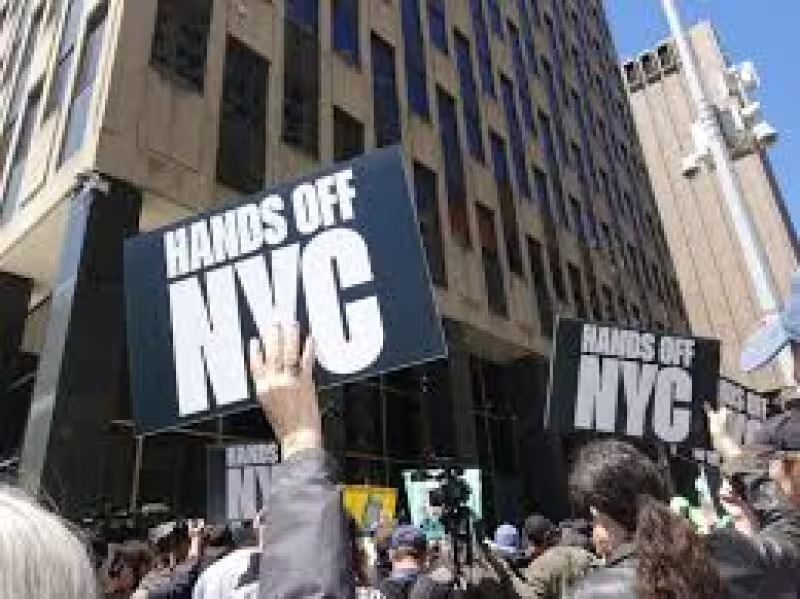
A federal judge in Rhode Island on Friday, June 5, 2026, blocked a series of Trump administration measures that had halted asylum adjudications, green cards, work permits and other legal immigration benefits for many applicants. Chief Judge John McConnell of the U.S. District Court in Rhode Island issued a 135-page opinion finding the restrictions unlawful and ordering them set aside.
McConnell’s order targets a set of policies that, for months, had largely barred U.S. Citizenship and Immigration Services officials from granting benefits to applicants from 39 countries on President Trump’s travel ban list and at times paused processing of hundreds of thousands of asylum cases regardless of nationality. The pause had frozen the issuance of green cards, employment authorization documents and naturalization steps for people who had filed the required forms, paid filing fees, submitted biometrics and attended interviews.

The measures at the center of the ruling were adopted late last year and were publicly justified by federal officials on national security grounds after the shooting of two National Guard members in Washington, D.C. Prosecutors later charged an Afghan man, who had been brought to the United States in 2021 and granted asylum in 2025, in connection with that attack — a fact the administration cited in defending its actions.
McConnell rejected the administration’s rationale. He found the sweeping limits arbitrary and capricious and contrary to federal law, and wrote that the government “claims statutory and regulatory authority that it does not possess; makes decisions without the reasoned explanations that it must provide; acts without regard for the reliance interests of applicants that it must consider; and justifies its actions with pretextual concerns of ‘national security’ that mask anti-immigrant sentiments that it is forbidden from letting influence its decision-making.”
The judge’s opinion emphasizes that the immigrants affected had followed the legal process: they filed paperwork, paid fees, submitted to biometrics collection and attended the required in-person interviews. Those procedural facts underpinned McConnell’s conclusion that the agency did not engage in the reasoned decision-making the law demands before stripping people of immigration benefits.
The Justice Department’s national-security framing of the measures drew a sharp rebuttal from McConnell, who treated those claims as insufficient and legally inadequate. That friction — between security claims and what the judge described as improper motives — is the core legal tension in the case. The administration had tied the new restrictions to public-safety concerns after the D.C. shootings; McConnell concluded the invocation of national security was, in key respects, a pretext for measures that had clear and broad effects on migrants from many African and Asian countries.
Not everyone welcomed the ruling. In a statement, James Percival criticized the decision as politically motivated and accused challengers of repeatedly alleging discriminatory intent. "The Left has been running the same gambit with so called 'animus' claims since 2017," he said, calling the opinion "sabotage dressed in legal clothing" and arguing that critics routinely assert, in effect, that an administration is racist and therefore its policies are invalid. "It goes like this: the admin is racist, therefore a policy I don't like is motivated by race, therefore it is invalid," Percival added, saying the argument has been used against nearly every Trump-era Department of Homeland Security policy.
Friday’s order immediately changes the legal status of the benefits freeze: the block removes the legal basis for the pause McConnell struck down. What the ruling does not say is when or how USCIS will restart processing the affected applications. The court did not set a timetable in its opinion, and the administration’s next move — whether to seek emergency relief, to appeal, or to implement the judgment administratively — was not specified in the material accompanying the decision.
The decisive open question is practical and urgent: when will USCIS resume issuing green cards, work authorizations and citizenship to the applicants who have been waiting for months? That timetable will determine how quickly people who complied with the immigration system regain benefits the judge said they were entitled to under the law.



