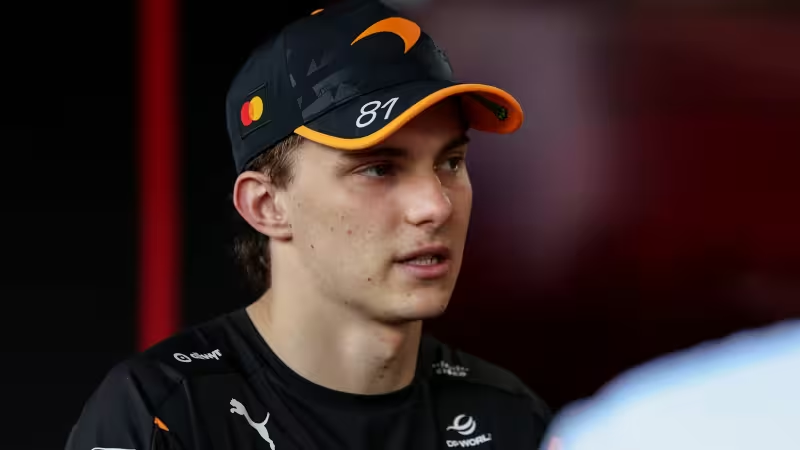
McLaren’s milestone weekend ended on a down note in Monaco as Oscar Piastri qualified seventh and Lando Norris eighth, leaving both cars stranded on the fourth row after a Q3 session in which the team simply could not find the grip to challenge the front runners.
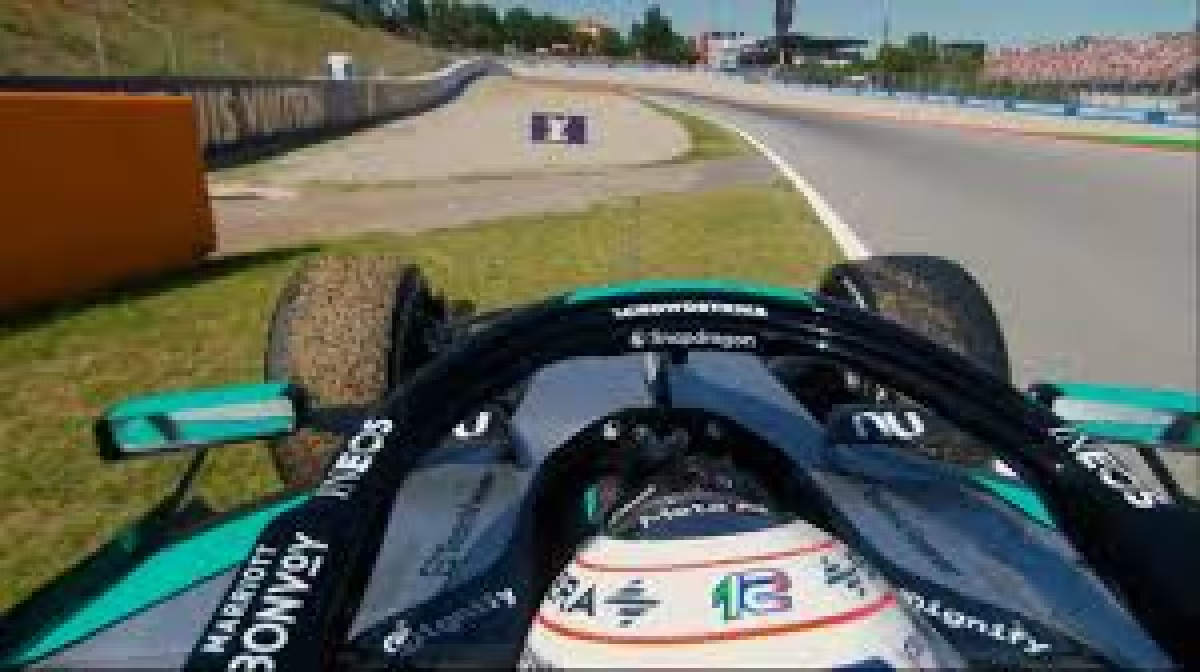
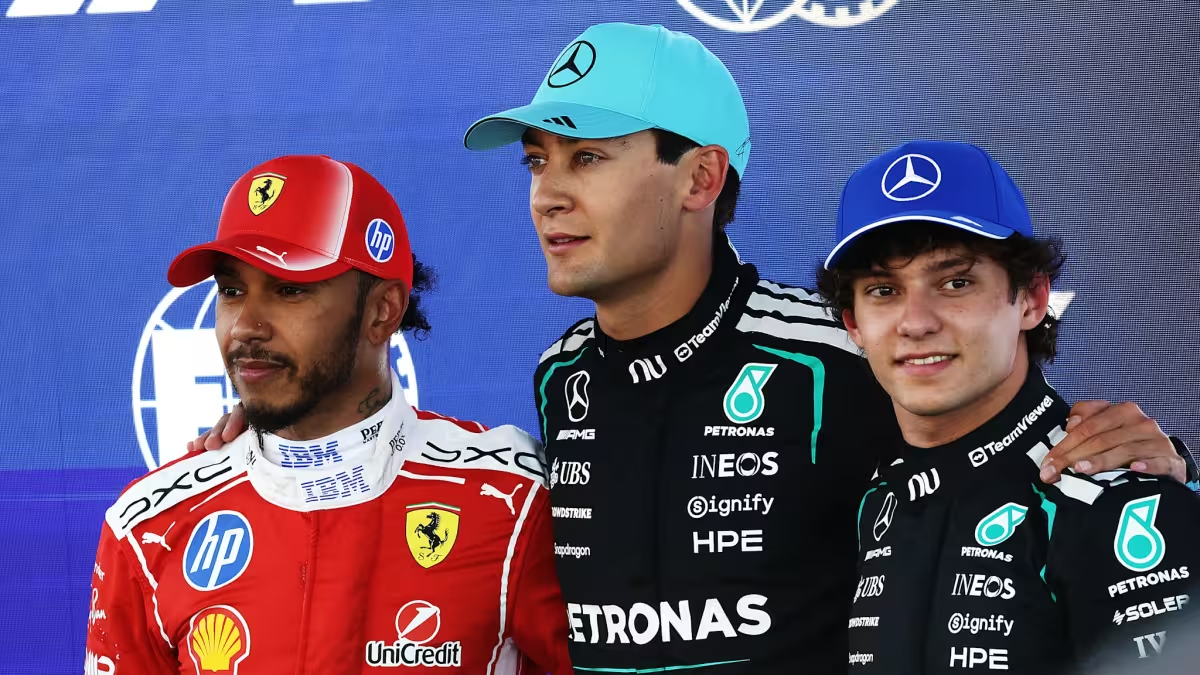
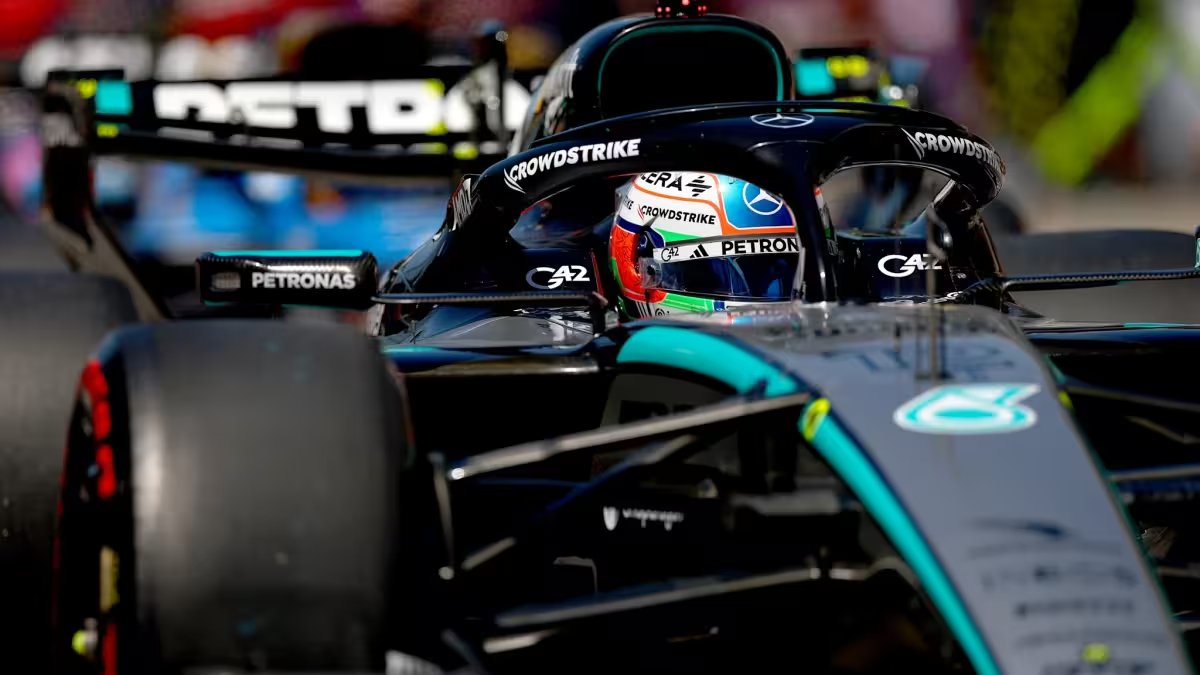
Piastri ended qualifying more than half a second adrift of Kimi Antonelli’s pole lap, while Norris’s second run was blunted by a small error — a lock‑up into Turn 10 — that he says cost him the final margin he needed. The usual rivals at Mercedes, Red Bull and Ferrari all trimmed their times through Q3, stretching the gap McLaren needed to close.

Norris summed up the session by saying the team had lacked a usable car all weekend, and that his last lap let him down after a lock‑up into T10; he added that he hit 99.9% on a lap and pushed to 100%, and “paid the price.” He also argued he had roughly two tenths in hand on his best pace, but even that would only have lifted him ahead of his team mate, not the leaders.
Piastri echoed the broader verdict on balance and grip. He said the car felt a bit nicer on Saturday than it had on Friday but that McLaren was short on grip compared with competitors, and that even with a little more lap time there was a limit to how high they could climb: “I think maybe there was a tiny bit more lap time out there but I think we were going to be seventh no matter what today.”
The numbers underline how badly the McLaren package underperformed relative to the front three squads: both drivers had been appearing outside the top five through Free Practice, and in Q3 those rivals were able to find extra pace between runs — a swing McLaren could not match. The result left the team celebrating its 1000th Grand Prix weekend with both cars hemmed in behind several rivals and with limited options at a circuit where overtaking is already scarce.
The session also exposed a clear disagreement about ceiling and culpability. Piastri framed the result as the best McLaren could do from its current setup, while Norris suggested there was still marginal time left in his lap but not enough to change the overall picture. That gap — between a diagnosis of inherent limitation and a claim of small, recoverable lost time — sharply defines McLaren’s immediate problem.
What matters now is whether McLaren can find meaningful grip and balance changes before the race; the team offered no confirmation of specific fixes after qualifying. With both cars on row four at a track where starting position is critical, McLaren will need a step forward in setup or a mistake from those ahead to salvage track position. Absent a clear overnight gain, the team risks turning its 1000th Grand Prix into a weekend remembered for what it could not do rather than what it celebrated.