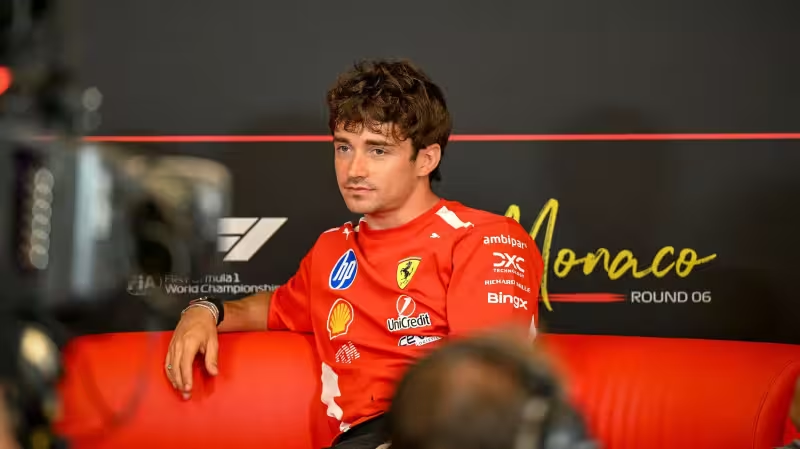
Charles Leclerc said he will keep using Ferrari’s simulator in his pre-race preparation, rejecting the idea of following Lewis Hamilton’s recent, self-declared move away from virtual rehearsals. Leclerc called the simulator “a very powerful tool” and said he has no intention of abandoning it.
That stance arrives with fresh context. In Montreal, Hamilton delivered his best-ever result in a Ferrari by finishing second behind Kimi Antonelli, having outqualified Leclerc for both the Sprint and the Grand Prix. Hamilton crossed the line 30 seconds ahead of Leclerc, who finished P4 — a weekend that made his comments about simulator use impossible to ignore.

Hamilton had said, ahead of the Canadian Grand Prix, that he would not use Ferrari’s simulator for his pre-race preparations. “Whether or not I use it to prepare for another race? Probably not,” he said, adding bluntly: “There are just too many risks.” He went further, tracing his own history with the tool: “If you look at the two best races I’ve had, I didn’t use a simulator and that’s honestly how it was,” and “Pretty much all the championships before, except for probably 2008, I didn’t use the sim, so it’s not a necessity.” He summed up his view plainly: “It’s a tool that can be powerful, but, for me, I’m old school. I’m probably better without it.”
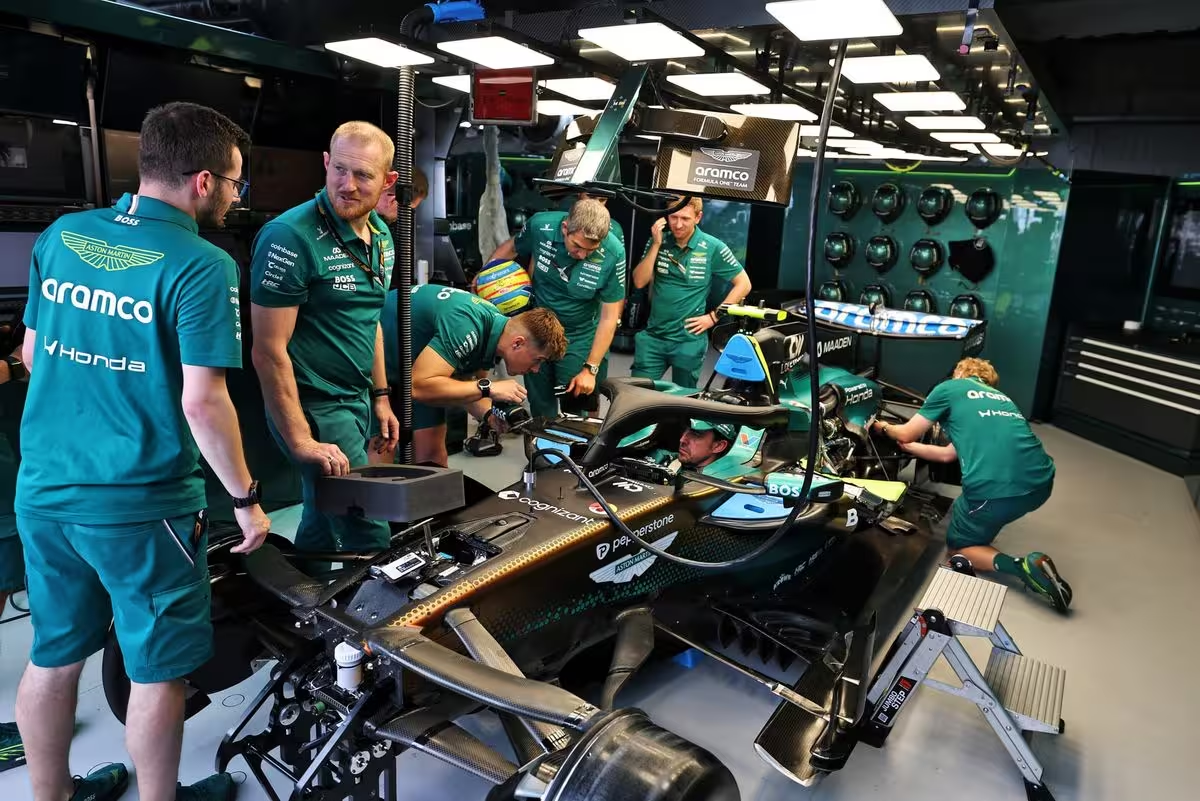
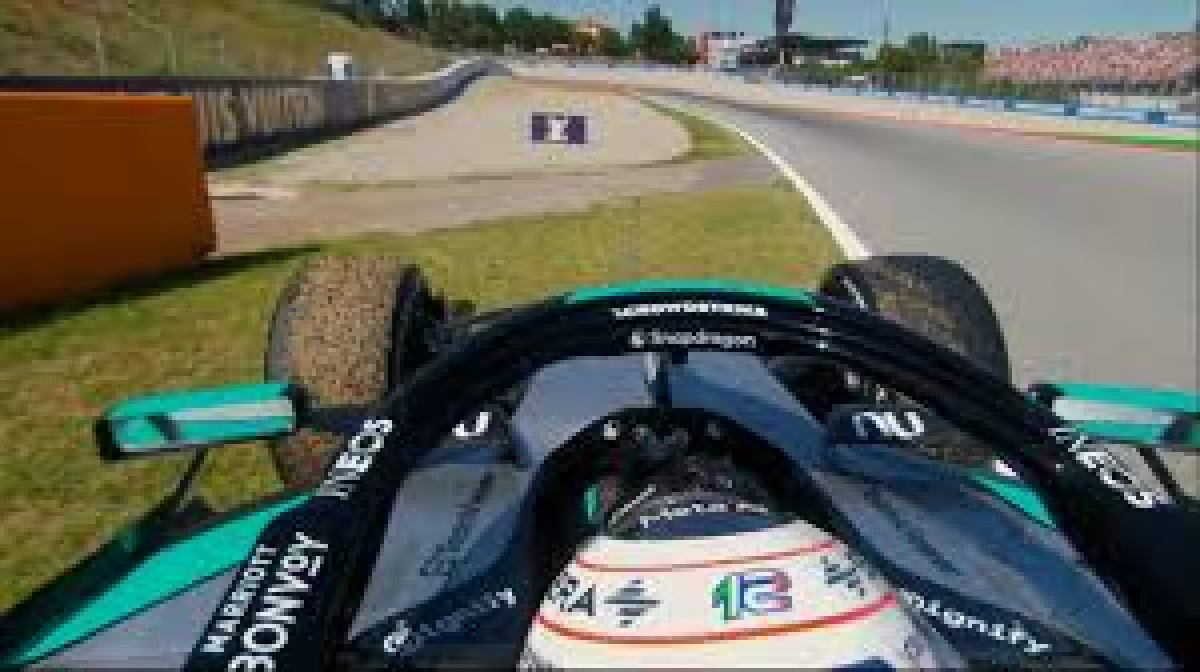
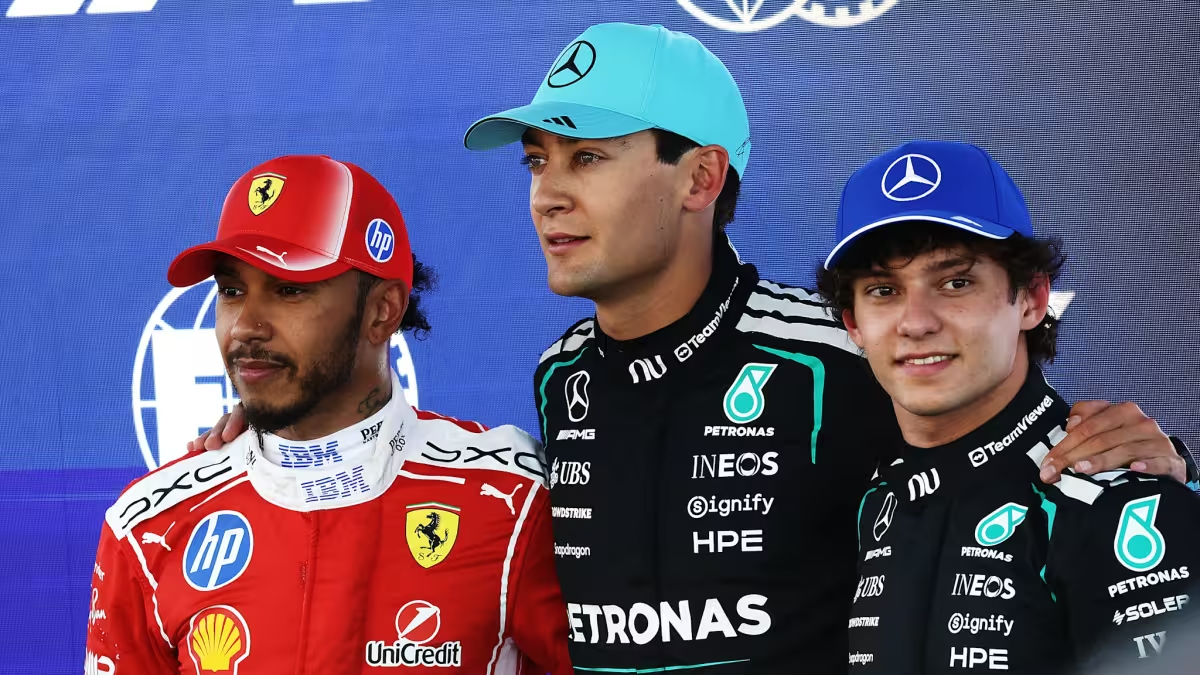
Leclerc, by contrast, has relied on Ferrari’s simulator throughout his time with the team and said he sees no reason to change a preparation method that has become integral to how he learns circuits and sets up runs. His decision to stick with the sim is not a technical argument so much as a deliberate difference in working method: where Hamilton describes a disconnect between the virtual and the real, Leclerc describes the simulator as a direct extension of his racecraft.
The split is more than a matter of habit. It creates a clear yardstick for comparisons between two drivers who now sit on different approaches to the same races. Hamilton’s Montreal weekend — outqualifying his team-mate twice and finishing 30 seconds clear in the race — provides immediate evidence to those who favor a low-tech route. Leclerc’s insistence that the simulator remains “very powerful” offers the counterweight: a champion’s tool, in his view, for refining lines, tyre work and long-run consistency.
That friction has already drawn outside comment. Former race engineer Rob Smedley questioned Hamilton’s decision on the High Performance Racing podcast and said it met a “shrug of the shoulders” from Ferrari personnel. The remark underscores a second layer of the story: this is not simply a private preference but a choice that ripples through team processes, data workflows and how engineers translate practice into race strategy.
For now, the only firm fact is the divergence itself. Leclerc will continue to use the simulator; Hamilton says he likely will not. What is not settled is whether Hamilton will keep to that course next weekend or whether Ferrari will quietly adapt preparation routines around the two drivers’ different needs. That unanswered question is the one that will shape the next comparisons between them — and it is the test both drivers will face the next time they line up on the grid.