



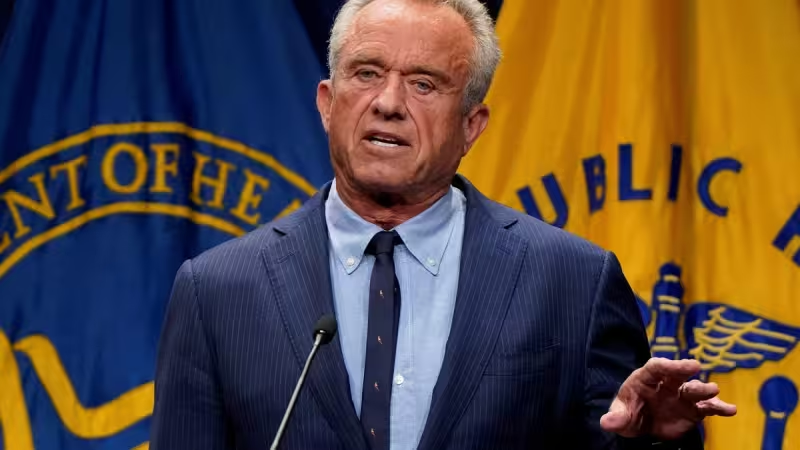
Robert F. Kennedy Jr. is pursuing federal access to most Americans’ medical records, saying the files are essential to studying autism, vaccine safety and chronic disease. The health secretary has described the effort as part of a broader push to assemble data systems that can support research, while state-level health exchanges already hold detailed patient information that can be shared between hospitals and clinics.
The move touches a raw nerve because the records can include doctors’ notes, prescriptions and other identifiable information, and some public health leaders have privately pushed back on giving Kennedy’s team access. They have questioned whether the request is legal or useful, even as Kennedy said in May that he and his advisers had gone to the states, put databases together and begun studies that were already in motion.

Kennedy also said, “We have a whole pipeline of studies that will be done over the next year,” underscoring how far the effort has progressed behind the scenes. But HHS has not publicly announced any new autism or vaccine research projects built on medical records, and the department has not explained how any personal health information obtained through state systems would be protected or handled.
That gap matters because the agency is seeking data from state health information exchange systems, which are designed to let hospitals and clinics share detailed, identifiable patient records. A source familiar with the effort said the funding was already allocated through Centers for Disease Control and Prevention programs and that the initiative is not evidence of a national patient database or master patient index, but it did not answer the larger question of how widely the information may be used.


HHS has framed the work differently. In a June 4 statement, a spokesperson said the agency is “strengthening public health surveillance and modernizing data systems to better understand and combat the childhood chronic disease epidemic” under Kennedy’s Make America Healthy Again agenda, and said Americans deserve “robust systems to monitor the drivers of chronic illness.”
Those words sit next to a harder reality: Kennedy has long made autism a personal focus, he said shortly after his confirmation that he would find its cause by his first September in office, and that deadline has passed. The issue has also been politically charged since last year, when he proposed compiling the medical records of people with autism for a federal disease registry, a step health officials later said was not underway.
The contradiction has followed the effort into 2025. On April 21, NIH Director Dr. Jay Bhattacharya floated an autism research initiative that could create disease registries, and four days later an HHS official said the department was not creating such a registry, instead describing a real-world data platform drawing on public and private information.
For now, the plain answer is that Kennedy is still trying to get the records, and HHS is still presenting the effort as a data-modernization drive rather than an autism registry. The unresolved question is not whether the work exists, but how much identifiable patient information the department will collect, what studies it will actually run and whether it can do so without crossing the privacy line critics already see in the request.



