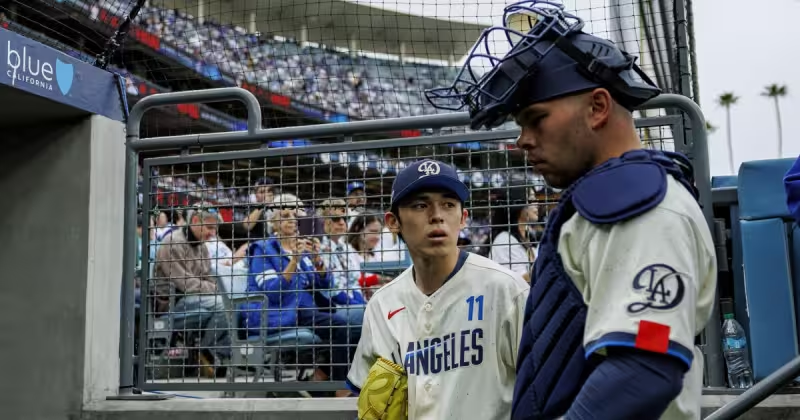
"But here, if something happens to your body, you have to tell them right away," Roki Sasaki said, putting a simple rule at the center of how he's adapting to life with the Dodgers as he settles into a bigger role.
The adjustment has been practical: about a month ago Sasaki reintroduced a splitter to his mix, a pitch he has thrown before for Team Japan in 2023, and Statcast now separates that pitch from the offspeed offering it reclassified last year as a forkball. The splitter is roughly five miles an hour faster than the forkball, and Sasaki and the staff say it has improved both his command and his velocity profile.

Those changes show up in results. Since the splitter became a regular weapon, Sasaki has lasted at least five innings in all six of his starts; by contrast he had reached at least five innings in four of eight starts last year and just one of his first four this season. His strikeout-walk differential has more than tripled compared with the first four starts of the year, and his ERA since the adjustment has dropped by 2.33 runs per nine. He posted a 3.18 ERA in May even as his overall line through 10 starts sits at a 4.59 ERA and a 5.04 FIP across 51 innings.
The club has noticed the on-field shift and the personality that comes with it. Dodgers strength and conditioning coach Travis Smith laughed about Sasaki’s clubhouse presence: "He talks a lot of trash," adding, "He’s not quiet at all." Manager Dave Roberts has been careful in his praise, saying, "Obviously, there’s a lot of talent there," while warning, "And so I do think that … we’re probably kind of over-expecting from Roki at an early stage."
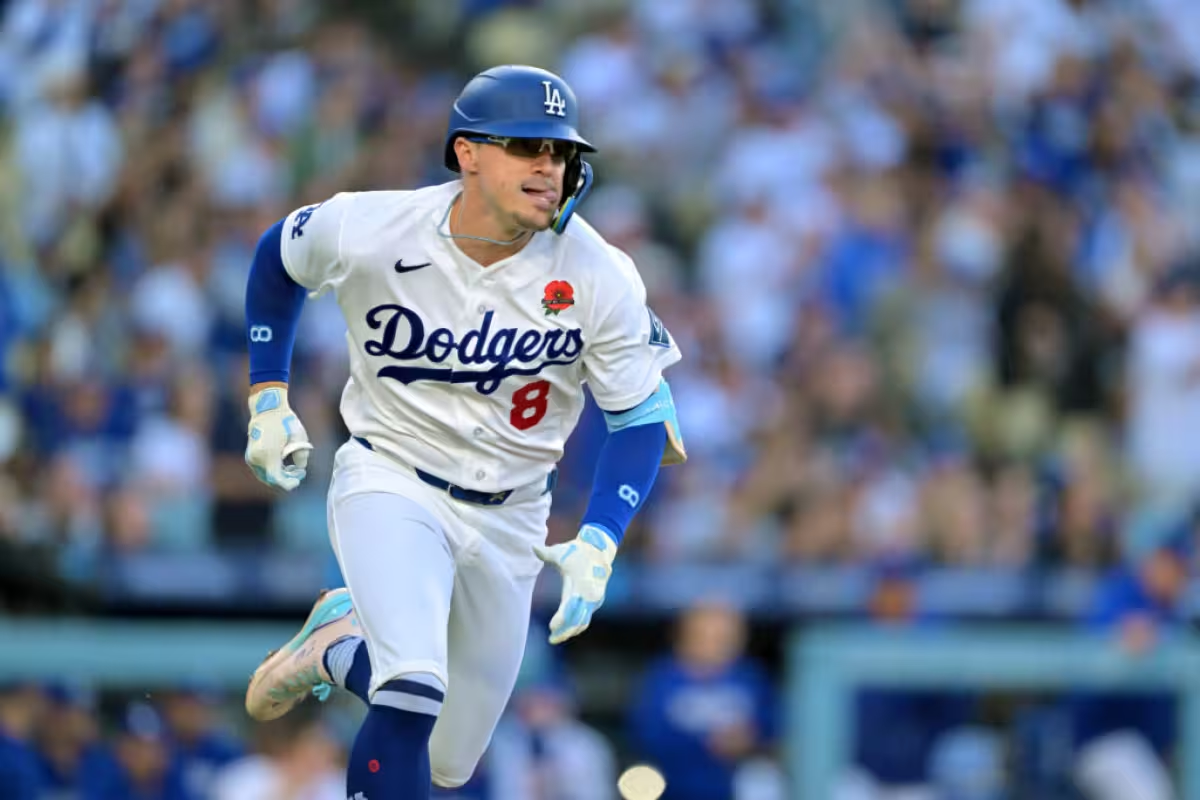
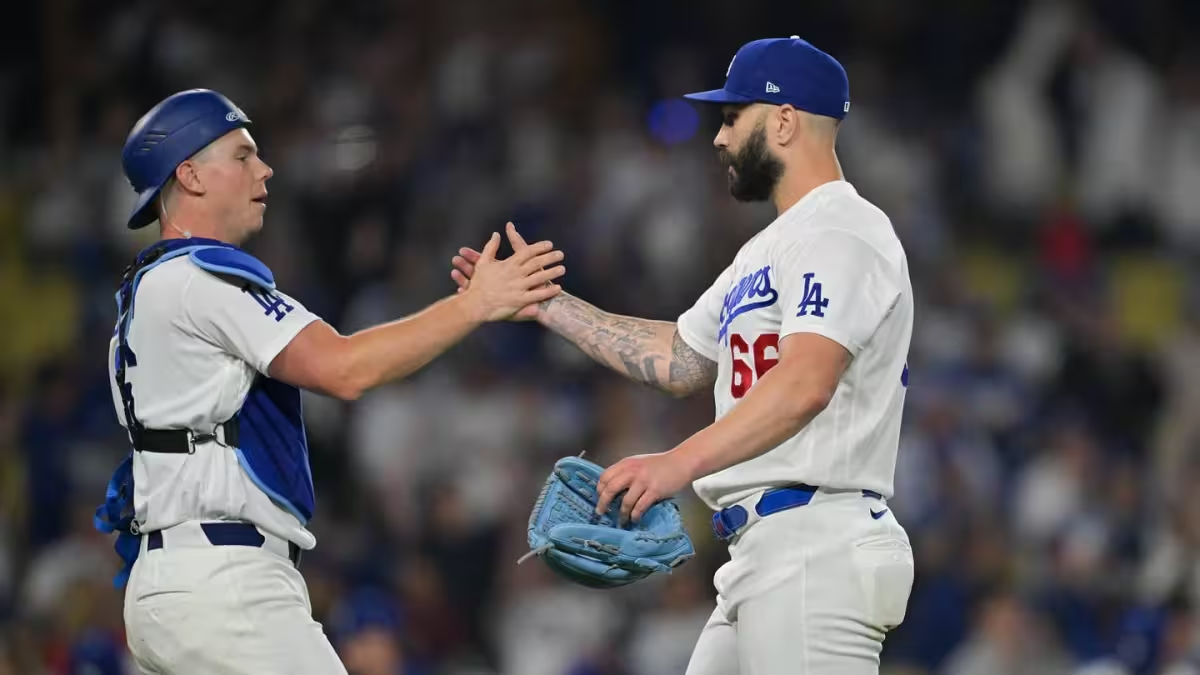
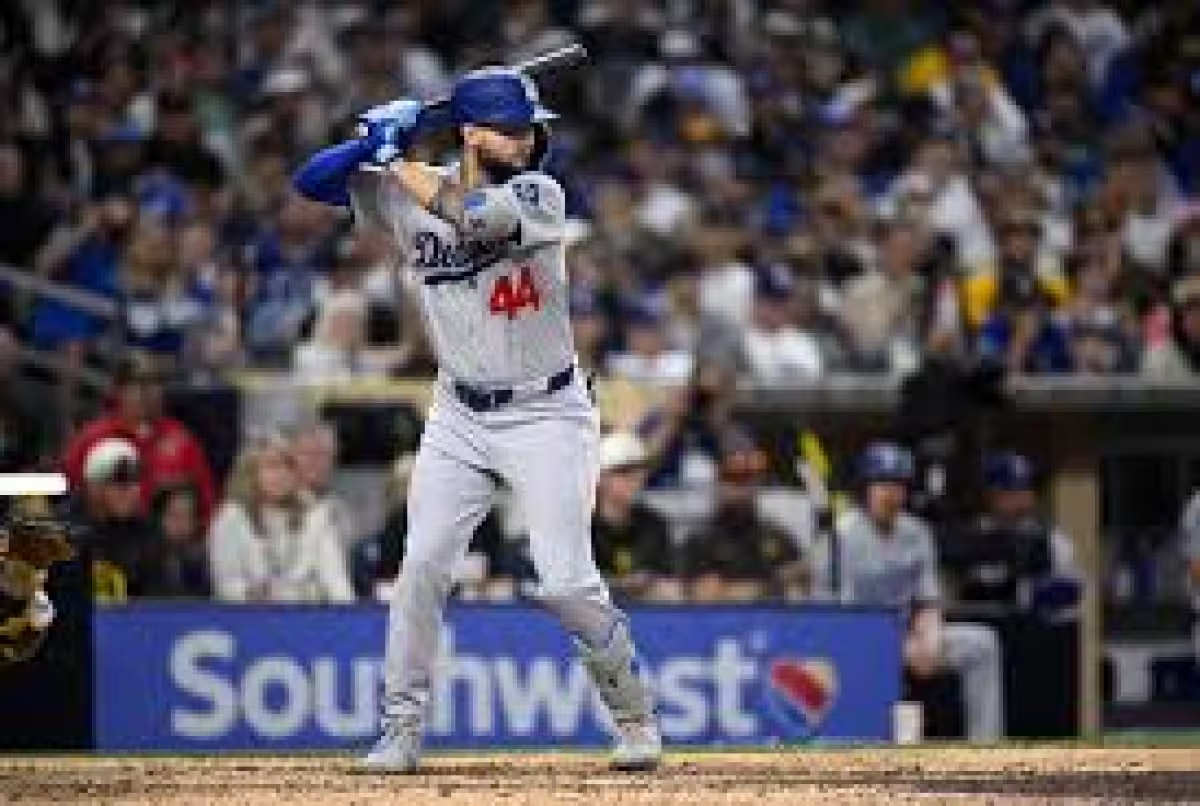
Sasaki's recent steadiness helps explain why the Dodgers have kept him in the major-league rotation rather than optioning him to Triple-A or returning him to the bullpen. The choice carries extra weight because the rotation is depleted: Tyler Glasnow left his May 6 start after one inning with back spasms and has not been cleared to throw off a mound, and Blake Snell, after a May 9 outing that lasted three innings, was diagnosed with loose bodies in the elbow, had surgery and was moved to the 60-day injured list, where he cannot return until early July. It increasingly appears Glasnow will not be back before July either.
Sasaki, 24, has not had a linear climb. He missed four and a half months last year with a shoulder impingement before finding some success in the bullpen last fall, and he arrived in MLB with four years of Nippon Professional Baseball experience but relatively limited professional innings. His start on Friday against the Angels will be only his 30th major-league appearance, regular season and postseason combined.
He contrasts the way pain and discomfort were treated in Japan with how he approaches it now in Los Angeles. "You don't want to hide it," he said, echoing a different approach to communication and care: "In Japan, after a rough start, he didn't feel the need to talk about silver linings." That directness matters when a young pitcher is managing a workload the Dodgers clearly hope to preserve.
Still, the ledger contains a clear caveat. The splitter has earned Sasaki better command and more durable outings, but his season numbers remain 4.59 ERA and 5.04 FIP through 10 starts, a reminder that the improvement is recent and incomplete. The Dodgers are betting on the development because the rotation needs innings now; whether that bet holds depends on consistency, not a single outing.
His start Friday against the Angels will be the clearest test yet — and the single question that matters is simple: can Sasaki sustain the command and effectiveness the splitter has unlocked over a longer stretch? How he answers that in the next handful of starts will determine whether the Dodgers have a short-term stopgap or the beginnings of a durable young starter.