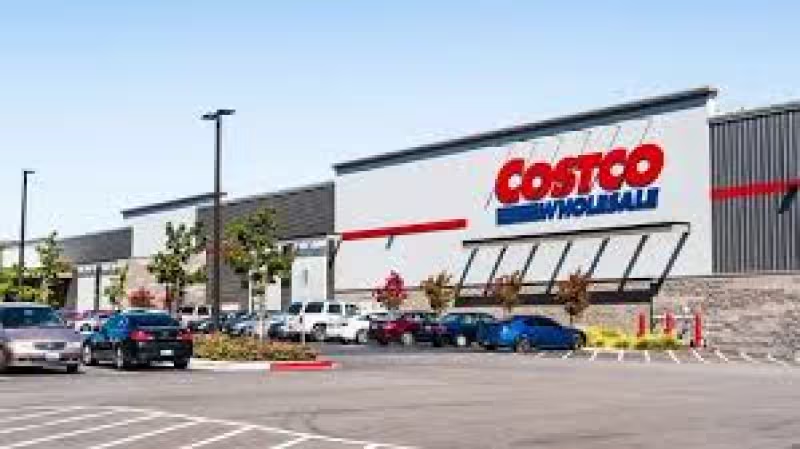
Costco broke gas-station sales records in Q3 as a jump in fuel prices pushed many first-time buyers to its pumps, the warehouse chain reported.
The surge came with Costco’s broader business bump: company revenue grew 12% during the quarter as shoppers funnelled through its lots. Regular U.S. gasoline climbed to about $4.48 a gallon in late-May — roughly $1.32 higher than a year earlier and reversing three years of declines — a rise the CEO attributed in part to the Middle East war and which coincided with the spike in demand at Costco’s forecourts.

Industry comparisons show the calculus that drew drivers. U.S. News estimates savings at Costco pumps run about 10 to 30 cents per gallon versus local stations, and market analysts say Costco prices are deliberately aggressive. "Costco tends to be one of the most aggressive competitors when it comes to prices," Patrick De Haan said. Company pricing strategy also appears deliberate: industry commentary puts Costco’s fuel-margin at about 14%, below an industry-standard margin near 20%, a gap that lets the chain undercut many neighborhood stations.
The mechanics mattered. Many of the buyers at Costco pumps in Q3 were first-time pump customers who then entered warehouses to shop, and that extra inside spending amplifies the value of the fuel draw. Consumers’ Checkbook found Costco’s items to be cheaper than major rivals — about 8% cheaper than Walmart and 13% cheaper than Target — and shoppers generally judged Costco’s goods to be higher quality. That combination helps explain why drivers willing to queue and drive farther landed in record numbers.

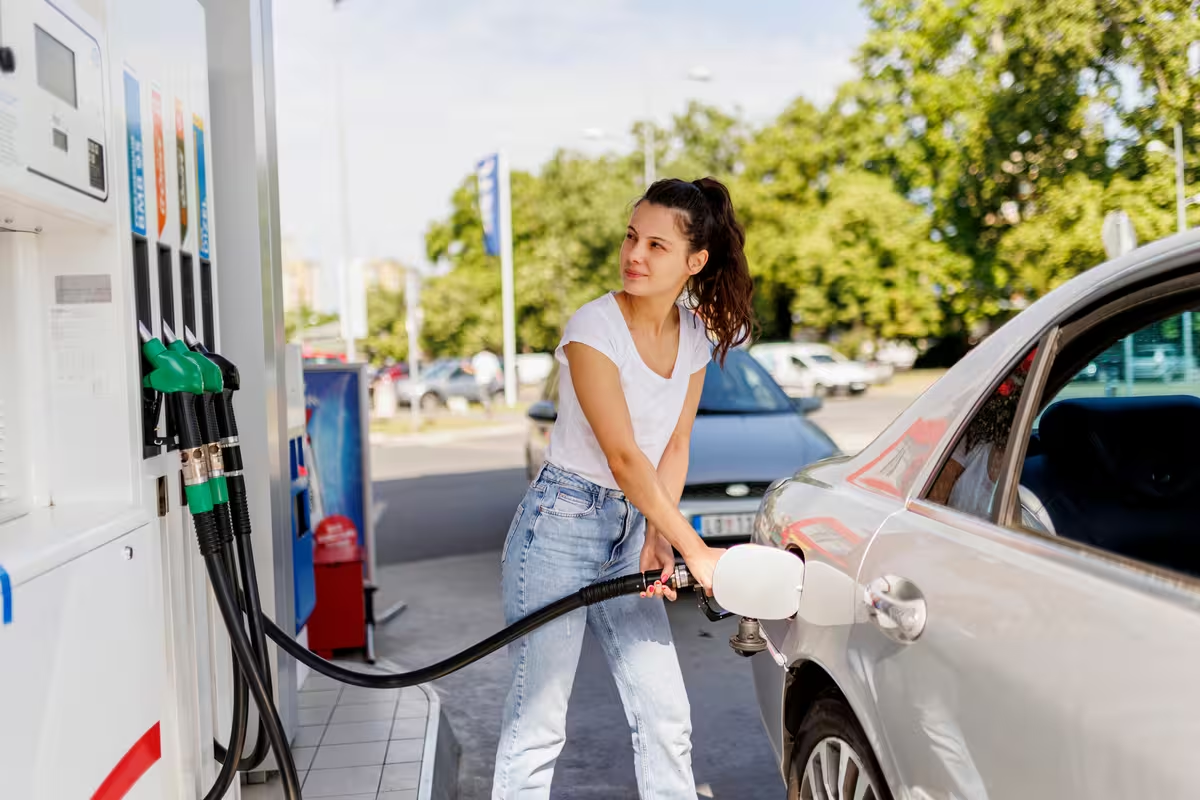
For individual drivers, though, the math is mixed. Cost savings on the pump can be real but thin: at 10 to 30 cents per gallon, a Gold Star member must fuel somewhere between roughly 260 and 1,300 gallons a year to recoup a $65 membership, according to Kiplinger’s estimate. Infrequent shoppers who buy bulk items or who pay for additional travel time or sit in long lines may end up losing money despite lower per-gallon prices.
That friction was visible alongside the numbers. Observers and analysts cautioned that long wait times at popular Costco stations and longer drives to warehouse locations can cancel out the advertised savings, a point De Haan underscored when noting the trade-offs drivers face. Those convenience costs — travel, time in line and the membership fee — are the main limit to how far fuel-driven traffic can grow.
There’s a behavioral component, too. The late-May price jump came as consumer confidence sat at record lows in a University of Michigan survey, making cheaper fuel an immediate cue for bargain hunting. Many drivers treated Costco’s pumps not just as a cheaper fill-up but as a one-stop saving opportunity, which helped turn higher retail fuel prices into booming forecourt sales and higher overall revenue for the quarter.
The record Q3 outcome leaves a clear open question: how durable is this traffic if fuel prices fall or congestion worsens? Costco’s lower margins on gasoline make its pumps a strong defensive play while prices are high, but the company’s advantage narrows when the spread to local stations tightens. If regular gasoline drifts back down from the late-May peak, or if long lines and travel costs rise further, the slate of first-time pump customers could thin quickly.
In short, Costco’s Q3 gas bonanza looks driven by an acute market shock and a pricing strategy built to capture it. The company turned higher per-gallon revenue into broader warehouse traffic, but the same forces that inflated sales — a $4.48-a-gallon environment and shoppers under strain — also create a fragile foundation: if prices retreat or convenience deteriorates, many of the customers who triggered the record quarter may stop making the trip.