




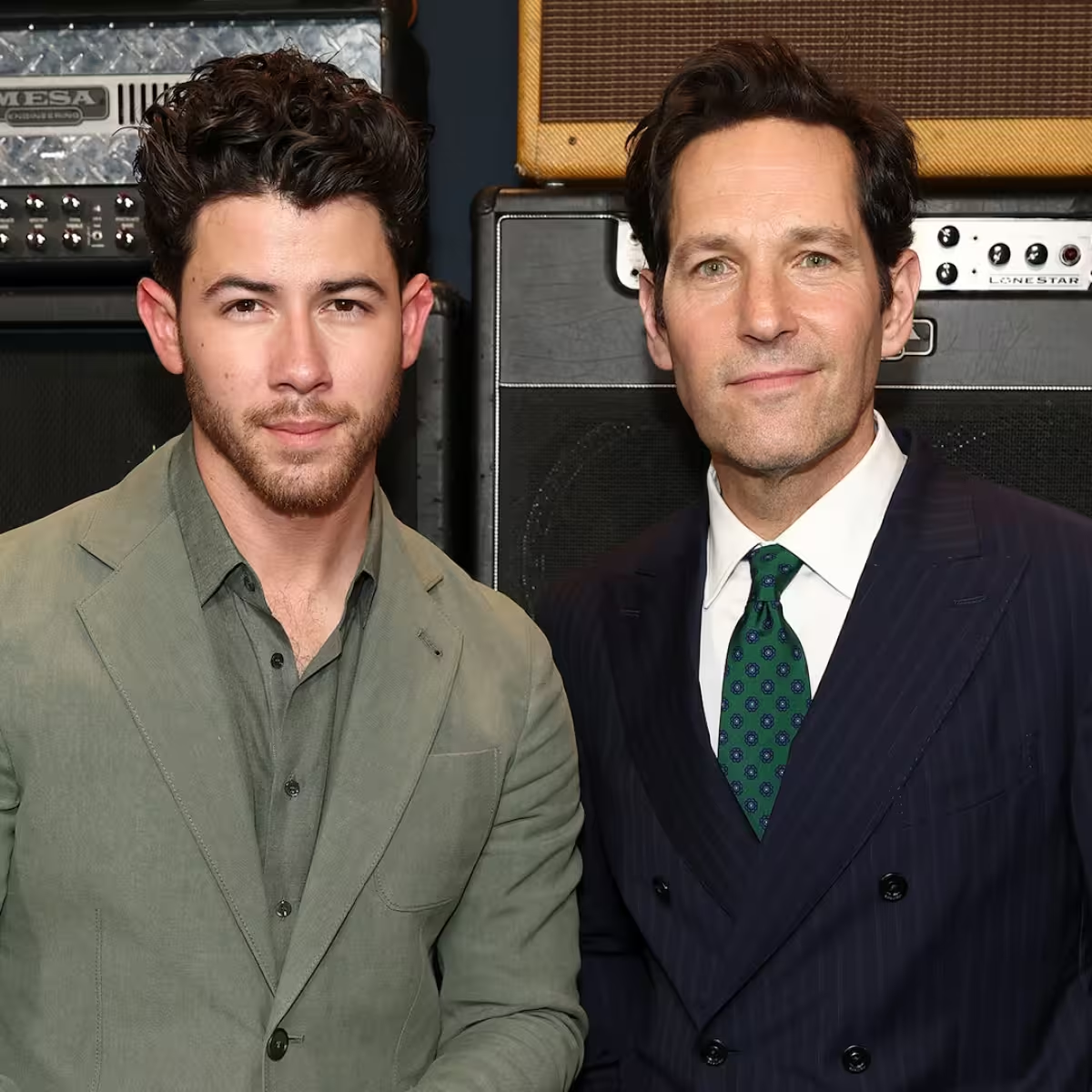
A review published by the concluded that Paul Rudd and Nick Jonas "hit the right notes" in John Carney’s Power Ballad, a verdict given extra weight this week by Lionsgate’s release of production stills pairing Jonas with Rudd and with Havana Rose Liu.
That applause matters because Carney has spent almost two decades shaping the same territory: ordinary musicians who find redemption through song. He wrote and directed Power Ballad, and his track record — beginning with Once in 2007 and continuing through Sing Street and Flora and Son — makes the music itself the film’s lead character as often as any actor.

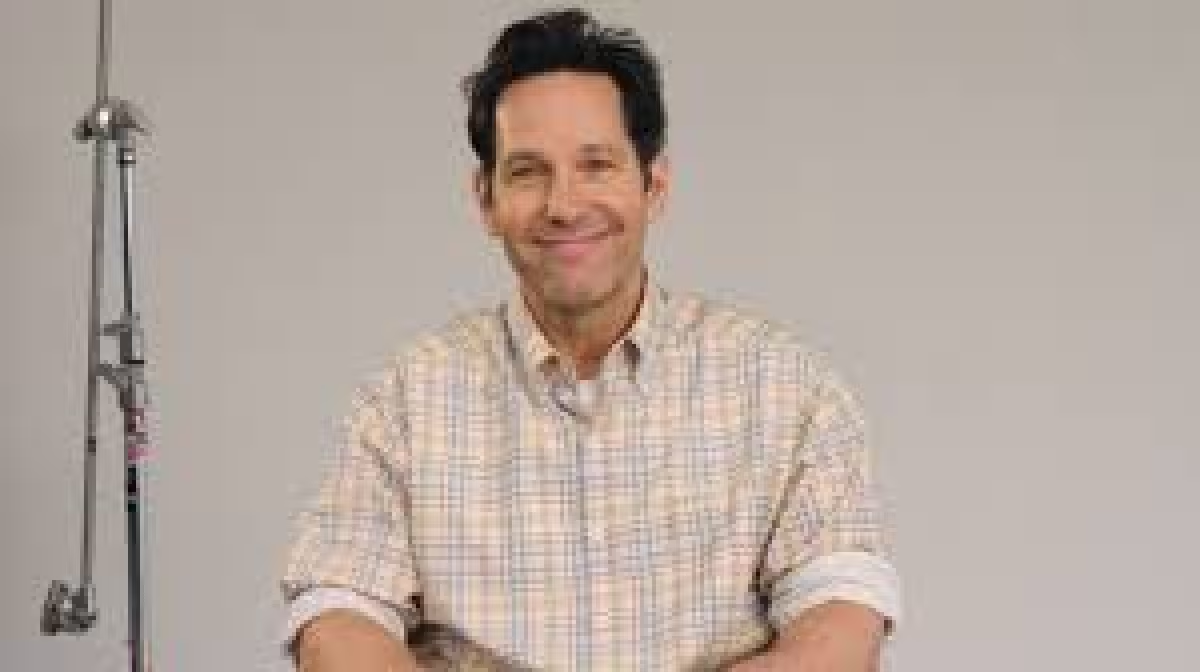
The new images perform a quick piece of storytelling: one frame frames Jonas and Rudd together in a way that reads like an exchange between a pop figure and a quieter performer, another aligns Jonas and Havana Rose Liu, signaling a crossover between celebrity and the smaller-band world at the movie’s center. Those visuals reinforce the review’s central claim that Carney has cast performers able to carry both intimacy and a more mainstream pop presence.
The film’s plot, as described in coverage, centers on a wedding band called the Bride and the Groove and a meeting between a wedding-band singer and a pop star. That setup is exactly Carney’s lane — inside-the-band vantage points, private grief and the possibility of repair through music — but a detail in the story unsettles pure nostalgia: a member of the Bride and the Groove insists they are not rock stars, calling themselves "human jukeboxes." The line undercuts glamour and reframes the film as a negotiation between celebrity gloss and communal musicianship.
That friction is the movie’s most interesting move on paper. Carney’s films often ask viewers to feel for small musical moments; making the band self-aware enough to deny rock-star status threatens the easy uplift of a pop cameo. It shifts the drama: is the pop star a catalyst for healing, or an ornament against which ordinary players must reassert their value?
The published review and the studio stills point in the same favorable direction — they vouch for Rudd and Jonas as a workable pairing — but neither specifies what Jonas actually does within the story. His presence is visible; the narrative function of that presence remains unspecified in the material released so far. That absence leaves a practical question for audiences: is Jonas carrying a cameo of star power, a full supporting role, or something more elaborate?
For readers who want more context on the casting and chemistry, our feature on the pair, Paul Rudd and Nick Jonas Forge an Unlikely Pair in John Carney’s Power Ballad, explores how the actors fit into Carney’s creative world: Other recent pieces touch on Jonas’s public life and how audiences have seen him off-screen: and how Rudd’s real-life surroundings reacted to the pairing:
What matters next is concrete: distribution details and a fuller cast description. If Carney’s history is any guide, the film will live or die by the musical moments — the scenes in which the Bride and the Groove actually sing together and the pop element either meshes or jars with the band. The current evidence suggests Carney has the right performers in place; the remaining question is whether the movie will let those performers create the small, believable musical truth that has made his earlier films stick.



