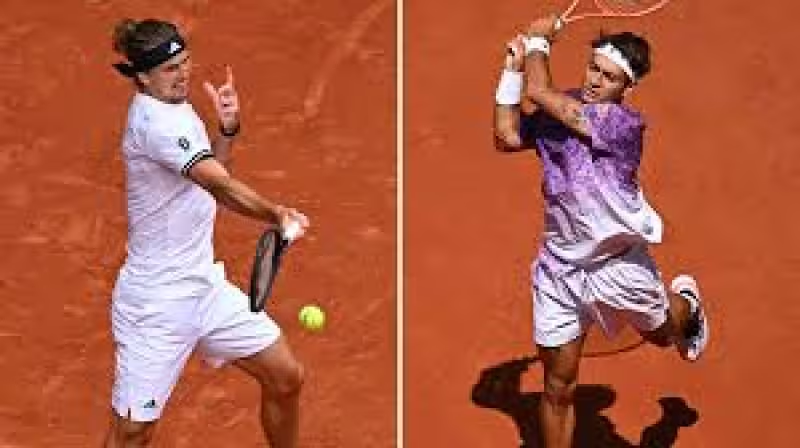
Alexander Zverev and Jakub Mensik meet in the French Open men's semi-finals, with Mensik — the 26th seed and a Czech 20-year-old — set to serve first in the match that will decide a place in the final.
The immediate prize is simple: a spot in the Paris final. Zverev arrives as the second seed and the favourite for a first Grand Slam title after three previous runner-up finishes; Mensik is bidding for his first major final. The contrast could not be cleaner on paper. Naomi Broady captured the view of Zverev's momentum succinctly: "I think Alexander Zverev has looked fantastic so far."

Mensik's run to the last four has drawn attention for a different set of reasons. Observers note a willingness to vary his game, repeatedly rushing the net and mixing up his patterns rather than remaining a pure baseline aggressor. "I have noted how many times Jakub Mensik has come to the net throughout the tournament," said Mark Woodforde, and he added a clear condition for the Czech's hopes: "If he can come out and dictate, then it could be his day."
The other half of the draw will provide its own curiosity. Flavio Cobolli meets Matteo Arnaldi in the opposite semi-final; Arnaldi is world number 104, the lowest-ranked man to reach the Paris last four since 1997. That run underlines the unpredictability of this fortnight and leaves the Mensik–Zverev match as the defining moment for the night: youth and variety against experience and sheer pursuit of a missing prize.

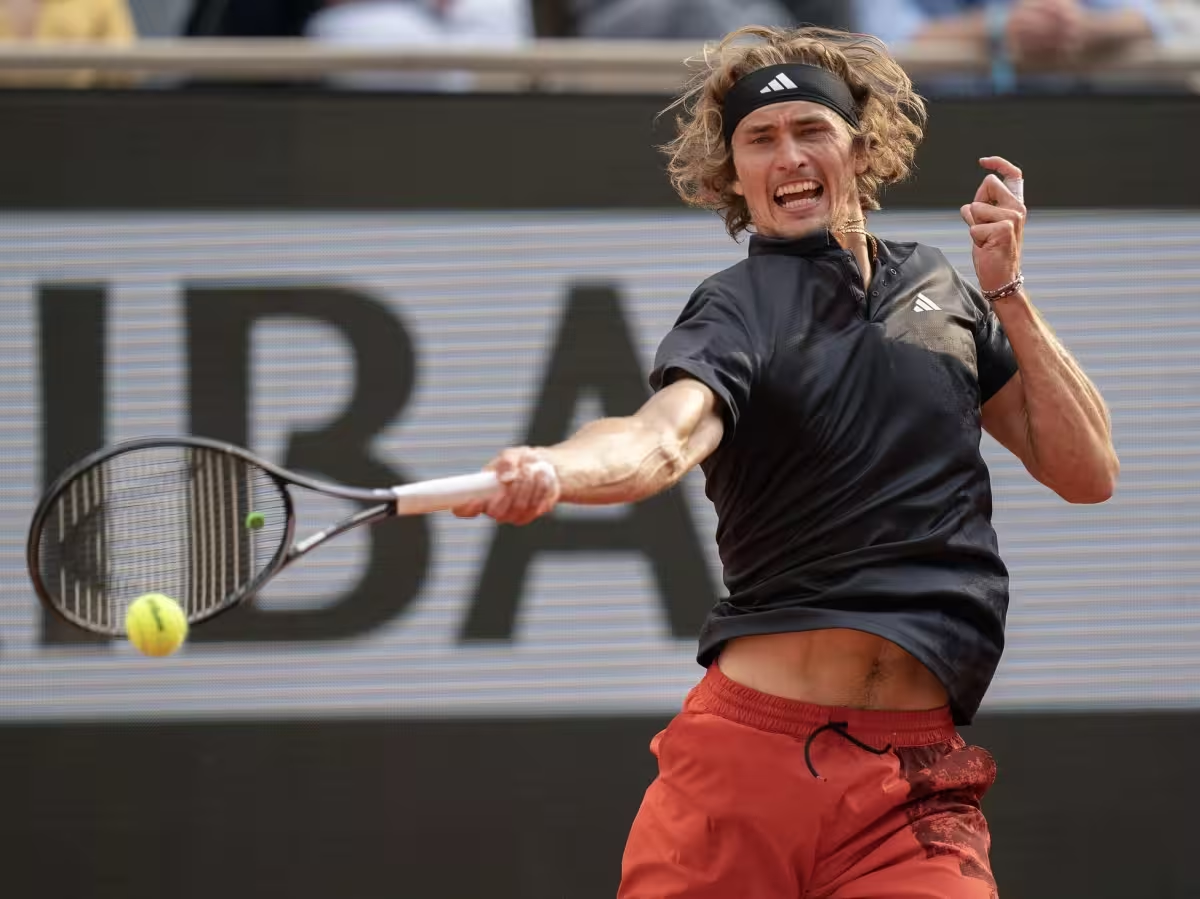
Practical detail matters in a match this tight. Mensik serving first gives him the immediate chance to set the tone with his first-serve pattern and early forays to the net. Zverev's form, meanwhile, has been widely praised — Broady added that she believed "he has had enough time to get his head around Jannik Sinner going out, who has become his arch nemesis." That extra mental settling could matter at the crucial swings of a best-of-five match.
What to watch when the match begins is clear and measurable. Mensik's net approaches are not a stylistic tic; they are his strategic lever. If he can convert those for quick points and drag Zverev off the baseline, he forces the German to play more half-volleys and shorten points — terrain that favours an aggressive, younger opponent. If Mensik's "weapons were in operation in previous rounds," as Woodforde observed, he can manufacture the short points that neutralize Zverev's power.
On the flip side, Zverev's path to his first major depends on the opposite script: keeping Mensik pinned deep, using his serving strength and heavy ball to prevent the Czech from stepping in, and leaning on the experience of deep Grand Slam runs. The second seed's status as favourite is not just reputation; it is built on repeated deep runs in majors, and on-court control would tilt the match toward him.
The deciding unresolved fact is the one that has threaded through every preview: which side will win the battle for control. The sharp question left for Paris is whether Mensik can impose a net-forward game early and often; if he does, he will reach his first major final. If he cannot, Zverev's form and favourite status point to him finally clearing the Grand Slam hurdle and advancing to the final in Paris.