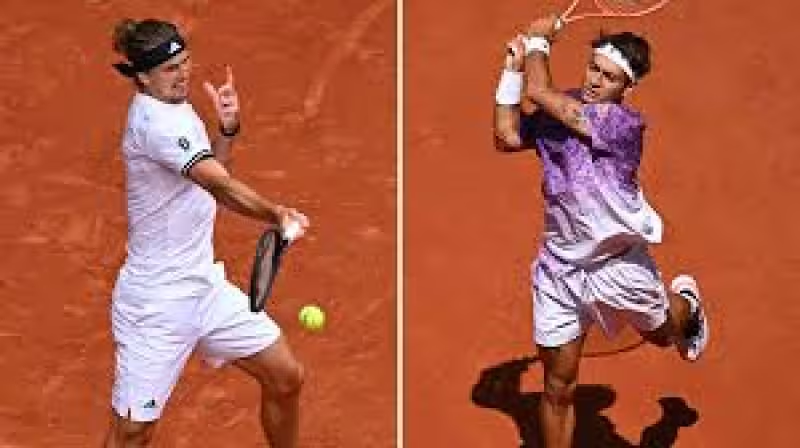
Jakub Mensik and Alexander Zverev meet in the French Open 2026 men's semi-final at 8:30 a.m. ET, a heavyweight rematch that pairs Zverev’s Grand Slam hunger against Mensik’s growing reputation for upsetting top opponents.
The match carries immediate weight because the two met only last month in Madrid, where Zverev edged Mensik 6-4, 6-7, 6-3 after Mensik had a break in the deciding set. Zverev arrives having lost only one set en route to his 11th Grand Slam semi-final and as the 2024 runner-up at Roland Garros; he has not won a major title before this match. Mensik, the 26th seed here, pushed through an exhausting route to the last four — he played two five-setters earlier in the tournament and still had two days off after his quarter-final win over Joao Fonseca.

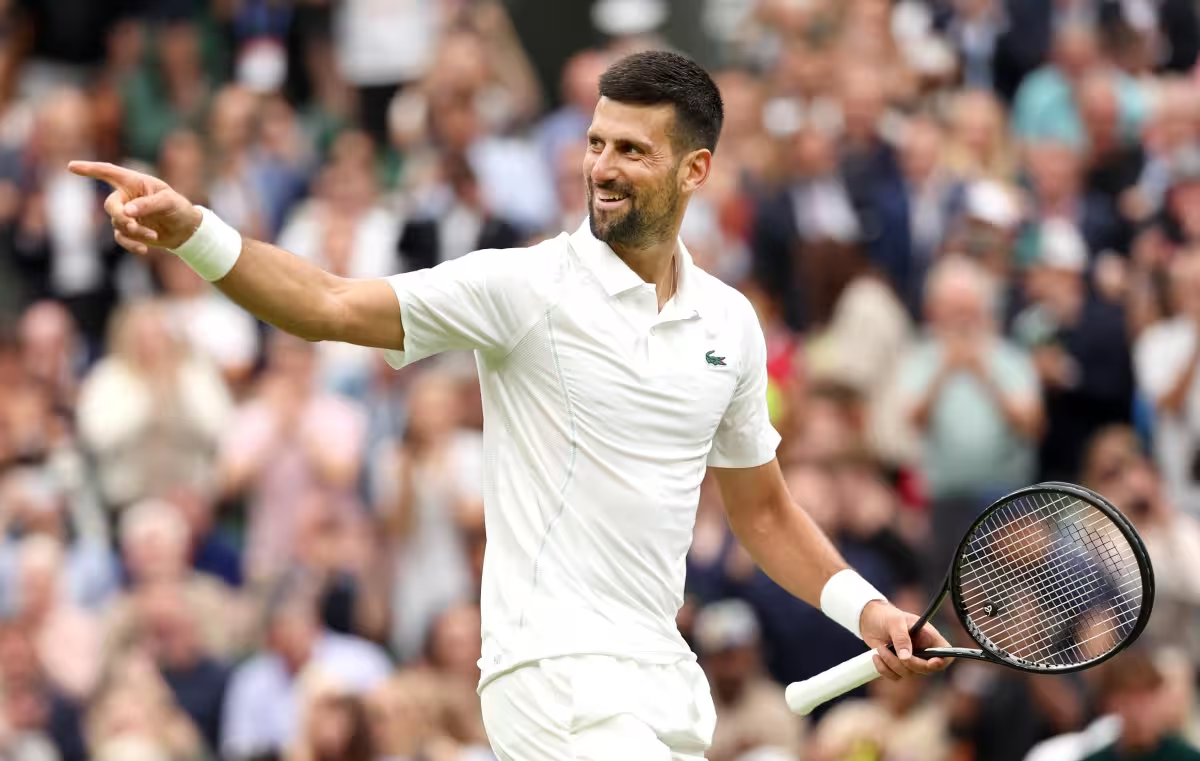
Those figures matter on the scoreboard. Zverev has spent four hours less on court during this fortnight than Mensik, a margin that usually favors the fresher player. Mensik’s path, however, is built on high-profile scalps: he beat Novak Djokovic in three sets to win the Miami Open last year and took Jannik Sinner down in Doha this season. Those wins are the reason Mensik is not merely an underdog with an unusual run; they mark him as someone who raises his level against elite opposition.
Context sharpens the matchup. The draw opened up after Jannik Sinner and Carlos Alcaraz exited early, giving Zverev a potentially more favourable route to the last four. Mensik has been described during the fortnight as raw and unproven at the deepest stages of a major — yet his recent results argue that rawness has a competitive edge when he faces big names on big courts.
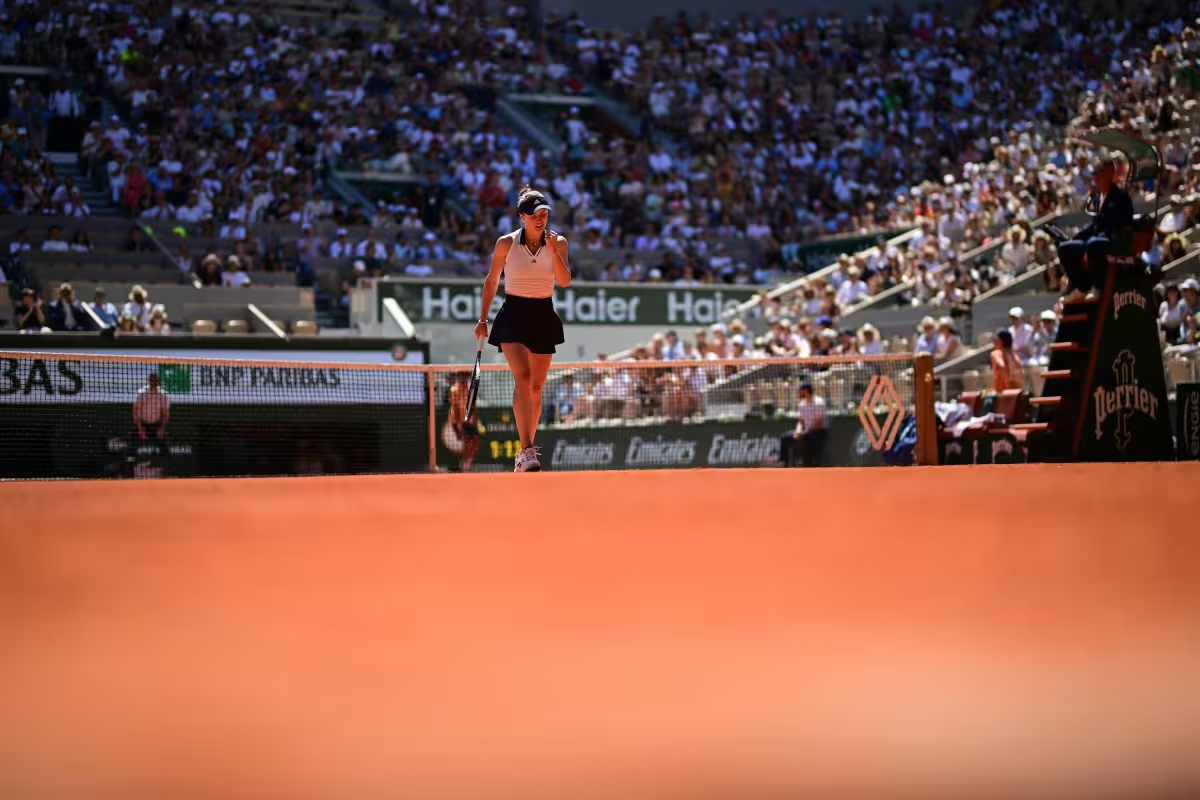

The real friction is physical versus psychological pressure. Zverev’s conservation of energy matters: fewer hours on court and only one set dropped suggest he carries the sharper legs into a semi-final. Still, observers point to Mensik’s peculiar appetite for pressure matches. One former champion compared Mensik to a player born for big moments; another noted both men have strong backhands, gave Zverev the edge on serve and Mensik the edge on forehand, and argued that Mensik plays better against better players — that if he applies scoreboard pressure and Zverev feels the nerves, Mensik can produce something special.
Practical details before the first ball: Mensik arrived on court ahead of Zverev and will take the court as the 26th seed, carrying the accumulated toll of two marathon matches but also the momentum of landmark wins earlier in his career. Zverev’s semifinal is his 11th appearance at this stage across majors; he is the more experienced in late-slam moments but still hunting a first title. The Madrid meeting last month is the most recent tactical reference — Zverev found a way in three tight sets after Mensik had led in the decider — so any repeat will hinge on whether Mensik can convert early breaks and keep Zverev from settling into rhythm on serve.
What to watch when play begins: the early service games and the forehand-to-backhand patterns that defined their Madrid match; whether Mensik can manufacture scoreboard pressure without burning energy early; and whether Zverev’s serve and match management hold under the unique stress of a Grand Slam semi-final, where he has come close before but never closed the title gap. If Mensik can force tight, momentum-shifting moments, his record against top players suggests he will be dangerous. If Zverev keeps the points short and avoids lapses, his fresher legs and marginal serving edge should carry him through.
The unresolved question going into the match is simple and decisive: can Mensik reverse the Madrid result and use his appetite for big-stage pressure to derail Zverev’s pursuit of a first major, or will Zverev’s shorter court time and greater experience at the business end of slams finally convert into the title-clinching run he has not yet managed? The answer will determine who advances to the French Open final and which storyline — breakthrough or breakthrough denied — follows Roland Garros to the end.