



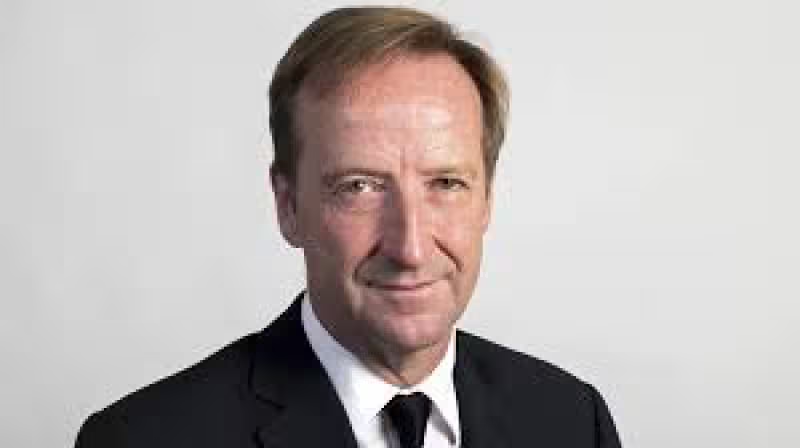
Sir Alex Younger, who ran Britain’s overseas intelligence service from 2014 to 2020, has died at the age of 62; Blaise Metreweli said the cause of death was cancer. Younger — known inside the service as "C" and based in an office overlooking the River Thames — served as Britain’s top international spy for six years.
Younger's six-year tenure outlasted the typical five-year stint for British spy chiefs, making him the longest-serving head of MI6 in half a century. That stretch coincided with a period when the service expanded its use of technology and confronted a range of overseas threats, from international terrorism to a more assertive Russia.

Born July 4, 1963, Younger studied economics and computer science at the University of St. Andrews before joining the British Army in the mid-1980s. He trained at Sandhurst, later rose to the rank of captain and served with the Scots Guards on the British Army of the Rhine and in Northern Ireland. After leaving the Army he answered an advertisement for work with the Halo Trust in Afghanistan; in 1991 he received a tap on the shoulder and joined MI6.
As chief, Younger publicly pushed to broaden recruitment and to strip back some of the romantic mystique around the agency. He repeatedly framed the service as composed of ordinary people doing extraordinary work, and he told audiences that while MI6 sometimes bent rules it did not break the law. He also acknowledged the personal burden of leadership, saying he had hesitated when the opportunity to lead the service arose because he understood the moral and personal responsibilities involved.
The immediate consequence of Younger’s death is felt inside Britain’s intelligence community: the loss of a figure who combined an establishment background with an outward-facing effort to make MI6 less opaque. His office title and tenure underscore the institutional weight of the news — the head of the Secret Intelligence Service, or S.I.S., is a central figure in Britain's response to overseas threats, and Younger occupied that role longer than any of his predecessors for decades.
There are unresolved details. The announcement states cancer as the cause of death, but it does not specify the type of cancer. Nor have any funeral or memorial arrangements been announced. Those omissions leave open immediate questions about how and when the service and the state will mark his passing.
For now, Younger will be remembered both for the length of his stewardship and for the contrast between his patrician, establishment background and his public effort to demystify MI6 — a tension that defined his public portrait. Whether that effort will shape the agency’s future recruitment and public image, and whether MI6 will stage a public commemoration, remain the most consequential open questions following his death.



