



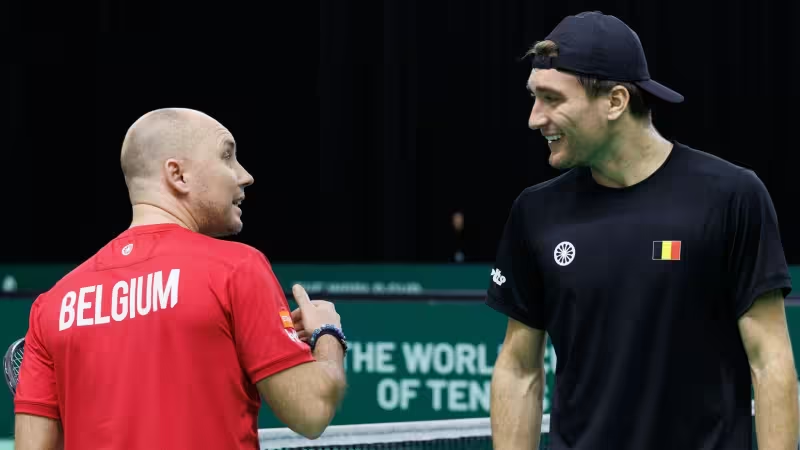
Raphaël Collignon pulled out of the Roland-Garros doubles match he was due to play with Zizou Bergs the day after his shock win over Ben Shelton, his coach said, citing a very small abdominal discomfort and calling the decision purely precautionary.
Steve Darcis, speaking for Collignon’s team, framed the withdrawal as management rather than a crisis: Collignon felt a slight ache in his abdomen after an intense second-round singles victory, so he and his team opted not to push through a doubles match scheduled the next day.

The decision had immediate practical consequences. Collignon and Bergs had been listed as the third match on Court No. 13 versus Petr Nouza and Neil Oberleitner on the tournament schedule, but the Belgian pairing did not take the court after Collignon declared forfait.
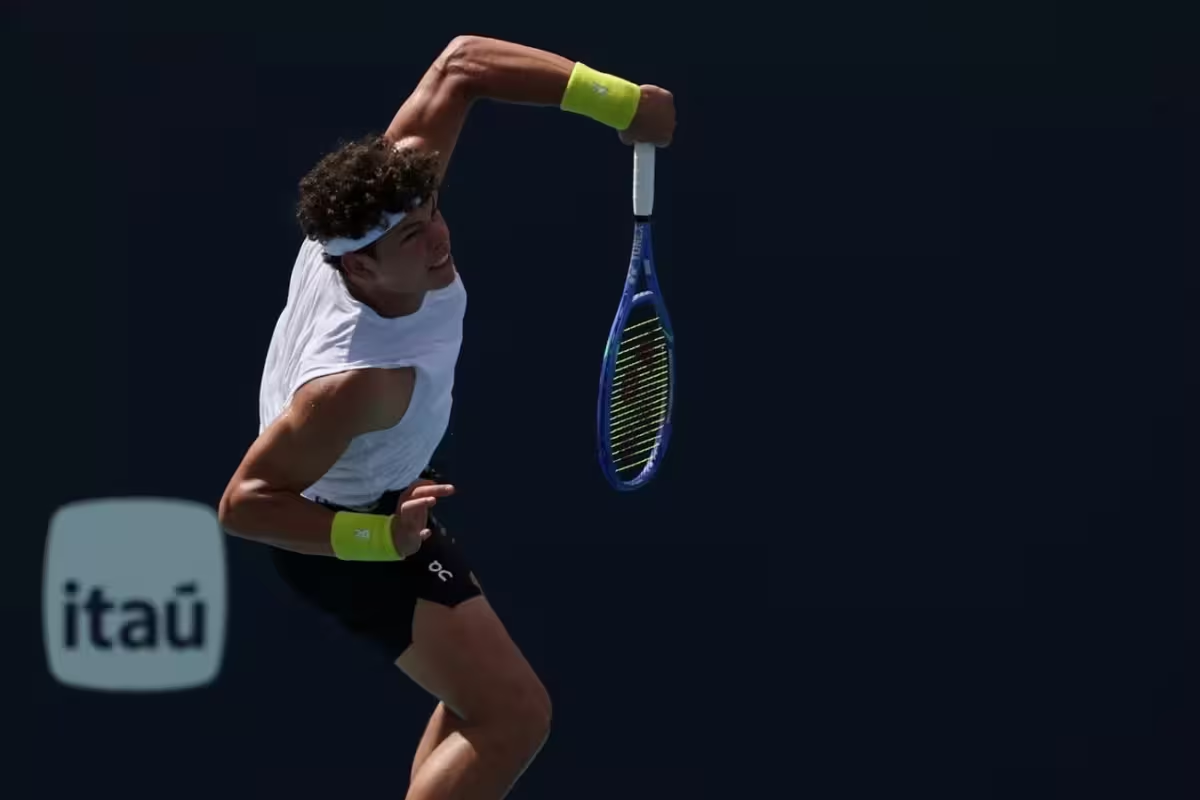
The weight of the choice was evident: Collignon had just beaten Ben Shelton, a result that propelled him into the third round and raised expectations. Darcis said Collignon “played at full intensity” against Shelton and served very well despite the discomfort, but the team had agreed in advance that a small problem or fatigue would be treated by stopping short of continuing in both draws.
That planning sits at the heart of the friction in the story. Darcis was clear that the withdrawal was cautious — Collignon had seen the doctor and his physiotherapist, had treatment planned and would rest after a late night — yet it came immediately after a high-effort upset, drawing attention to whether the abdominal issue was truly minor or a symptom of accumulated fatigue.
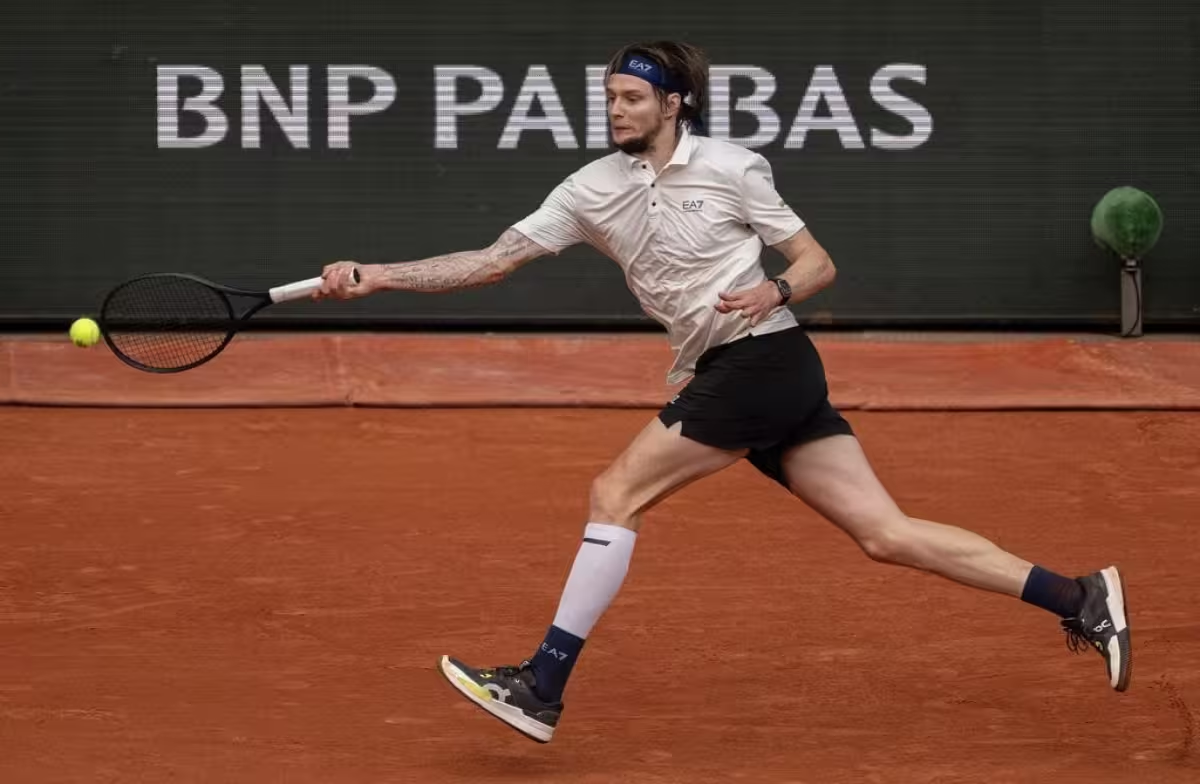

For Collignon the calculus was simple: preserve his singles chances. Darcis warned that the upcoming match against Matteo Arnaldi would be very physical — Arnaldi, he pointed out, has been ranked as high as 30th in the world and looked to be returning to form — and the team wanted Collignon as fresh as possible for that test.
Collignon followed the plan and took the court for the third-round singles match, but the margin between precaution and consequence was narrow. The match against Arnaldi stretched into a near five-hour contest and was decided in a super tie-break; Collignon fell short and did not reach the second week in Paris.
The sequence — an upset over a top opponent, a doubles withdrawal called a precaution, then an exhausting loss in the next round — answers part of the lingering question about severity: the abdominal problem kept him out of doubles but did not prevent him from competing in singles. It also leaves open a sharper point the team acknowledged in advance: intense matches have a cost, and managing that cost sometimes requires giving up opportunities in other events.
For Collignon, the immediate consequence was clear. The protective move preserved his ability to play the bigger singles match, but it could not guarantee recovery or victory against an opponent of Arnaldi’s calibre. The episode underlined the trade-offs smaller teams and players must make at Grand Slams between seizing momentum in multiple draws and protecting a body after an unexpectedly demanding performance.
Whether the precaution extended Collignon’s tournament life — or simply postponed the toll until a marathon showdown — is a narrow, practical judgment his team already made; the result in Paris shows it was not enough to carry him into the second week.



