



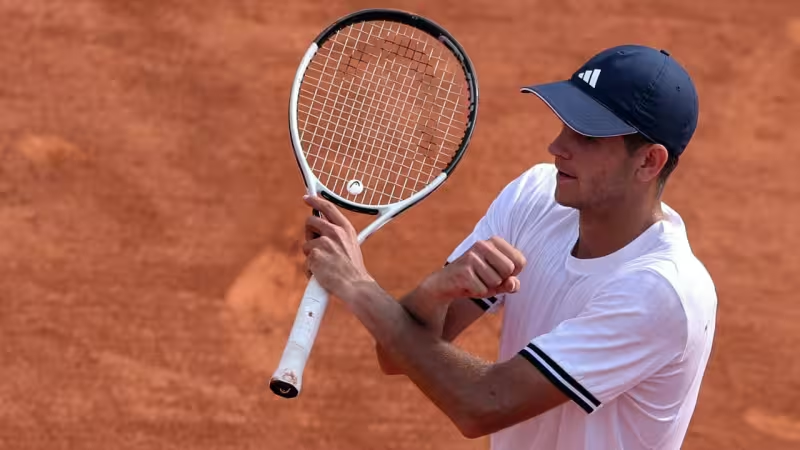
Rafael Jodar advanced to the third round of Roland Garros on May 29, but the result came with a jarring coda: during a changeover he threw a water bottle to a member of his team and, as he left the court, pushed a ballgirl, actions that were captured and circulated widely online.
Interest in "fonseca tennis" rose alongside the footage because Jodar and João Fonseca have been tracked together all season — peers at 19, recent rivals and both visible at Roland Garros — and fans searching for Fonseca updates found themselves pulled into the debate over Jodar’s conduct on the same day.

The match itself was a five‑set test. Jodar beat American Alex Michelsen 3 sets to 2, the scores 7–6 (7/2), 6–7 (7/5), 4–6, 6–3, 6–3, and secured a place in the third round where he will face compatriot Pablo Carreño Busta. Video of the post‑pause incident — Jodar throwing a bottle to his team during a break and shoving the ballgirl as he exited the clay court — spread across social platforms within minutes, prompting a wave of criticism that quickly became the dominant frame of the match for many viewers.
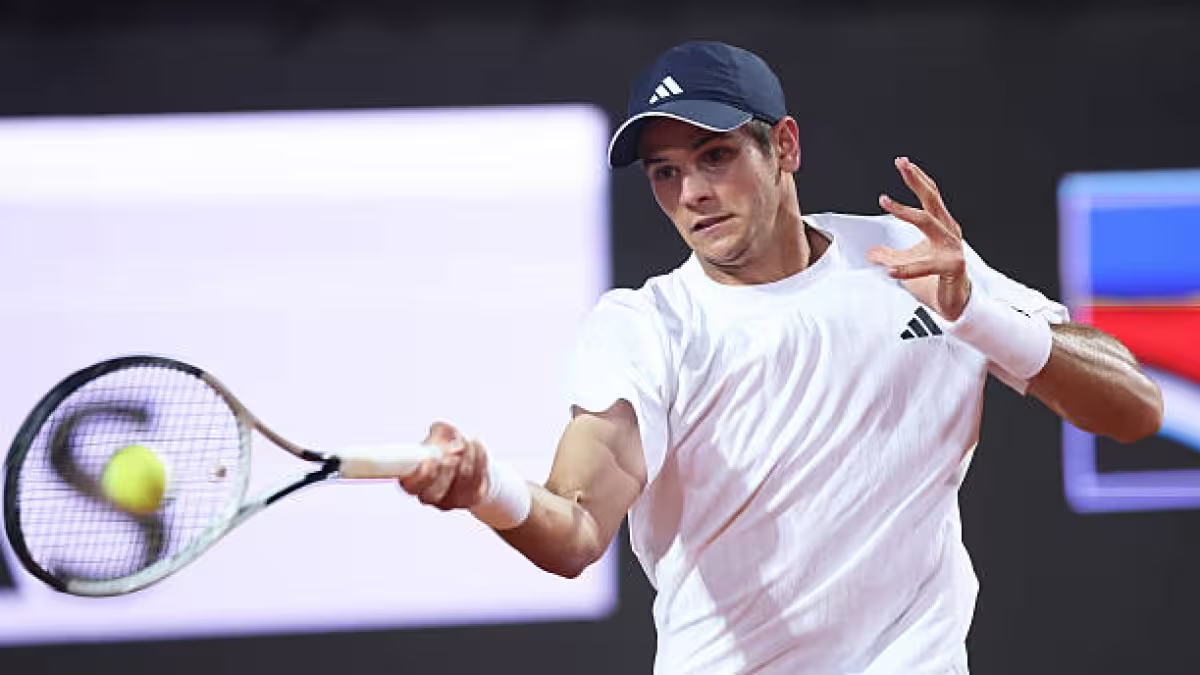
That online reaction sits at odds with the numbers on paper. A five‑set victory at a Grand Slam is significant: it moved Jodar through the draw and preserved his momentum in Paris. But the moment a player pushes a ballgirl changed the conversation. Supporters pointed to the grit required to recover from a two‑set deficit; critics said the gesture was indefensible and eclipsed the sporting achievement. The clash between those views has kept the incident trending even as tournament play continues.
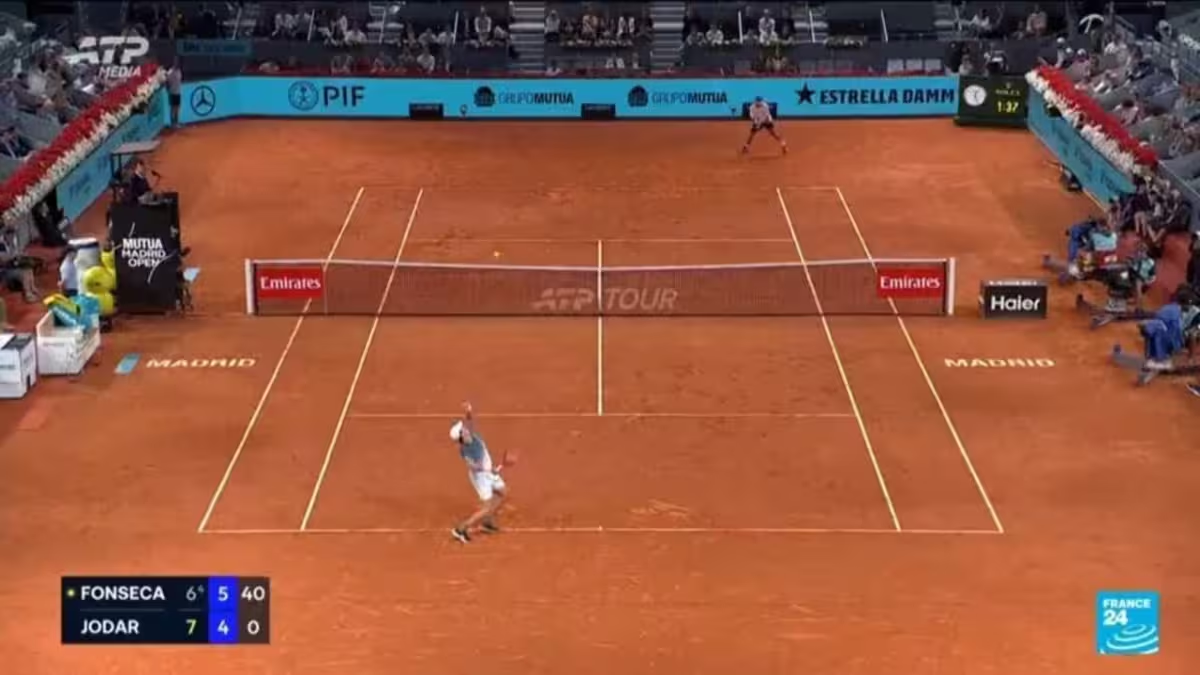
The episode also arrived against the backdrop of a budding comparison between Jodar and Fonseca that has followed both players this spring. Jodar defeated Fonseca 2–1 at the Madrid Masters at the end of April, a clay duel in which Fonseca broke his racket in the third set; Jodar then overtook Fonseca in the rankings in mid‑May after a run to the Rome quarterfinals, appearing at No. 29 while Fonseca sat at No. 30. Fonseca, for his part, staged a notable moment at Roland Garros the same day by taking the third set against Novak Djokovic and finishing it with a powerful ace highlighted in live coverage, a sequence that helped drive separate searches for "fonseca tennis." Those intertwined storylines — rivalry, rank shifts and headline moments for both young players — explain why attention did not stay focused solely on the scoreline.
Despite the clarity of the result, one concrete gap remains: there is no verified record in the material available that an official sanction was announced at the tournament in the hours after the incident. Tournament discipline, and whether it will be applied before Jodar’s next match, is the outstanding question. The draw is set — Jodar faces Pablo Carreño Busta in the third round — but the governing response, if any, is not.
That unanswered decision is the consequence that will matter most. If officials impose a penalty before Jodar meets Carreño Busta, the tournament will have signaled that conduct can alter a player’s path at a Grand Slam; if they decline to act, the social‑media uproar may mark a missed moment for enforcement and leave Jodar’s victory remembered more for the shove than the comeback. The single, urgent question now is whether Roland Garros will rule on the shove before Jodar walks back onto the clay.



