



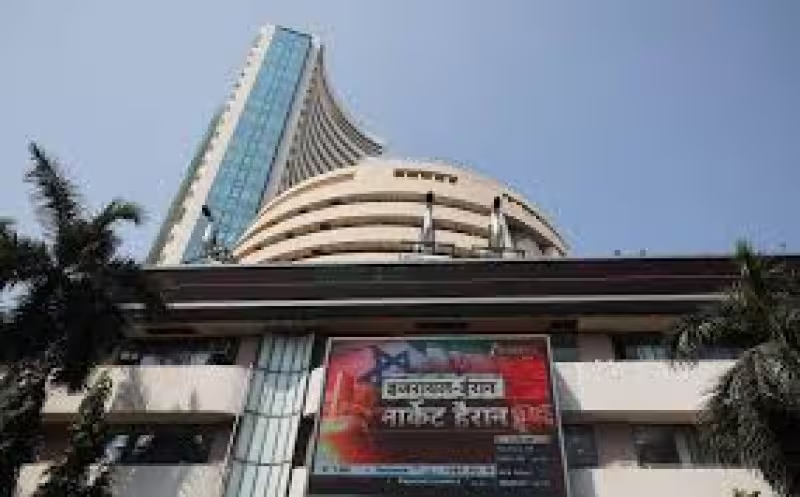
Indian markets plunged in the final hour on Friday as late selling tied to an MSCI index rejig and lingering geopolitical worries knocked the benchmark indexes sharply lower.
The BSE Sensex closed 1,092.06 points lower at 74,775.74, a drop of 1.44 per cent, while the NSE Nifty50 slumped 359.40 points to finish at 23,547.75, down 1.5 per cent. Both indexes retreated sharply from intraday peaks — the Sensex had reached 76,220.02 and the Nifty had touched 24,002.8 earlier in the session.

Market breadth was weak: 2,507 stocks fell on the BSE against 1,568 advancers. Losses swelled in the final half-hour of trade as MSCI's May index rejig came into effect at the close, a move that hits passive funds that typically adjust portfolios at the end of rebalancing day.
The mechanical pressure from the rebalancing is clear: IIFL Capital expects India's weight in the MSCI Emerging Markets Index to drop to around 11.2 per cent after the latest exercise, down from about 20 per cent in July 2024. That prospective fall in passive inflows came as traders booked profits after a recent run-up and as investors weighed broader risks.



Geopolitics and oil added to the strain. Investors were grappling with uncertainty over a potential US-Iran peace deal on Friday, and concerns about still‑elevated crude prices weighed on equities. Brent crude futures, while down about 19 per cent during May, remain more than 27 per cent above levels seen before the Iran conflict — a level that keeps pressure on import-dependent India.
Sector moves showed the unevenness behind the headline numbers: heavyweight financial stocks fell 1.2 per cent and information technology names lost 0.9 per cent on the day. Monthly swings reflected the same mixed picture — Reliance Industries dropped 7.7 per cent, ONGC declined 11.4 per cent and ITC fell 8.9 per cent over the month, while Adani Enterprises surged 22 per cent after US authorities dropped fraud charges against Gautam Adani. Metals names were among the winners: Hindalco rose 8.6 per cent and National Aluminium gained 6.3 per cent during the month.
The recent run-up left markets vulnerable. The Nifty fell 11.3 per cent in March before rebounding 7.5 per cent in April, a pattern that has left investors open to profit‑taking and abrupt reversals when flows change — as they did at the close on Friday.
The session exposed a persistent tension: passive, end‑of‑day rebalancing can force large trades that move prices mechanically, but that selling collided with genuine uncertainty about whether US‑Iran tensions have eased enough to keep oil prices and risk premia low. Arun Malhotra captured that unease bluntly: "We are unlikely to see a consistent rise in Indian stocks unless the uncertainty over the US-Iran conflict is clearly behind us".
Markets closed with the sense that two forces — the MSCI reweighting shrinking India's passive allocation from the highs of July 2024 and an unsettled geopolitical backdrop that keeps oil prices elevated relative to pre‑conflict levels — will determine near‑term direction. For now, the Nifty 50's retreat on Friday leaves the rally from April looking fragile and investors watching whether the rebalancing and geopolitical headlines will continue to drive late‑day volatility.



