



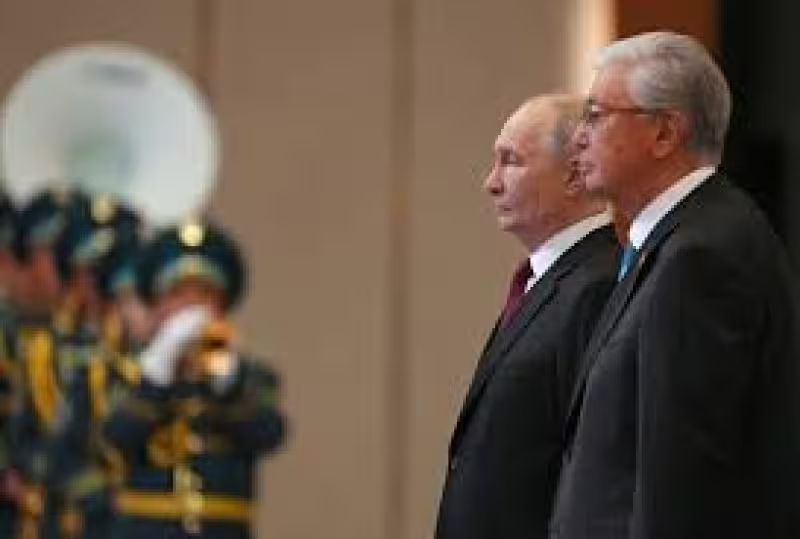
Russia and Kazakhstan on Thursday signed a $16.5 billion agreement to build Kazakhstan’s first-ever commercial nuclear power plant, a deal sealed in Astana during high-level bilateral talks between President Vladimir Putin and Kassym-Jomart Tokayev.
The agreement names state-owned Rosatom as lead contractor to build the facility near the village of Ulken on the southeastern shore of Lake Balkhash and tasks a Russian export loan with covering roughly 85% of the total cost.

The project scope is specific: Kazakhstan’s atomic energy agency said the plant will feature two advanced VVER-1200 Generation III+ reactors. Rosatom won the primary construction mandate over China National Nuclear Corp., France’s EDF and Korea Hydro & Nuclear Power — a competitive victory that places Russia at the center of the nascent Kazakh nuclear sector.
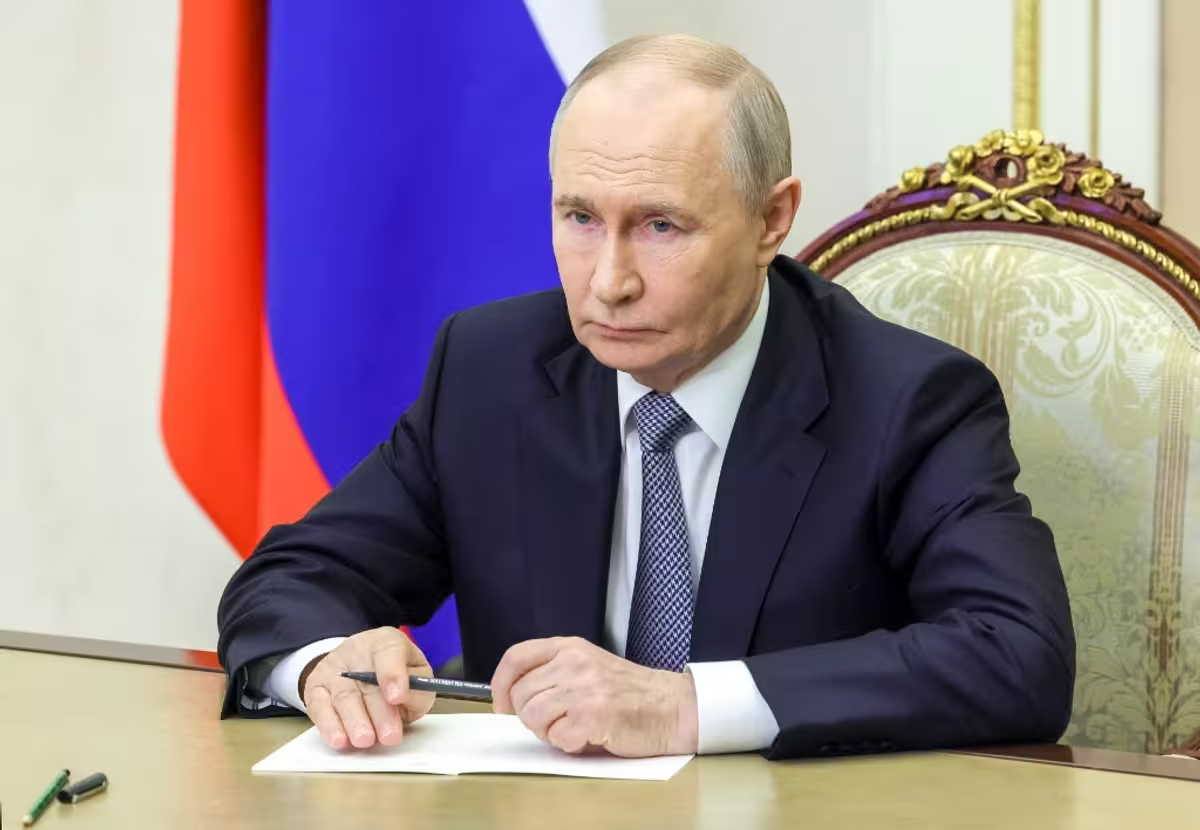
Putin framed the deal as more than a single power station. He called it "a flagship project in the field of peaceful nuclear energy" and said "the commissioning of the plant will make a significant contribution to the energy supply of the Kazakh economy, helping to provide businesses and households with affordable and clean energy." He added that "we are not simply talking about the creation of a nuclear power plant or construction; we are talking about the creation of an entire industry, including education, personnel training, and so on." At the signing ceremony Tokayev said, "The agreement signed today on the construction of the Balkhash NPP has an important role."
The numbers behind the rhetoric give the deal heft: $16.5 billion in project value, two VVER-1200 reactors and a financing structure that places the bulk of the bill — roughly 85% — on a Russian export loan. For a country that the World Nuclear Association lists as the world’s largest producer of uranium, the package does three things at once: it promises new domestic power capacity, it seeks to seed a homegrown nuclear industry, and it brings Russian capital and engineering tightly into Kazakhstan’s energy mix.
That mix matters because Kazakhstan has for decades relied on aging coal-fired generation and struggled with electricity deficits in parts of the country. The government and industry officials have long argued that large-scale nuclear capacity could stabilize supplies and reduce reliance on fossil fuels; the new plant is being pitched by both presidents as a way to deliver cleaner, cheaper power to households and businesses.
But the deal also carries an obvious geopolitical and economic tension. Observers have described the agreement as advancing Kremlin efforts to anchor its economic and geopolitical influence within former Soviet states amid Western sanctions. By providing finance that covers roughly 85% of the project and handing Rosatom the primary construction role, Moscow secures not only work for its national champion but decades of technical, operational and institutional ties to Kazakhstan’s nuclear program.
There is a practical puzzle beneath the ceremony. Kazakhstan sits atop the world’s largest uranium production, yet until now has not hosted a commercial nuclear fleet of this scale. The state’s decision to import reactor technology and near-total project finance binds the country’s future power generation to foreign hardware and to the training and supply chains Putin described. Rosatom’s mandate will include construction and, by implication, the long-term involvement that comes with operating and fueling reactors — roles that will shape regulatory, educational and workforce arrangements inside kazakhstan for years to come.
The immediate next step is construction under Rosatom’s lead near Ulken on Lake Balkhash; the signed agreement clears the legal and financial path for that work to begin. How quickly reactors rise, how much of the promised industry and training is built inside Kazakhstan rather than supplied from Russia, and how energy prices and grid reliability respond are the practical measures that will decide whether the project fulfills its stated promise.
For now, both capitals are selling a simple narrative: a major investment to secure energy and build an industry. The deal’s scale and the financing terms make it likely that Russia will remain centrally involved for decades — a strategic and economic tether that will test Kazakhstan’s balance between energy independence and close ties to Moscow even as film shoots and other ventures continue in the country, such as Jackie Chan’s upcoming trip to shoot Armour of God IV: Ultimatum.



