On May 28, President Ilham Aliyev told residents of the village of Boyuk Galaderesi in Shusha that he has been marking May 28 – Independence Day – in Azerbaijan's liberated lands since the “glorious Victory,” and that doing so has “already become a tradition.”
Speaking during a meeting with local people, Aliyev said, “Since our glorious Victory, I have been celebrating this beautiful holiday, May 28 – Independence Day, in the liberated lands, and this has already become a tradition. I believe it is the most correct choice.” He added that “Independence Day is very dear to each of us.”

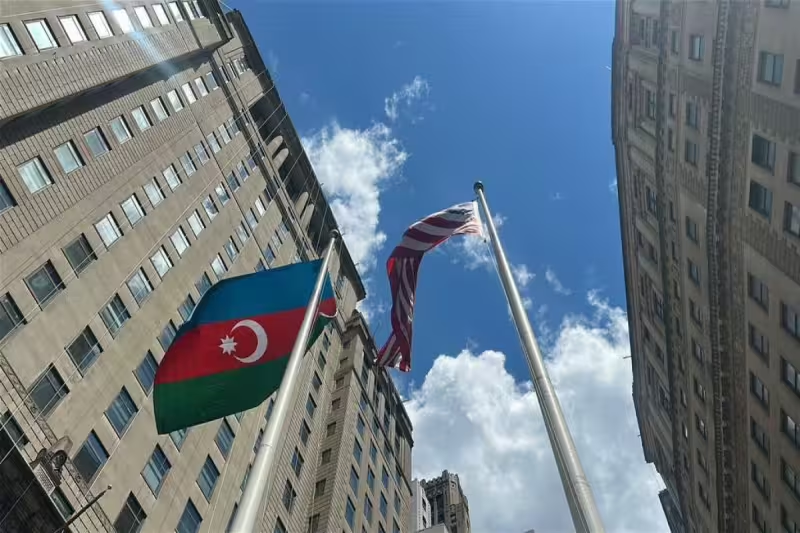
The president’s remarks came on the day he laid flowers in front of the Victory Arch erected in Victory Park in Khankendi city, a commemorative act officially recorded on May 28. Abroad, the Permanent Mission of the Republic of Azerbaijan to the United Nations joined members of the Azerbaijani-American community and fellow New Yorkers at an annual flag-raising ceremony in New York City dedicated to the 28 May Independence Day of the Republic of Azerbaijan.
Those public gestures tied the holiday to specific places: the liberated lands where Aliyev chose to celebrate, the Victory Arch in Khankendi city where he paid tribute, and a diaspora ceremony in New York City that marked the day for Azerbaijanis and supporters overseas.
Context provided by official sources links the practice of marking May 28 in the liberated lands to the celebrations that followed what is described as Azerbaijan’s Victory. The Victory Arch in Victory Park in Khankendi city has been singled out as a focal point for remembrance on the holiday, and the New York flag-raising has been characterized as an annual event organized by Azerbaijan’s mission to the United Nations alongside community members.
The juxtaposition of ceremonies on the ground in recently retaken territory and a diplomatic, diaspora-focused ritual in New York highlights two parallel aims: to root state celebration in reclaimed domestic sites and to sustain ties with Azerbaijanis abroad. The pattern Aliyev described — returning each year to liberated lands to mark the state holiday — underscores an attempt to make the geography of Independence Day itself part of official memory and ritual.
That framing carries immediate political weight. By repeatedly staging Independence Day observances in liberated areas and publicly linking those acts to the Victory, the presidency is reassigning symbolic capital to those places and to the monuments that now anchor them. At the same time, the participation of the Permanent Mission in New York and the presence of the Azerbaijani-American community show the same message being projected beyond the country’s borders.
Aliyev’s declarations and movements since May 28 make clear that celebrating in the liberated lands is intended to be more than a one-off commemoration; it is being presented as a settled practice. The most direct conclusion from the available facts is this: the presidency has converted the choice of venue — the liberated lands and their monuments — into the central element of how it will mark Independence Day going forward.