



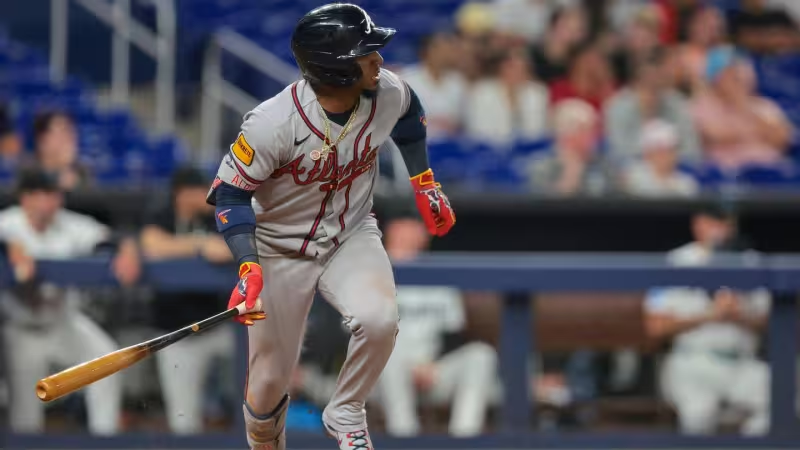
Ozzie Albies — a player the Atlanta Braves have relied on when healthy — has cooled sharply after a hot start, slashing.123/.215/.123 over his last 15 games and managing just seven hits and four RBI in that stretch.
Albies was one of Atlanta’s best hitters through the first month of the season, but the last couple of weeks have been a clear step back: over those 15 games he drew five walks, struck out eight times and posted a.338 OPS. The rawness of the skid matters because Albies has not played in back-to-back full seasons since 2018 and 2019, and injury has already cut into his playing time this year.

The numbers behind the slump are stark and specific. In the recent 15-game span Albies has seven hits, four RBI, five walks, eight strikeouts and a.338 OPS — a run of form that contrasts sharply with how he began the season and with the role he normally fills for the club.
That contrast lands against the larger backdrop of a team that remains one of baseball’s best offenses this season. The Braves have continued to produce at a high level, which has softened the blow of Albies’ cold stretch and kept Atlanta competitive while he works his way back to form.
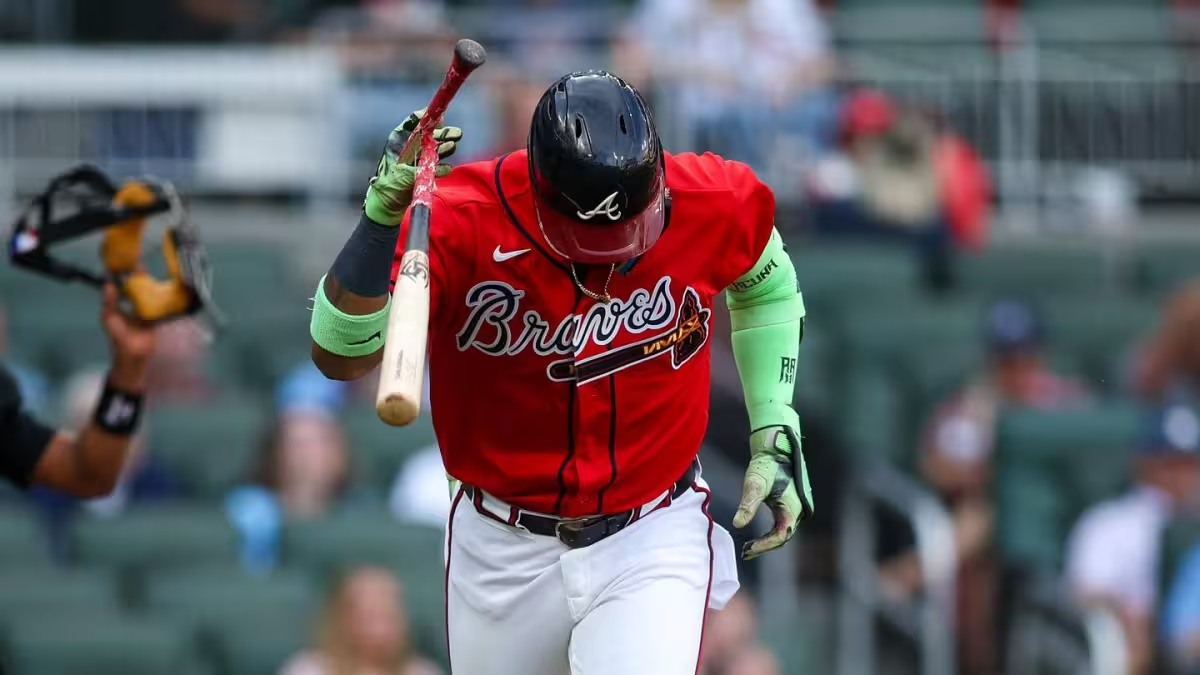
There is a tension inside Albies’ box score: his recent results have cratered, but many of his season-long process metrics remain encouraging. This season he has an excellent strikeout rate of 12.3 percent, a squared-up rate of 28.4 percent, a walk rate of 7.3 percent, a barrel rate of 4.0 percent, and a hard-hit rate of 26.6 percent; his bat speed is 68.9 mph and his chase rate sits at 36.0 percent. Those figures are not neutral—they point to contact quality and swing characteristics that, when they translate to results, have made Albies a high-impact player.
The contradiction matters because it frames the immediate question for the Braves. Albies has a history of high performance when healthy; he has not yet managed back-to-back full seasons since 2018 and 2019, and injuries have reduced his availability in recent years. His early-season success suggested a return to form, but the recent 15-game slide shows how quickly production can swing when playing time and timing are disrupted.
This is not a collapse so much as a compact, alarming drought. Seven hits, four RBI and a.338 OPS in 15 games are the measurable facts. They sit uneasily beside a low strikeout rate and respectable batted-ball metrics for the season. The Braves’ broader offensive strength has masked the slump for now, but it cannot replace the steady contributions Albies provides when he is operating normally.
The most consequential question for Atlanta now is clear: can Albies convert those season-level metrics into consistent results over an extended stretch of games? If he does, the team keeps a top-tier offensive piece intact; if he does not, the Braves will have to reconcile his limited availability and uneven output with the demands of a long season.



