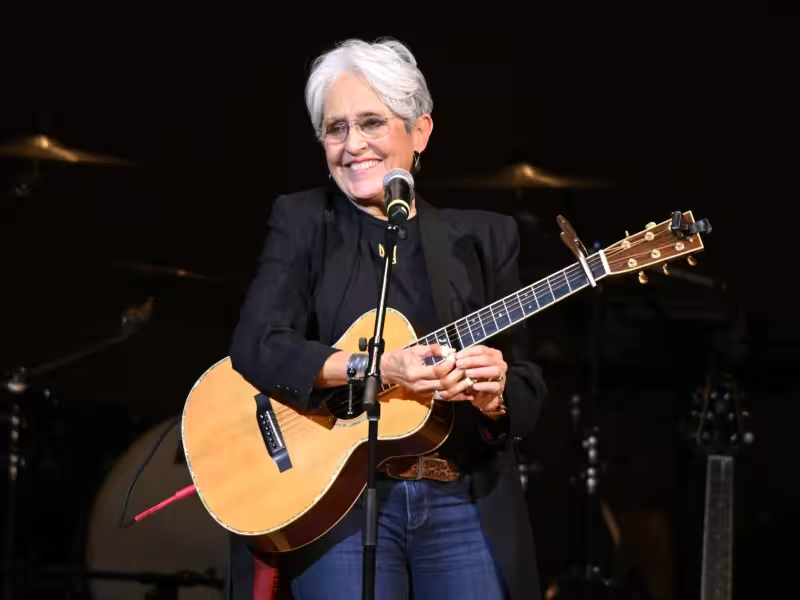
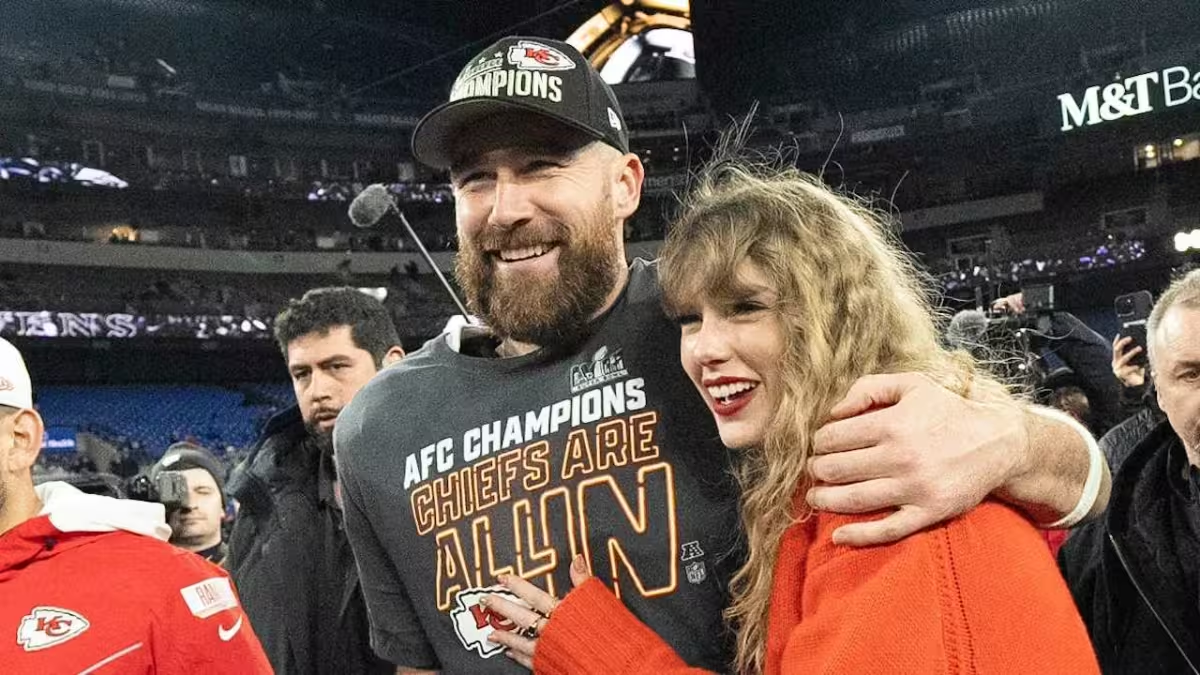
Joan Baez said in a new interview that she is disappointed modern pop stars rarely turn political protest into their music, singling out names like Taylor Swift and Olivia Rodrigo and asking why they don’t take that step on stage.
Baez — the folk singer who marched with Martin Luther King Jr. and protested the Vietnam War — did not accuse today’s performers of silence across the board. “The young people right now, some are writing amazing stuff,” she told the host of Wiser Than Me With Julia Louis-Dreyfus, and “a few are willing to speak out.”

She pointed to artists she believes do cross the line from pop to politics. “Brandi Carlile is,” she said. “Maggie Rogers, my pal, put [it] right out there front and center on the stage at a rally against ICE.” Baez said she understands some of the pressures facing younger stars — “I think I understand where they’re coming from” — but added a blunt question about major stadium acts: “I sort of cock my head at these stadiums filled with brilliant young women songwriters, and why can’t they just take that little step?”
Baez framed the missing mainstream protest song against the unforgettable songwriting of the 1960s. “It’s revealing that the one song that’s used in all of these demonstrations is ‘The Times They Are a-Changin,’” she said, then argued that “the level of that writing from back then hasn’t been approached. No one has approached it. You can’t summon that up, I don’t think.”
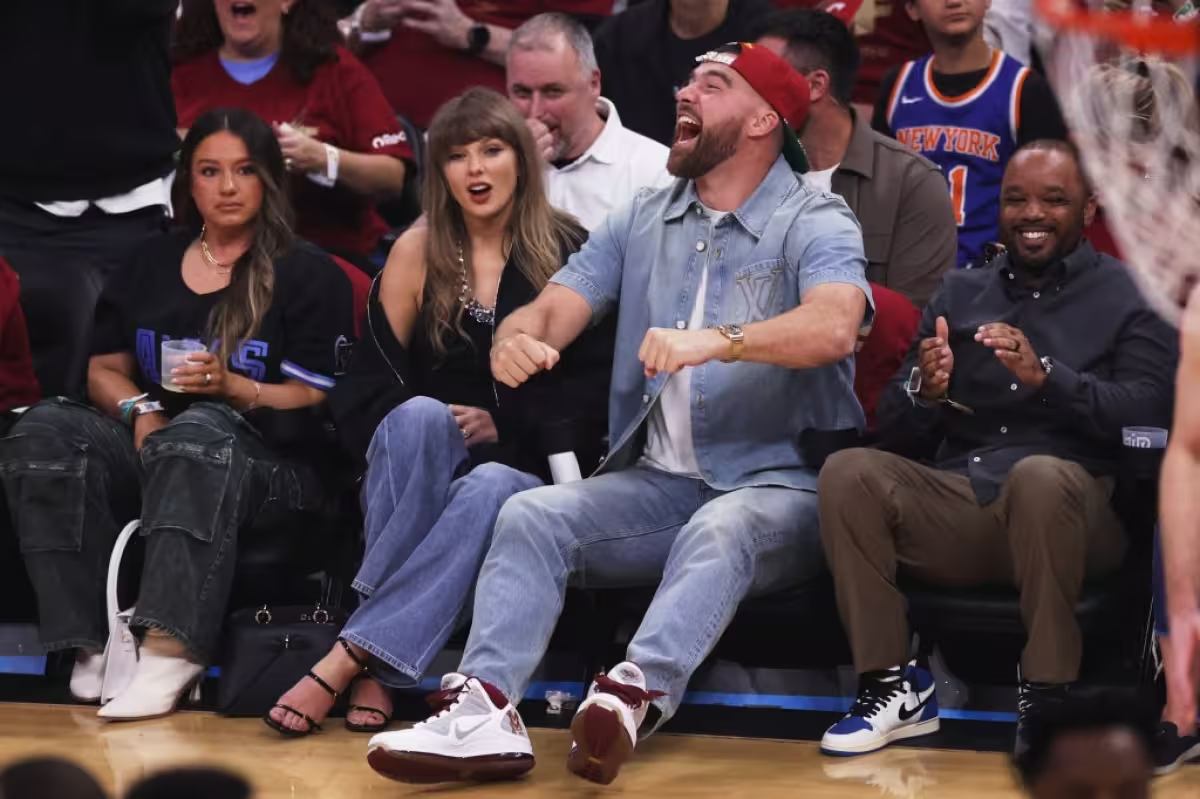
The singer’s comments landed quickly online and split the internet into two camps. Some fans and commentators defended today’s stars, saying they operate under relentless online scrutiny, mounting security concerns and corporate pressure that did not shape the counterculture generation. Others agreed with Baez, arguing that true protest music has mostly vanished from the pop charts and now survives in underground punk, indie and folk scenes.
Baez also noted that activism has migrated in form. “Activism today often exists outside the music itself,” she said, a point she illustrated with her own recent appearances: earlier this year she performed with Maggie Rogers and Tom Morello at the No Kings rally at the Minnesota State Capitol, and in March she and Rogers joined the Artists United for Our Freedoms event protesting changes to the Kennedy Center.
Her comments echoed a line she gave last year when she told a magazine that what is needed is an anthem, but that writing a modern anthem is impossible. The new interview revisited that argument while naming specific pop figures and asking why wealth and platform haven’t produced more explicit political songwriting. “Because they’re already richer than God, you know, most of them,” she said, addressing money and perhaps the incentives that blunt protest.
The friction is plain: Baez insists major artists could do more, while many observers point out a changed industry and different risks for performers today. That split matters now because Baez is not speaking as a curious onlooker; she is a benchmark of what protest music once was and, in her view, what it could still be if artists chose to make it so.
The answer to her central question is therefore twofold. Baez’s judgment is that the kind of anthem-level songwriting that defined the 1960s is unlikely to be summoned on command; industry structures, financial comfort and modern threats make overt protest rarer in stadium pop. Yet she also proves her own point: some artists still use their platform and their music — Brandi Carlile and Maggie Rogers among them — and Baez herself continues to show up at rallies. The real takeaway is not that protest music is dead, but that it has shifted places, forms and risk calculations — and that whether a new anthem will ever rally a generation depends less on talent and more on whether artists are willing to put their songs where their politics are.