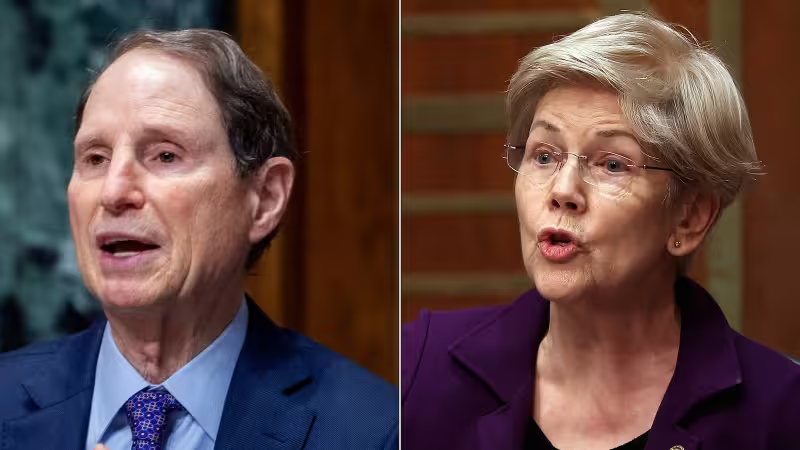
Top Democrats on Thursday demanded answers from Treasury Secretary Scott Bessent and IRS CEO Frank Bisignano over a settlement tied to President Donald Trump that creates a nearly $1.8 billion Anti-Weaponization Fund. In a late Thursday evening letter, Elizabeth Warren and Ron Wyden said the arrangement looked like an outrageously corrupt use of taxpayer money and warned that it could be used to aid Trump allies and people prosecuted over the Jan. 6, 2021, attack on the Capitol.
The fund comes out of a $10 billion lawsuit Trump brought against the IRS after a government contractor pleaded guilty in 2023 to stealing the tax information of Trump and other wealthy Americans and leaking it to media outlets in 2019 and 2020. The settlement also includes an addendum ending any existing IRS audits of Trump, his family or their businesses, a detail that sharpened criticism once the Justice Department posted the document on Tuesday. Later, the Justice Department said the addendum applied with respect to existing audits, not future audits.

Warren and Wyden, the Senate Finance Committee ranking member, wrote that the agreement appears to be a brazen scheme to corruptly dole out taxpayer money to Trump’s allies and violent insurrectionists. They also said there appeared to be no binding limit that would stop the president or his family from drawing as much as they wanted from the fund. Trump is not allowed to receive money from the fund under the settlement, but sources told News that people associated with him might be able to file claims.

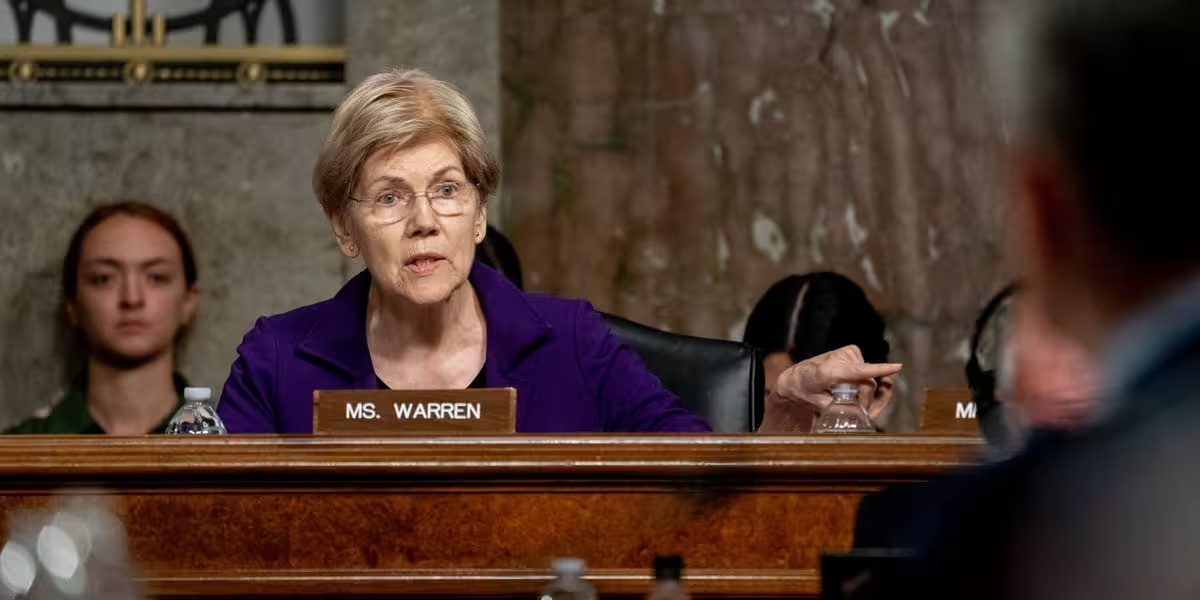

The backlash is already affecting Congress. Senate Republicans postponed plans on Thursday to move forward with their $70 billion immigration enforcement bill after concerns about the settlement, and a two-hour meeting with Republicans and acting Attorney General Todd Blanche did little to ease them. The fund would be led by a five-person commission appointed by the attorney general, and Trump would have the right to remove any member of that commission. The Justice Department plans to draw money from the federal compensation fund, a perpetual appropriation normally used to pay court judgments and settlements.
That structure is what gives the fight its force today. The fund is meant to compensate people who say they were wrongly targeted under the Biden administration, but Democrats said the lack of disclosure around recipients leaves room for political favoritism in secret. Warren and Wyden said the arrangement was an astonishing abuse of presidential power and a corrupt giveaway of an unknown amount of taxpayer money, and they asked Bessent and Bisignano to explain exactly who can benefit, who decides, and how the program can be kept from becoming a back door for Trump’s allies.
The next test is whether the administration will narrow that answer beyond the Justice Department’s claim that the audit language applies only to existing audits. For now, the settlement has landed where neither side wanted it: in Congress, where it is slowing unrelated legislation and forcing Republicans to defend a fund that critics say was built to be used in private and on the president’s terms.