



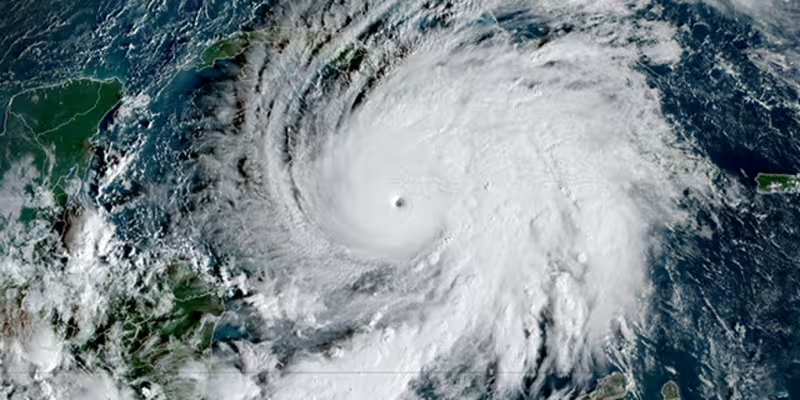
NOAA released its official 2026 Atlantic hurricane season forecast on Thursday, calling for a below-average year with 8 to 14 named storms, 3 to 6 hurricanes and 1 to 3 major hurricanes. In NOAA’s count, major hurricanes are Category 3+ storms.
The forecast comes as the season moves into its first half, when forecasters say the Atlantic can still see storms that form close to home. NOAA said a developing El Niño climate pattern should suppress tropical development in the Atlantic Ocean, and government forecasters said it is likely to outweigh the effect of expected above-average ocean temperatures that would normally help fuel hurricanes.

The numbers are notably lower than an average Atlantic hurricane season, which produces 14 named storms, 7 hurricanes and 3 major hurricanes. Colorado State University’s April outlook was also cautious, calling for 13 named storms, 6 hurricanes and 2 major hurricanes, the fewest storms CSU had predicted since 2019. CSU, which began early-year hurricane season forecasts in 1984, said at the time it expected a Super El Niño to become the dominant force shaping tropical weather patterns this season.

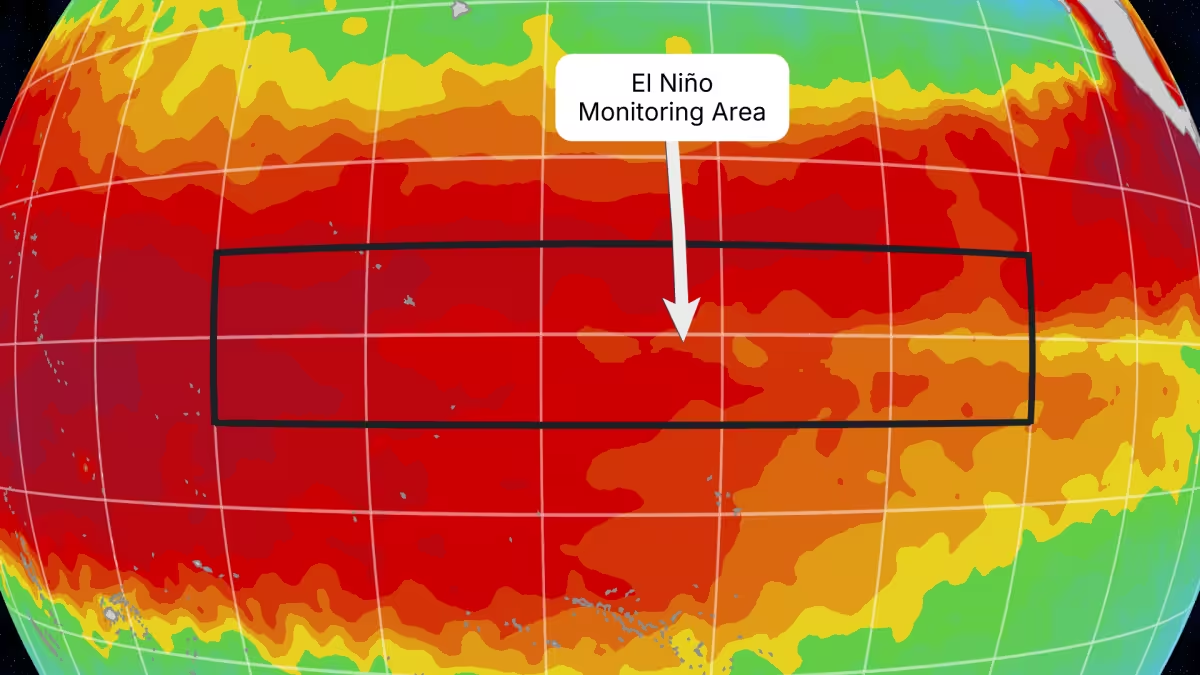
That call is now being reinforced by data from the Pacific Ocean, which points to a historically strong Super El Niño forecast to take hold sometime this summer. El Niño is one of three phases of the El Niño-Southern Oscillation climate cycle. It describes warmer than average water across the equatorial Pacific, while La Niña refers to colder than average water conditions and ENSO neutral means temperatures are close to average.
During El Niño, warmer water in the central and eastern Pacific produces strong winds that hinder tropical development in the Atlantic and enhance development in the Eastern Pacific. NOAA said that signal is expected to be strong enough to virtually shut down hurricane formation in the open waters of the Atlantic this year. Even so, homegrown tropical systems can still form in the northern Gulf and along the Southeast coast, and those storms tend to be weaker, shorter-lived and harder to track far in advance than systems that develop farther out in the Atlantic.
For people watching local weather, that is the distinction that matters most. A quieter Atlantic does not mean no storms, but it does mean the season is more likely to be shaped by smaller, faster-moving systems with shorter lead times before impact. NOAA’s forecast suggests the broad threat is lower than usual, but the country is not entering a risk-free season.



