




Steve Makinen offered 13 betting systems for the 2026 WNBA season, publishing an early-season study that used 1,315 games of data from the start of the 2021 season through May 19. Makinen is pitching the systems as practical rules players can test as lines open and the league’s profile keeps climbing.
The study’s numbers are granular and, at times, blunt. Huge favorites of 12 points or more were 147-19 straight up but a losing 68-98 against the spread since the start of the 2021 season. Road favorites playing a second straight game after being upset in the prior contest went 37-7 straight up and 31-12-1 against the spread in 44 instances over the last 5-plus seasons. Home teams coming off a close win of five points or fewer were 80-87 straight up and 60-106-1 against the spread, while home favorites coming off a close loss of eight points or fewer were 103-32 straight up and 77-54-3 against the spread since the beginning of the 2022 season.

Other systems expose different angles. Teams riding winning streaks of three or more games were a losing 25-64 straight up and 33-55-1 against the spread as underdogs in their last 89 tries. Teams coming off a game in which they allowed 68 points or fewer and who were set up as underdogs were 44-78 straight up but a profitable 69-51-2 against the spread. Road teams coming off games where they made four 3-point shots or fewer were 79-92 straight up and 100-67-4 against the spread since 2021.


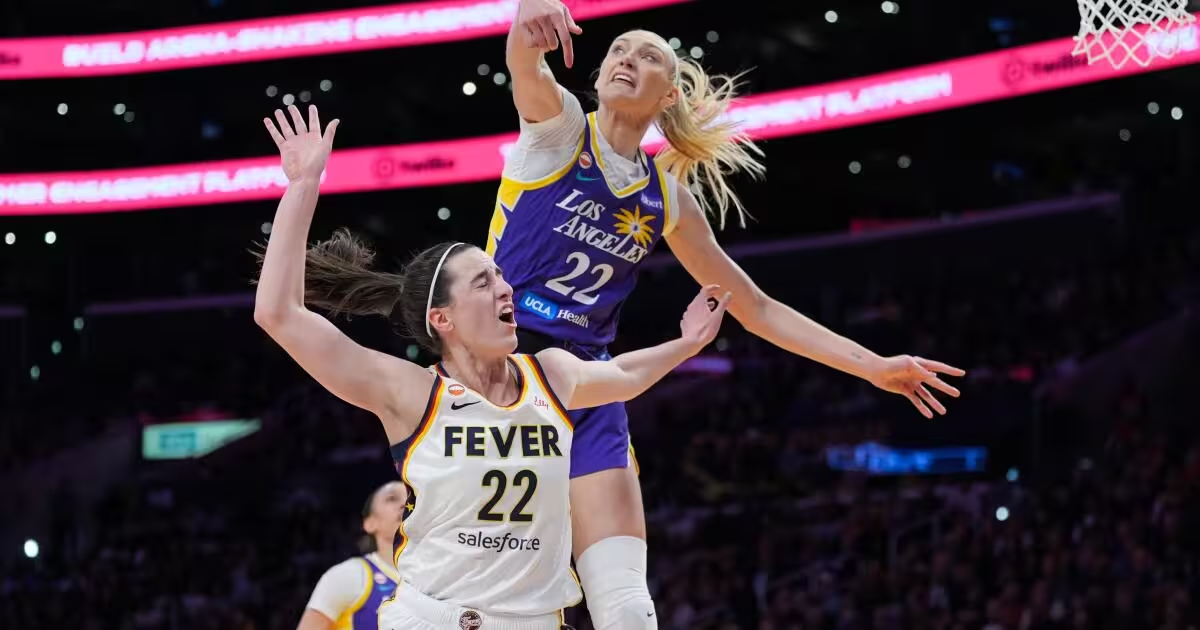
Context matters: Makinen says the systems are based on line ranges, last-game performance, team strength statistics and other factors he folded into the filters. The analysis arrives as the WNBA enjoys what many call a renaissance — one propelled by players whose names move markets. Caitlin Clark’s arrival and the profile of established scorers have helped push exponential growth in WNBA betting, and household names such as Kelsey Plum draw disproportionate attention from bettors and bookmakers alike.
The tension in Makinen’s work is plain: several of the clearest winning records are straight-up performances that do not automatically translate to success against the spread. The huge-favorite example is the sharpest illustration — dominant on wins but a poor bet ATS — and it underlines why bettors who chase final scores risk losing to margins and line movement. Conversely, some patterns that look weak in straight-up terms become profitable ATS opportunities, notably certain road teams and underdogs after specific defensive outings.
For bettors the takeaway is concrete. Makinen’s filters point to early edges: favoring road favorites in a second straight game after an upset looks supported both SU and ATS, while routinely laying points to 12-point-plus favorites is risky against the spread despite their high SU win rate. Likewise, beware backing teams as underdogs simply because they carry a winning streak; those underdogs have struggled both SU and ATS in the data set.
What happens next is straightforward and testable: these systems will be live in the market from the opening weeks of the 2026 WNBA season, and their value will be measured by whether bookmakers adjust lines to close the edges Makinen reports. For bettors who follow the numbers, the clearest, fact-backed bet for now is to look for road favorite bouncebacks and to treat oversized favorites with caution against the spread — a strategy that accepts market noise around stars such as Kelsey Plum but rests on patterns the data actually shows.



