



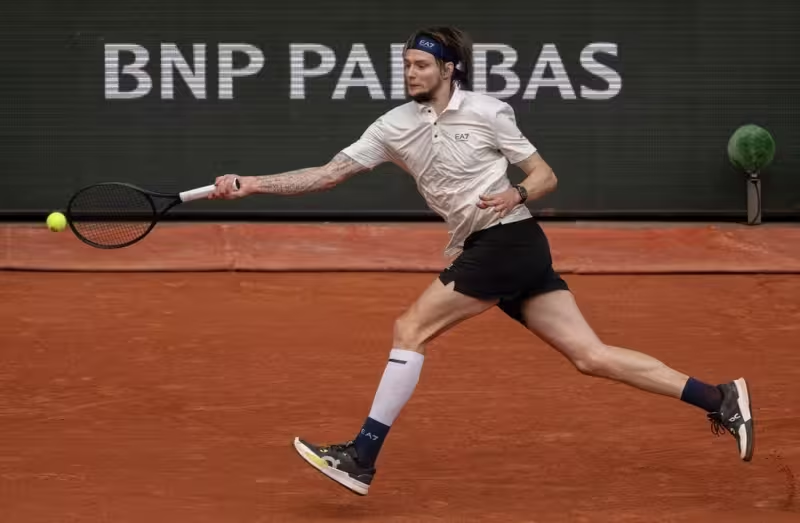
Learner Tien will play Alexander Bublik in the ATP Geneva semifinal on May 22, 2026 at 15:30 CEST, a rematch that carries fresh weight because Tien beat Bublik on Rome’s slow courts two weeks ago.
Tien arrives in Geneva off a week of high-stakes wins: he upset Stefanos Tsitsipas in the opening round in two tiebreaks and then survived a three-set quarterfinal against Michelsen to reach the last four. The source lists the head-to-head between Tien and Bublik as 1-0 in Tien’s favor.

Bublik, meanwhile, has not been easy to dismiss. He opened in Geneva with a straight-sets victory over Butvilas and then recovered from a first-set 5-7 loss to defeat Rinderknech in the quarters. Those results give Bublik momentum on a court the source frames as faster than Rome’s slow surfaces.
Why this matters today: the Geneva semifinal will test whether Tien’s recent win over Bublik on slow courts carries over to a quicker surface, and it will immediately shape the tournament final. The match pits a player with a recent head-to-head victory and upset momentum against a big-serving opponent built for faster courts, and the scheduled 15:30 CEST start makes it the marquee clash of the afternoon.
The contrast in form is stark in the details. Tien’s week in Geneva has included two tiebreaks and a three-set quarterfinal; he also lost in Rome last week to Jodar in the 1/8-finals in straight sets, a reminder that his results have been uneven across three of his last five matches. Bublik’s path shows cleaner scorelines but also volatility: he dropped the opening set 5-7 to Rinderknech before turning that match around, and around this time last season he lost his opening match in Hamburg to Mpetshi Perricard.
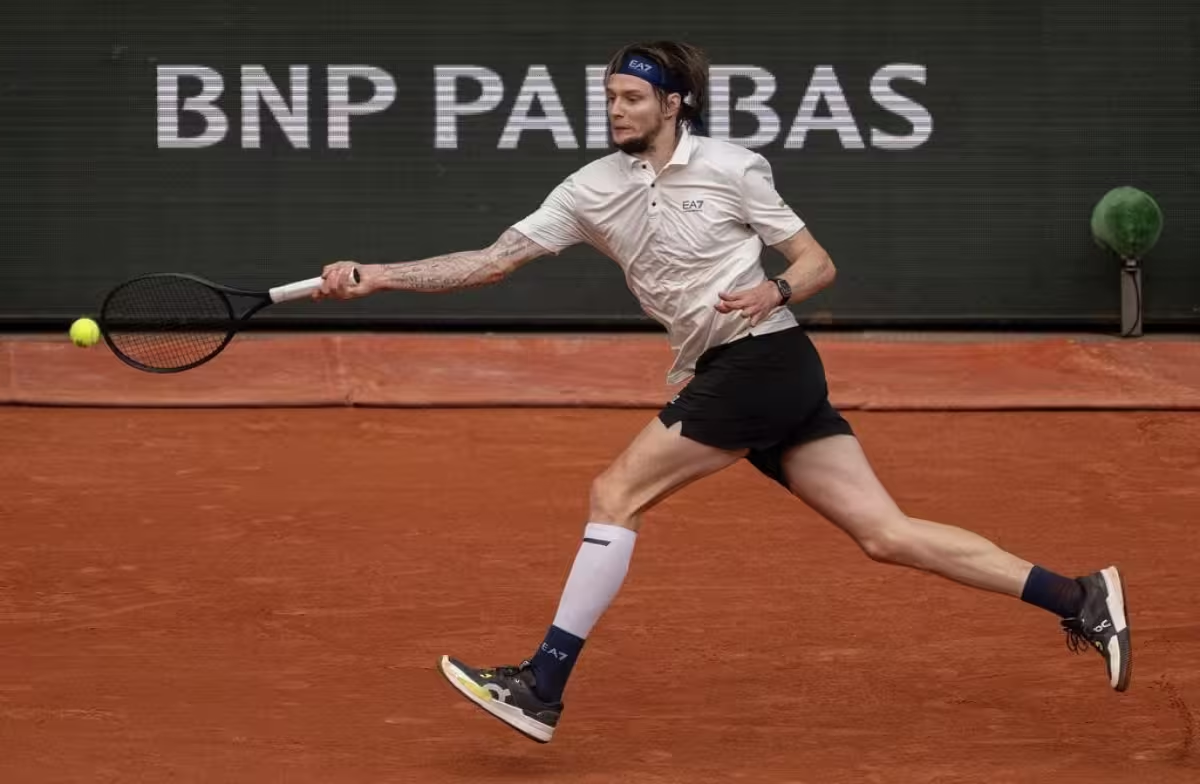
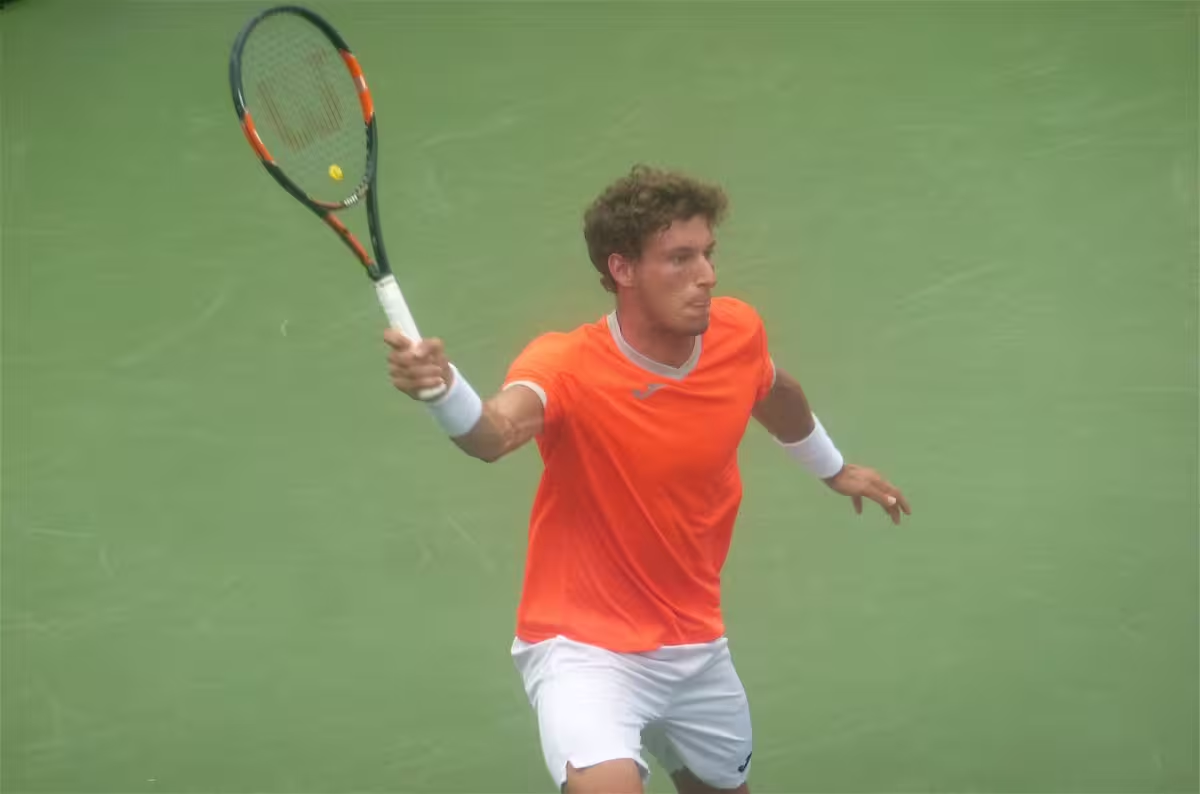
Context sharpens the stakes. Geneva’s quicker courts should, in theory, favor Bublik’s power game and serve-dominated points; Rome’s slow clay favored extended rallies that helped Tien prevail two weeks ago. Tien also comes to this semi with a recent history at Geneva himself—last season he lost his opening match to Kei Nishikori in three sets—so the question of adaptation cuts both ways.
The tension in the matchup is simple and specific: does Tien’s confidence from an earlier head-to-head win and his string of clutch performances, including the upset of Tsitsipas in two tiebreaks, outweigh the surface shift back toward Bublik’s strengths? The performances that got both men to this round do not point the same way. Bublik has the faster-court résumé in Geneva this week; Tien has the psychological advantage of a 1-0 record against him.
Other threads in the draw matter, too. Casper Ruud has not dropped a set in Geneva, taking straight-set wins over Brooksby, Collignon—after trailing 3-5 and saving a set point—and Popyrin in the quarterfinals without offering any breakpoints. Mariano Navone reached the quarters with a series of comebacks and then fell under Ruud in straight sets last season in the Davis Cup; Ruud’s form underlines how much is at stake for whoever emerges from the Bublik–Tien match.
What happens next is immediate and decisive. The winner of the Bublik–Tien semifinal will take a clear path into the Geneva final and, given Ruud’s dominant run, will likely face a player who has not dropped a set. In practical terms, Bublik must use the quicker footing to shorten points and leverage serve; Tien must turn his Rome confidence and recent tiebreak nerve into consistency against that pressure.
The match at 15:30 CEST on May 22 will tell whether Tien’s Rome victory was a repeatable blueprint or a one-off on slow clay: if he wins again on faster Geneva courts, the 1-0 head-to-head becomes more than a footnote; if Bublik wins, the surface argument will look decisive. Either way, this semifinal is the hinge on which the Geneva title chase turns.



