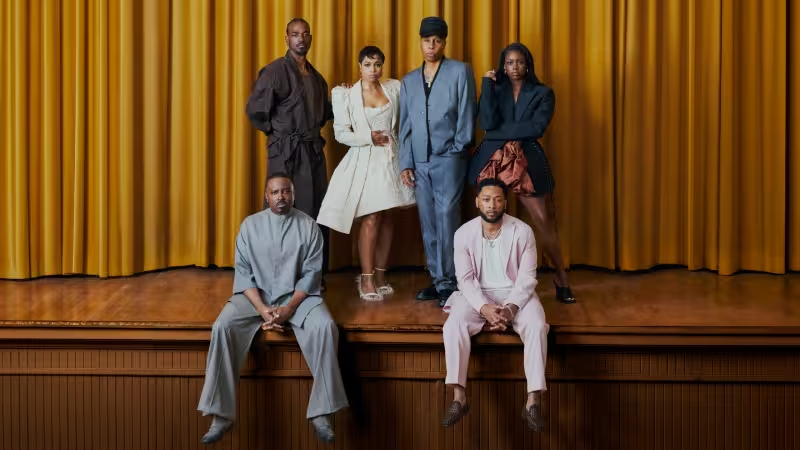
Hannaha Hall is returning to the set as The Chi prepares to take its final bow: the eighth and last season arrives on Showtime and Paramount+ starting May 22.
The show that premiered on Showtime in 2018 will close out after eight seasons and, according to Forbes, nearly a decade on air — a run Forbes says makes The Chi the longest-running Black drama series in premium cable and streaming history. Hall, who has appeared in 62 episodes through Season 7, is among the cast members who will carry the series to its finish. Series regulars include Jacob Latimore as Emmett and Birgundi Baker as Kiesha, while Luke James and Jason Weaver — both of whom joined in Season 4 — round out later additions to the ensemble.

Those numbers matter to the people who built the show. Baker says she expected a long life for the series and told Hall she wanted to be a series regular; she says she could not have dreamed the show would reach eight seasons. Latimore has described the practical side of that longevity — after the first season he began looking for other projects and believes actors must always be prepared to pivot. Weaver’s path into the cast was indirect: he was originally set to play Ronnie in the pilot before the episode was reshot, and he has said that while Ronnie wasn’t right for him then, the role he plays now was.
Lena Waithe created The Chi to center on Chicago’s South Side and to push back against one-dimensional portrayals of the city. Waithe herself framed the final season with a clear thematic title: The Coldest Winter Ever, a signal that the close will be shaped around a single, deliberate idea rather than a scattershot goodbye.

The series’ early production history underscores the show’s instability and its later durability. During the pilot phase the cast shifted — Hall was one of the only actors who remained after the pilot was reshot — yet the series went on to expand in scope and time. By Season 4 the show was still changing: both Luke James and Jason Weaver joined then, and Weaver later explained that returning to tell the stories he wanted led him back to the series.
That history produces a real tension as the show winds down. The Chi built a layered ensemble and then kept reshaping it; some performers saw the series as a springboard to other work, while others became the steady seam through which the show stitched its community. Hall admits she was unsure at the start, and has said she was simply glad Chicago was being placed on screen. Baker’s surprise at eight seasons and Latimore’s readiness to pivot point to the practical costs and opportunities of a long-running drama: careers evolve even as a series becomes an institution.
For viewers and the city the show was meant to represent, the final season will be a test of whether The Chi can finish on the tight, thematic note Waithe promises. Forbes’ assessment of the series’ record — its length and stature in premium cable and streaming — frames what the closing chapters will be judged against: nearly a decade of stories about Black Chicagoans, community, healing and redemption.
With its eighth season set to begin May 22 and Waithe naming the final arc The Coldest Winter Ever, The Chi looks poised to end deliberately rather than drift. That decision both honors the series’ unexpected longevity and answers the most immediate question facing the show: not whether it will stop, but whether it will stop on purpose.