
























Why Don’t Muslims Start Fasting Together? Unveiling the Crescent Disputes

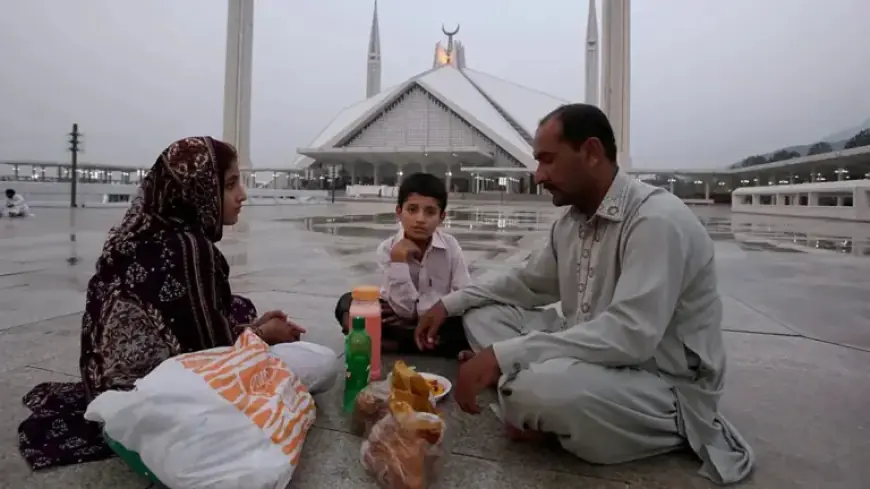
Ramadan holds a significant position in Islamic practice, recognized as the third pillar of Islam. It is a month marked by the revelation of the Quran to the Prophet Muhammad on Laylat al-Qadr, referred to as the Night of Destiny. This period is not just about fasting from food and drink but emphasizes self-restraint and spiritual growth through rituals like the Taraweeh prayers and charitable acts.
Why Don’t Muslims Start Fasting Together?
One of the most compelling issues within the Islamic community is the discrepancy in the start of Ramadan. The Islamic calendar is lunar, comprising 12 months, each lasting 29 to 30 days. The commencement of Ramadan hinges on the sighting of the crescent moon, which can lead to various interpretations and practices globally.
Crescent Moon Sighting Controversies
While the traditional method relies on direct observation of the moon, some nations employ systematic astronomical calculations. This divergence often stems from different schools of thought, resulting in Ramadan starting one or two days apart in various regions.
- Saudi Arabia: Uses both moon sighting and the Umm al-Qura calendar.
- Iran: Primarily follows religious decrees based on moon sighting.
- Gulf States: Typically align their start of Ramadan due to political and religious solidarity.
Political Influences on Ramadan Dates
The varying start dates of Ramadan often reflect deeper political issues. The notable rift between Saudi Arabia and Iran illustrates how political tensions and sectarian differences can influence religious observances. While Saudi Arabia and other Gulf nations tend to synchronize their fasting schedules, Iran’s distinct practices highlight the political dimensions that intersect with Ramadan observances.
The Case of Lebanon
In Lebanon, religious diversity complicates matters further. This small nation, home to various sects, sees different groups following different calendars for Ramadan. Sunni Muslims generally align with Saudi Arabia, whereas segments of the Shia community may follow astronomical calculations or even Iran’s declarations. This leads to distinct fasting schedules even within individual households.
Variations in North Africa
Across North Africa, countries like Tunisia and Algeria often announce the beginning of Ramadan simultaneously due to their cultural and political ties. However, Morocco tends to diverge in its timing, influenced by historical and political tensions with Algeria, particularly over the Western Sahara issue. These inter-country dynamics serve as a reminder of the intricate links between politics and religious practice.
Conclusion
Understanding why Ramadan starts on different days across the Islamic world involves acknowledging a complex interplay of religious jurisprudence, astronomical practices, and political considerations. As Muslims anticipate the holy month, the varying start dates remind us that spirituality often coexists with the worldly realities of governance and belief.