






















Ramadan 2026: Crescent sighting confirms start; fasting hours, suhoor and iftar times

Moon spotters have verified the waxing crescent, setting the start of Ramadan 2026 at sundown on Tuesday, Feb. 17, 2026 (ET), with the first day of fasting beginning Wednesday, Feb. 18, 2026 (ET). Muslims worldwide observe the ninth month of the Islamic lunar calendar by fasting from dawn until dusk, with local suhoor (pre-dawn meal) and iftar (post-sunset meal) times guiding daily practice.
When Ramadan 2026 begins and how dates are set
The Islamic calendar follows lunar cycles, so the start of each month is confirmed by the sighting of the new crescent moon. That sighting this year took place on the evening of Tuesday, Feb. 17, 2026 (ET), which means Ramadan begins at sundown that day and fasting starts the following morning. The month will last 29 or 30 days, with the end and the celebration of Eid al-Fitr confirmed after the next crescent is observed. Community calendars currently point to mid-March for the end of the fast, with Eid likely to occur around March 18–20, 2026 (ET), pending final moon observations.
Fasting hours, suhoor and iftar: what to expect worldwide
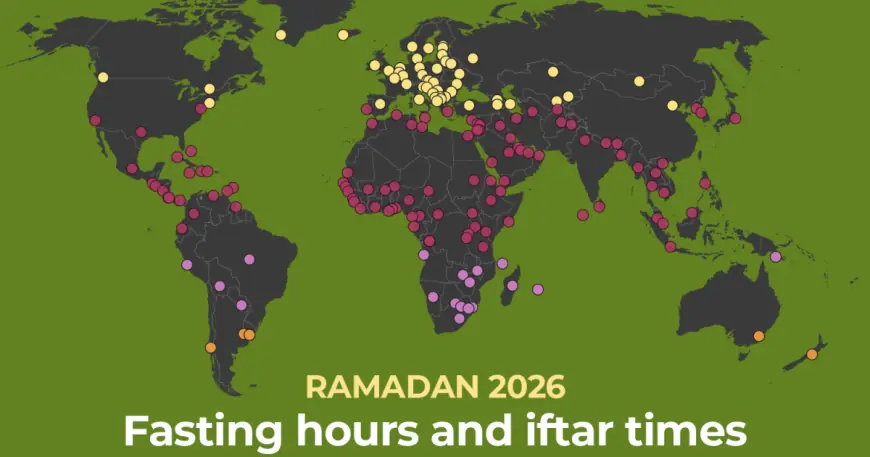
Daylight hours for the dawn-to-dusk fast will vary considerably by location. Globally, the daily fast in 2026 will span roughly 11. 5 to 15. 5 hours depending on latitude and local sunrise and sunset times. For nearly 90% of people living in the Northern Hemisphere, fasting hours this year will be shorter than last year—on the first day many communities will fast about 12 to 13 hours, with the daylight period changing slightly through the month. In contrast, places south of the equator, including parts of Chile, New Zealand and South Africa, will typically see longer days at the start of Ramadan, around 14 to 15 hours, though those durations will evolve over the month.
Daily practice centers on two meals: suhoor before dawn and iftar at sunset. Observant Muslims begin suhoor in the early morning, cease eating and drinking at the break of dawn, and then break the fast at iftar when the sun sets. The fast also entails refraining from smoking and sexual relations during daylight hours and is observed with the aim of spiritual reflection, self-discipline and increased compassion.
Broader context and what changes over time
Because the lunar year is shorter than the solar year by about 11 days, Ramadan shifts earlier each Gregorian year by roughly 10 to 12 days. That drift means seasons and daylight lengths change for Ramadan over decades: between now and 2031, the pattern will move toward the winter solstice for Northern Hemisphere observers, producing the shortest daylight fasts when that alignment occurs. The lunar calendar effect also produces rare situations such as 2030, when Ramadan will be observed twice within the same Gregorian year—beginning once in early January and again in late December.
Beyond fasting, the month features nightly and communal elements: extra nightly prayers, reading and reflection on sacred texts, and a focus on charitable giving and community meals. Exemptions exist for those who are ill, pregnant, nursing, traveling, elderly or otherwise unable to fast; people granted exemptions are encouraged to participate in other aspects of the month and to make up missed fasts or provide compensatory aid where required.
This confirmation of the crescent marks the start of a month observed by nearly 2 billion people worldwide. Local mosques and community groups will publish suhoor and iftar schedules specific to cities and time zones to help families and individuals plan their days throughout Ramadan 2026 (all times referenced in local practice should be cross-checked with local announcements in Eastern Time contexts where applicable).