






















Why tyreek hill's Release Has Teams Re-Stacking Plans — Chiefs Face Tough Choice

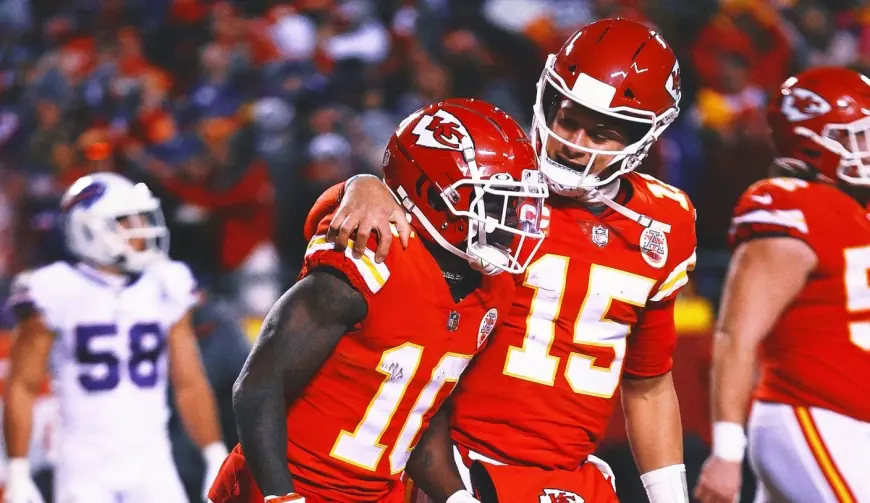
Tyreek Hill was released Monday (ET), immediately reshuffling the wide receiver market and prompting speculation about where the five-time All-Pro might land next. His combination of elite production and recent major knee trauma has made Hill both a high-upside target and a significant gamble, forcing contenders to weigh roster fit, salary implications and medical uncertainty.
Chiefs reunion would be sentimental but risky
For Kansas City, the temptation to reunite with a former star is obvious: Hill and the franchise have a championship-era history and a shared rapport with the offense’s core. Still, several practical hurdles make a return complicated. The team begins the offseason roughly $55 million over the salary cap, which sharply limits flexibility for a high-profile free agent even if that player takes a reduced deal.
Medical status is the other major question. Hill is rehabilitating from an ACL tear and a dislocated knee and is set to turn 32 in March. That combination of age and a significant lower-body injury means any contract would come with performance uncertainty. One market estimate has projected a potential 2026 salary in the neighborhood of $18 million — a steep drop from his recent earnings but still a substantial commitment for a team managing tight cap space.
Beyond dollars and health, the Chiefs’ receiving room is already unsettled. No Kansas City receiver topped 600 receiving yards last season, several veteran targets are set to hit free agency, and a prized rookie has not yet emerged as a consistent playmaker. Adding Hill would replace one set of questions with another: will the player who once dominated defenses still provide the same explosive upside, or will the investment limit the team’s ability to address multiple roster needs?
Why a safer approach appeals to Kansas City
League observers who have evaluated the situation urge caution. The argument for restraint is twofold: preserve cap room to shore up multiple areas, and prioritize retaining key contributors whose presence stabilizes the roster. Two notable free agents on the Chiefs’ own roster include a veteran tight end who remains a central piece of the offense and a young linebacker viewed as a rising defensive asset; both represent continuity that would likely deliver more predictable short-term value than a recuperating wideout.
With the salary ledger tight, the club may elect to pursue lower-cost, lower-risk wide receiver options that fit within a broader plan for roster balance rather than betting a large portion of resources on one comeback project. That conservative route could leave the door open for shorter, incentive-laden deals if Hill’s market ultimately softens or if medical reports show a clearer path back to full form.
Baltimore and other suitors shape up as logical landing spots
Other contenders figure to circle. Baltimore, in particular, has been mentioned as a strong fit: the team already boasts two emerging targets who are playing well and could absorb the bulk of targets while allowing Hill to reintegrate as a complementary option. In that scenario, Hill could start in a third-receiver role and gradually expand his responsibilities if recovery progresses, giving both player and team a chance to assess his health without immediate heavy reliance.
Any interested club will balance three key variables: how quickly Hill can return to game speed, how much guaranteed money a team is willing to commit up front, and how his presence affects depth and development plans for younger receivers. The supply of teams ready to gamble on an upside veteran with recent injuries should be limited, but a low-risk, short-term contract could appeal to playoff contenders seeking a disruptive downfield threat.
Ultimately, Hill’s release has triggered intense evaluation across the league. Clubs must decide whether they want to chase potential game-changing talent in the near term or prioritize fiscal prudence and roster balance while Hill rehabilitates and the market clarifies. For a franchise with cap pressure and internal needs, nostalgia alone may not be enough to justify a reunion.