
















Rickie Fowler puts 3D‑printed Cobra irons in play after extensive testing

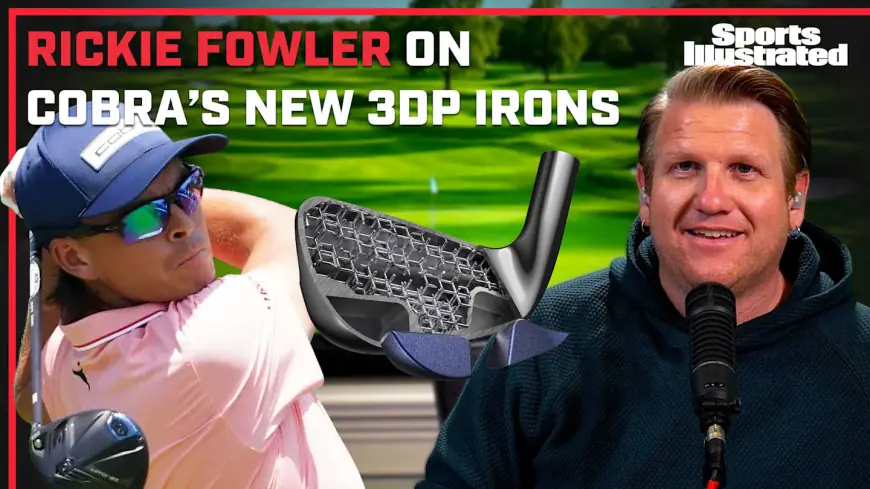
Friday, Feb. 13, 2026 (ET) — Rickie Fowler has taken a distinctly modern turn with his equipment, moving a custom set of 3D‑printed Cobra irons into the bag after a months‑long process of testing and refinement. It’s a tech‑forward step that aligns with Fowler’s long‑standing curiosity about gear, even as he insists he’s less of a tinkerer than he used to be.
A calculated switch, not a whim
Fowler’s adoption of 3D‑printed irons didn’t happen overnight. He worked through multiple iterations before he felt the heads delivered the exact blend of launch, spin, and feel he needs at the highest level. Only after that sequence of trials did he commit to gaming them, underscoring that this is a performance choice, not a novelty play.
While he’s moved through equipment phases in the past, the stakes are different when a player reshapes a full iron profile with emerging manufacturing. Fowler made clear the decision was earned through repeatable results on the range and course, not just compelling lab talk.
Why 3D printing for irons
3D printing allows designers to build complex internal structures and fine‑tune mass properties that are difficult to achieve with conventional casting or forging alone. For a tour player, that can translate into precise control over center of gravity placement, face support, and sound and feel—without sacrificing the compact shapes and turf interaction better players prefer.
Cobra has been an early mover in this space, exploring how layered manufacturing can unlock designs that shift grams to exactly where players want them. For Fowler, that pathway offered a way to chase marginal gains across the set—tightening yardage windows, dialing in spin windows, and matching the acoustic feedback he trusts when the strike is pure.
Testing until the feel and numbers matched
Fowler didn’t buy into the concept on first contact. He cycled through several rounds of testing before he even considered putting the irons in play on Tour. Throughout the process, he weighed the hard data—ball speed, launch, spin, dispersion—against the soft variables that matter just as much: the sensation through the hands, how the head moves through the turf, and whether the sound at impact signals a strike he can repeatedly produce.
Many players shy away from extended testing because it’s time‑intensive and can cloud feel during competition weeks. Fowler leaned the other way. He wanted to know what every tweak did and how each change showed up both on a launch monitor and under pressure. Once the prototypes met his benchmarks, the decision effectively made itself.
A self‑described “golf equipment nerd”
Fowler has long been open about his appetite for gear knowledge, calling himself a “golf equipment nerd. ” That mindset helps explain why he was willing to push through a lengthy trial period. Rather than chasing a quick fix, he treated the project as a chance to build a set that answers his specific asks—trajectory control in the wind, consistent gapping, and feedback that keeps his swing keys sharp.
He also acknowledged that deep testing won’t appeal to everyone. But for his game, the extra miles on the range were worth it. The result is a set that aims to remove questions on stock shots and free him to be more aggressive when the situation demands it.
What it could mean for the rest of the field
Tour adoption often follows trust. If Fowler’s move yields the steadier approaches and tighter proximity he’s seeking, other pros may give 3D‑printed constructions a closer look. The broader signal is clear: elite players are increasingly comfortable blending traditional looks with cutting‑edge build methods, provided the performance stacks up.
For avid amateurs, the development is a reminder that modern manufacturing can deliver very targeted benefits—but also that results come from proper fitting and patience. Fowler’s path wasn’t a plug‑and‑play swap; he arrived at his setup through iterations and validation. The headline grabber is the 3D‑printing, but the decisive factor is the process.
With the new irons in hand, Fowler has aligned his long‑standing curiosity about equipment with a toolset built precisely for his swing. If the on‑course trends match the testing phase, expect this storyline to keep building through the season.