
























Canada hockey at the Olympics: Celebrini sparks fast start as Group A tightens

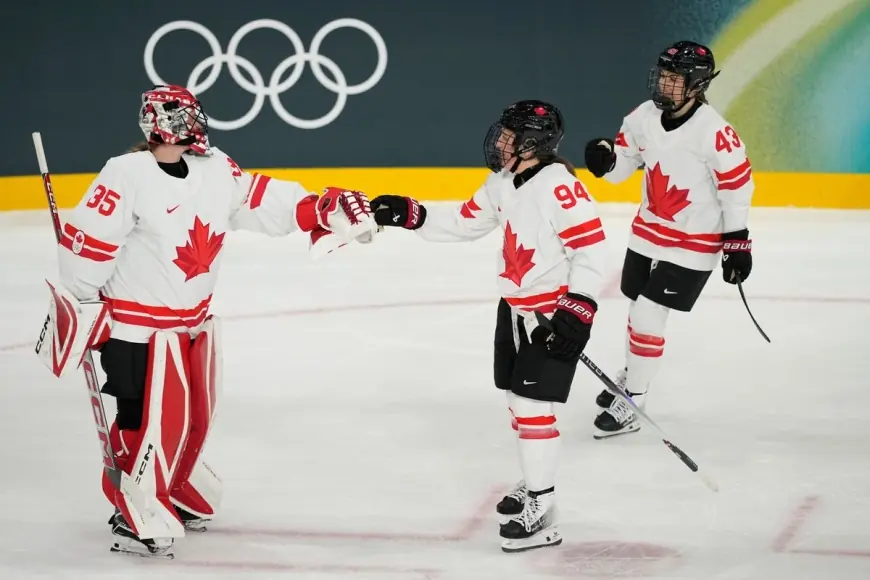
Canada hockey has opened the 2026 Winter Olympics men’s tournament with immediate urgency: a dominant shutout in the opener, followed by a live, high-leverage Group A game against Switzerland on Friday afternoon. The early spotlight has also landed on Macklin Celebrini, the 19-year-old forward whose rapid rise from top prospect to Olympic contributor is becoming one of the defining storylines of Canada’s first week in Milan.
As of 3:55 p.m. ET on Friday, Feb. 13, Canada led Switzerland 3–1 in the third period.
Latest: Canada vs. Switzerland score update
Canada’s second preliminary-round game has carried a “top-of-the-group” feel from the start, with both teams entering the matchup unbeaten. Canada has leaned on pace through the middle of the ice and quick-strike offense, while Switzerland has tried to slow transitions and turn the game into a structured, low-event contest.
A key wrinkle before puck drop: Canada ruled out Brad Marchand and Josh Morrissey for the Switzerland game, forcing lineup adjustments and elevating the importance of depth forwards and mobile defenders. In a tournament where games can swing on special teams and one messy line change, Canada’s ability to keep its identity with replacements on the ice is an early test of championship-level resilience.
Celebrini’s Olympic arrival is already real
Macklin Celebrini’s role is no longer theoretical. He scored in Canada’s opening game and has been used in moments that signal trust: offensive-zone opportunities, pace-setting shifts, and involvement in the kind of quick-attack sequences that define Canada’s best international teams.
His fit matters because Canada’s roster construction blends established stars with younger speed, and the tournament is short enough that chemistry has to arrive quickly. Celebrini’s early impact also eases pressure on veteran lines to generate every goal, giving Canada more ways to win when matchups tighten in the knockout rounds.
Canada’s opener set the tone: 5–0 over Czechia
Canada began the Olympics on Thursday morning with a 5–0 win over Czechia, a result that did two things at once: banked early points and sent a message about defensive detail. The shutout wasn’t just about goaltending; it reflected clean breakouts, controlled gaps through the neutral zone, and an ability to keep opponents from turning speed into second chances.
Connor McDavid’s playmaking stood out in the opener, but the more important takeaway was how Canada looked comfortable in its first real Olympic game environment—an environment that can produce tight sticks and early nerves even for elite players.
Group A picture: schedule, results, and what’s next
Group A is shaping up as the kind of group where goal differential and head-to-head results may matter. Canada’s immediate objective is straightforward: finish first to improve its path to the medal rounds and avoid unnecessary crossover danger.
| Date (ET) | Game | Result/Status |
|---|---|---|
| Thu, Feb. 12 (10:40 a.m.) | Canada vs. Czechia | Canada won 5–0 |
| Fri, Feb. 13 (3:10 p.m.) | Canada vs. Switzerland | Canada leads 3–1 (3rd period, 3:55 p.m. ET) |
| Sat, Feb. 14 (10:40 a.m.) | Canada vs. France | Upcoming |
Saturday’s game against France becomes more complicated if Canada expends too much energy closing out Switzerland. Tournament hockey often punishes teams that chase a big win, then show up flat 18–24 hours later.
What to watch: depth, health, and special teams
Canada’s ceiling is obvious, but Olympic gold runs are usually decided by less glamorous factors:
-
Injuries and availability. Missing Marchand and Morrissey against Switzerland underscores how quickly a roster’s plan can change.
-
Special teams discipline. A single ill-timed penalty can flip a game that otherwise favors Canada at five-on-five.
-
Bottom-six offense. When opponents load up defensively against top lines, secondary scoring becomes the separator.
-
End-of-game execution. Protecting leads demands structure—short shifts, smart clears, and no risky passes at either blue line.
If Canada closes out Switzerland, it puts itself in position to play Saturday with control: manage minutes, keep legs fresh, and treat the France game as a chance to lock in group positioning rather than a must-chase result. And if Celebrini continues to produce, Canada’s lineup becomes even harder to match, because the threat profile extends beyond the usual headliners.