











Wuthering Heights Movie 2026: Jacob Elordi Steps Into Heathcliff as a New Adaptation Rekindles the Book’s Oldest Fights and Barbie-Era Expectations

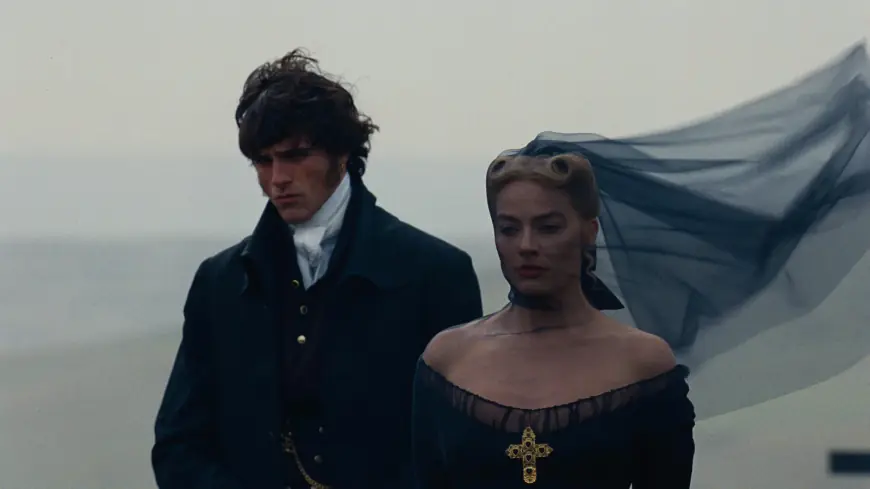
The Wuthering Heights movie arriving in 2026 has done what every major adaptation of Emily Brontë’s novel eventually does: it dragged a 19th-century book back into the present tense. The film opened in theaters on February 13, 2026 ET, led by Jacob Elordi as Heathcliff and Margot Robbie as Catherine Earnshaw. The release instantly reignited two parallel conversations that rarely stay separate for long: what the Wuthering Heights book actually argues about love and cruelty, and what modern audiences want an adaptation to say about race, class, and outsiderhood.
At the same time, Robbie’s involvement has pulled in a second, very contemporary set of expectations shaped by the post-Barbie movie moment: audiences now assume star-led projects will be both entertainment and statement, even when the source material is messy, ambiguous, and designed to resist moral clarity.
Wuthering Heights: Why the Book Still Hits Like a Warning Siren
Brontë’s Wuthering Heights is not a romance in the comforting sense. It is a study in obsession, social hierarchy, inheritance, and the way emotional neglect can metastasize into generational violence. Catherine and Heathcliff’s bond is portrayed as intimate and elemental, but also profoundly destructive, with the surrounding households paying the bill for their choices long after the initial betrayal.
That matters for any Wuthering Heights movie because the novel’s power is not the plot twist; it is the atmosphere of consequence. The book repeatedly asks whether love can be indistinguishable from possession, and whether a society built on property and pedigree inevitably turns people into instruments of revenge.
Wuthering Heights 2026: What This Movie Is Doing Differently
This 2026 adaptation has been discussed as a more stylized, emotionally heightened take, leaning into the story’s gothic intensity and the characters’ volatility. Early reactions have centered on how the film frames the ending and the way it handles the lovers’ spiral, with an emphasis on grief, breakdown, and the lingering presence of the past.
The choice to spotlight those extremes is not a neutral decision. It reshapes what casual viewers walk away remembering: not the slow, corrosive social logic of the moors, but the immediacy of anguish. That can make the movie more accessible, but it can also flatten the book’s colder, structural critique into something closer to a tragic, kinetic fever dream.
Jacob Elordi as Heathcliff: The Casting Debate and Why It Won’t Quiet Down
The most persistent controversy around the 2026 film is the casting of Heathcliff. In the novel, Heathcliff is repeatedly described as an outsider with ambiguous origins, and many modern readings treat race and xenophobia as essential to his marginalization and to the cruelty directed at him. Casting a white actor has prompted accusations of erasing that layer, particularly among younger online book communities who read Heathcliff’s otherness as inseparable from the story’s violence.
Supporters of the casting argue that Heathcliff has long been portrayed in varied ways and that adaptation is interpretation, not transcription. Critics counter that interpretation has consequences: if you remove the element that modern audiences see as central to Heathcliff’s social exile, you risk changing the moral physics of the story.
Behind the headline is a straightforward incentive mismatch. Studios and producers want bankable stars to open a film. Readers want fidelity to what they believe the book is actually about. Those goals overlap sometimes, but Heathcliff is where they collide.
Barbie Movie Afterglow: Why Margot Robbie’s Involvement Changes the Temperature
The Barbie movie proved that mainstream audiences will show up for a director-forward, culture-forward project that still plays as a big crowd event. That success has created a halo effect around Robbie’s career choices. When she appears in another high-profile film, many viewers assume the project will carry a similarly sharp modern lens.
Wuthering Heights complicates that expectation. Brontë’s novel is already “about everything,” but it is also about discomfort. If a new adaptation tries to tidy it into a clean parable, it risks losing the point. If it leans too hard into aesthetic spectacle, it risks turning brutality into mood.
So the Barbie comparison cuts both ways: it raises interest and pressure, and it primes audiences to judge not just performances, but intent.
What We Still Don’t Know
Even with the film now in release, several key questions remain unresolved in the broader conversation:
-
Whether the adaptation engages the novel’s themes of racialized outsiderhood directly or leaves them implicit
-
How audiences beyond core book fans respond once word-of-mouth replaces pre-release debate
-
Whether the creative team addresses the casting controversy in a way that adds clarity, or simply lets the film “speak for itself”
-
How the project performs over the next few weeks, which will shape what kinds of literary adaptations get greenlit next
What Happens Next: Realistic Scenarios and Triggers
-
The debate shifts from casting to interpretation
Trigger: viewers focus less on who plays Heathcliff and more on whether the film captures the novel’s moral bleakness. -
The discourse hardens into two camps
Trigger: online conversation treats any criticism as bad faith, or treats any defense as complicity, reducing nuance. -
The adaptation becomes a classroom and book-club accelerant
Trigger: renewed interest in the Wuthering Heights book, with readers returning to specific passages to argue what “counts” as faithful. -
A second wave arrives around at-home viewing
Trigger: broader audiences watch later and the conversation restarts with new clips and new takes.
Why It Matters
Wuthering Heights endures because it refuses to flatter its audience. A Wuthering Heights movie in 2026 is not just a period drama; it is a test of what modern viewers demand from adaptation: authenticity, representation, star power, and a coherent message. Brontë’s novel offers none of that neatly. That’s the challenge, and that’s why this version, with Jacob Elordi, Margot Robbie, and the shadow of Barbie-era expectations, has become more than a release. It’s a referendum on how culture rewrites classics when the present refuses to stay out of the story.