

























Michael J. Fox returns to acting as his Parkinson’s advocacy expands in 2026

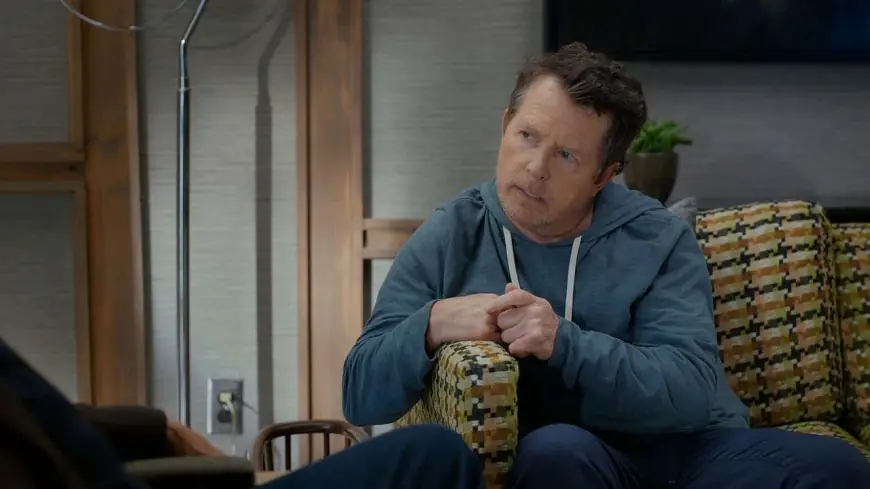
Michael J. Fox is stepping back into the spotlight in early 2026 on two tracks at once: a rare on-camera acting appearance after years away, and a renewed push by his Parkinson’s research foundation to bring practical, in-person support to patients and families across the United States. Together, the moves reflect a familiar Fox pattern—using cultural visibility to widen the on-ramps into care, community, and research participation.
A notable acting return after years off camera
Fox’s new acting work marks his first live-action role since he publicly said in 2020 that his Parkinson’s symptoms were making sustained on-set work increasingly difficult. The role is a guest appearance in a current, widely watched comedy-drama series built around therapy and grief, where one of the central characters also lives with Parkinson’s. Fox’s involvement is being framed less as a nostalgia cameo and more as a storytelling choice: a veteran performer bringing lived experience to a show attempting to depict the disease without reducing it to tragedy.
Fox has done voice work and public appearances in recent years, but the step back onto a set carries extra meaning because Parkinson’s can affect speech, movement, stamina, and fine motor control—exactly the things a camera captures most closely. In recent interviews, Fox has emphasized that living with the condition still requires attention every day, even as he tries to keep his identity larger than the diagnosis.
What Fox is saying now about Parkinson’s
In recent remarks, Fox has returned to a theme he’s repeated for decades: the emotional burden of Parkinson’s is not just physical symptoms, but the isolation and stigma that can follow a diagnosis. He has spoken about trying to “take the shame out” of the condition and about building connections with strangers who recognize themselves in his experience.
That framing matters in 2026 because Parkinson’s is becoming more visible in mainstream entertainment and public life, even as many families still struggle to find consistent specialty care, physical therapy access, and credible guidance on clinical trials. Fox’s public candor is often paired with a more pragmatic message: learn the basics, assemble the right care team, and stay engaged with research because the pipeline is moving, even if progress is uneven.
The 2026 “Parkinson’s IQ + You” event series: dates and locations
On January 20, 2026, Fox’s foundation announced the next slate of its free “Parkinson’s IQ + You” national event series, designed for people living with Parkinson’s, care partners, and families. The events typically mix expert panels with practical sessions on navigating symptoms, building a care team, and understanding research participation, plus an expo-style space for connecting with local resources.
The foundation says the series launched in 2019, has traveled to 18 locations, and has served more than 10,000 patients and families so far. The 2026 schedule includes four stops:
| City | Date (2026) |
|---|---|
| Henderson, Nevada | Saturday, March 14 |
| St. Louis, Missouri | Saturday, August 15 |
| Dallas–Fort Worth, Texas | Saturday, September 19 |
| Washington, D.C. area | Saturday, October 24 |
Organizers are emphasizing accessibility features such as assisted hearing devices, Spanish-language translation, transportation vouchers, and full-day programming intended to meet people at different stages of the disease.
Why these events matter in a shifting research landscape
Parkinson’s care is often a long, uneven journey: symptoms can change over time, medications can require repeated adjustment, and access to movement-disorder specialists can be limited by geography and insurance. That’s the gap these community events are trying to narrow—turning research momentum into something patients can feel in real life through education, connections, and clearer paths to trial participation.
The foundation also points to its role as a major funder in the field. While funding totals fluctuate year to year, the organization’s scale matters because it can support early-stage projects, data collection, and collaboration models that are harder to sustain through slower public funding cycles alone. For families, the near-term impact is more tangible: better information about symptom management, realistic expectations, and where to find support.
What comes next for Fox in 2026
Fox’s acting return is likely to keep attention on Parkinson’s in entertainment press and awards-season conversation. Separately, the foundation’s 2026 events create predictable moments—March, August, September, and October—when local communities will be pulled into the broader national story of care and research.
The bigger signal is continuity: Fox is still using visibility carefully, choosing appearances that align with his advocacy rather than competing with it. In 2026, that looks like showing up on screen in a story that directly engages Parkinson’s, while his foundation expands real-world touchpoints meant to help people live with the disease now—not only someday, after a breakthrough.