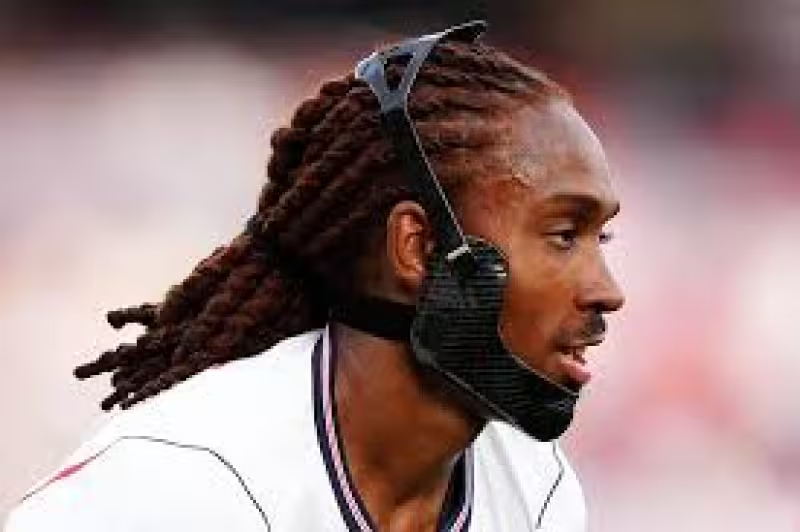
Djed Spence will wear a protective face mask for the duration of the World Cup after a stray elbow in May broke his jaw, a precaution intended to let him continue playing while the fracture heals.
The injury occurred in May when an elbow struck Spence and fractured his jaw. Medical staff cleared him to travel, but team doctors and specialists advised a full-time protective device on the field so the injury would remain stable under match conditions.

Protective face masks have become a routine option at major tournaments for players with facial fractures. Orthopedic specialists say the devices hold bones aligned and stable, which reduces the risk of displacement while a player competes. That basic function is what allows athletes such as Spence to remain in a squad rather than withdraw.
Carbon-fiber construction is a key technical detail. Orthopedic specialist Calvin Hwang noted that carbon fiber helps absorb impact and can prevent non-displaced fractures from worsening. The material is rigid enough to shield the injured area but light enough to wear through multiple matches without excessively restricting breathing or vision.



Several players at the World Cup are using similar masks for the same reason. Croatia captain Luka Modrić previously wore a face mask while recovering from a double cheekbone fracture, a high-profile example of how the gear is used to bridge recovery and competition.
The protective approach carries a clear safety calculus. Orthopedic specialist Justin Mullner warned that returning a player with a facial fracture without a mask can be dangerous, underscoring why teams prefer the precaution even when an injury is described as non-displaced. In practical terms, the mask reduces the immediate risk of further bone damage from incidental contact during play.
For Spence the mask is both medical equipment and a tactical accessory: it stabilizes his jaw and makes him available for selection in a tournament where squad depth and late-game changes matter. The device does not cure the fracture; it permits controlled participation while the bone knits and symptoms are managed by ongoing medical supervision.
What the current facts do not settle is how long Spence will need to continue wearing the mask once the World Cup ends. Doctors use these devices until imaging and clinical assessment show the bone is sufficiently healed and stable; the exact timetable varies by patient, fracture type and recovery. That unanswered interval — when, post-tournament, Spence might remove the mask for good — is the most consequential outstanding question for his rehabilitation.