



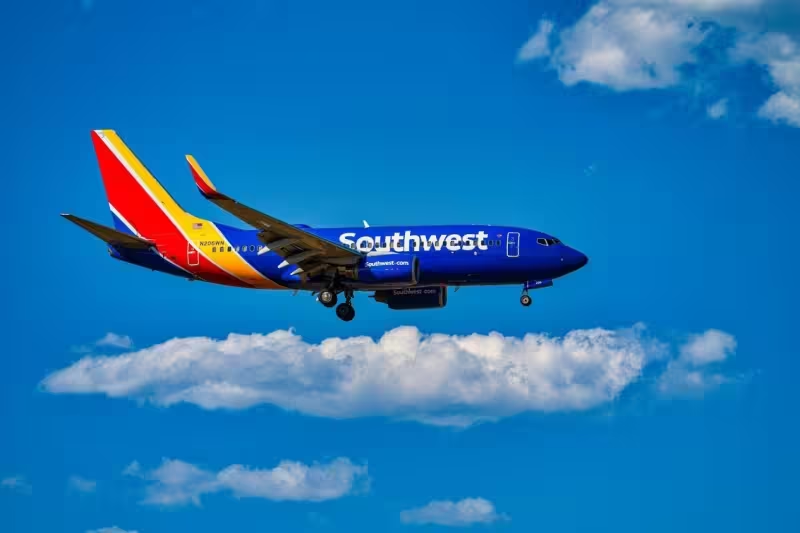
Southwest Airlines rebuilt its technology foundation after a chaotic December 2022 winter storm exposed fragile crew-scheduling systems, migrating off on-premises warehouses into cloud infrastructure, creating a unified data model across customers, crews and aircraft, and layering an AI common platform to drive real-time operational tools and customer-facing changes.
The immediate trigger for the overhaul was the mass cancellations that followed the December storm; early in 2023 Lauren Woods stepped into the chief information officer role weeks after that failure and framed the program around preventing a repeat. "Once you're out of the crisis mode, it becomes: how do we not get into this situation ever again?" she said.

Practically, Southwest focused on three linked technical moves. It migrated core data and analytics to cloud systems so information can flow without the batch delays of legacy warehouses. It stitched customer, crew and aircraft records into a single data model so planners and dispatchers work from the same picture. And it built what it calls an AI common platform to run predictive models, operational workflows and new customer services.
The AI layer consumes sensor feeds from tugs, de-icing equipment and ground vehicles to triangulate aircraft readiness, and it layers historical performance to flag likely delays at specific airports before they occur. Those signals feed tools used by operations centers and frontline teams rather than isolated spreadsheets, with security integrated from the start of the work.
The customer-facing shift that best exposes the scale of the engineering work was the move from 54 years of open seating to assigned seating. That change required a complete re-engineering of the reservation engine, boarding logic and the interfaces crews and gate agents use. Southwest pushed reservation-system changes incrementally through the summer, then launched full assigned seating in January.


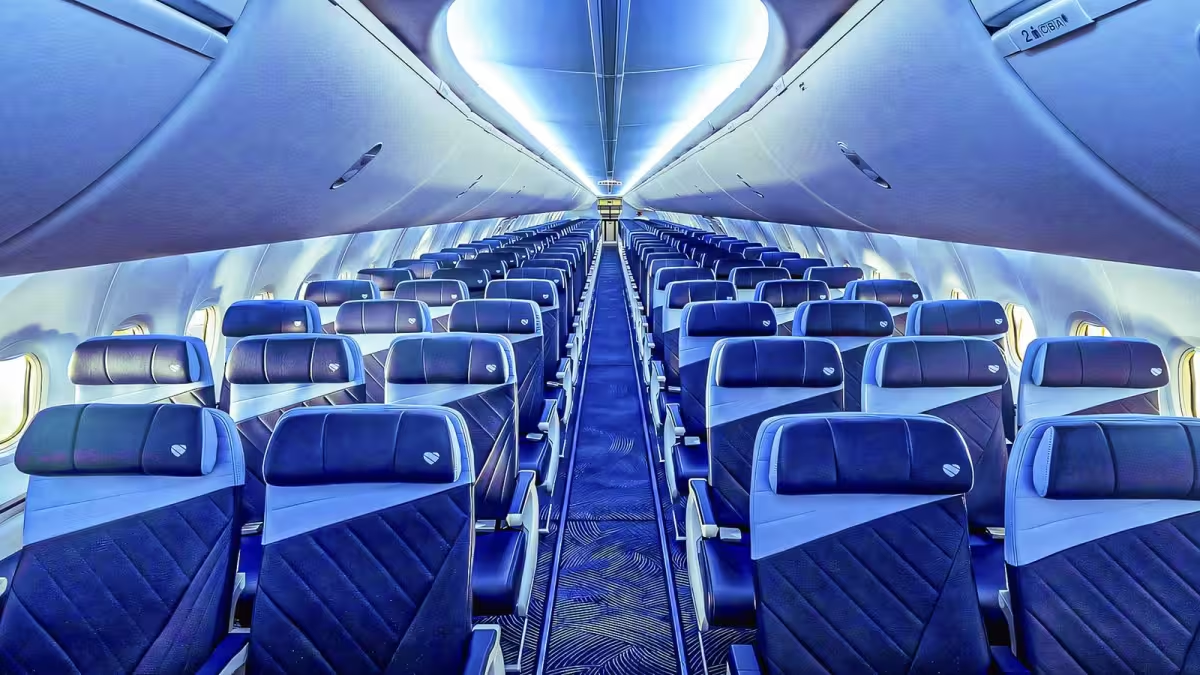
Woods described the scale bluntly: "It is a lung and heart transplant for the commercial side of this airline." She also warned about partial, brittle fixes: "If the data isn't there at scale, that solution becomes a one-off instead of something you can really expand on," which explains the stepwise rollout as the company reconciled brand, operations and technology.
The shift away from open seating is both technical and cultural. For more than half a century Southwest sold itself on low fares, speed and the informality of open boarding; converting those customer expectations into deterministic seat assignments forced changes across revenue buckets, boarding procedures and customer communications. The incremental summer releases were intended to reduce the risk of a hard cutover while teams tested the new reservation logic under live loads.
On the operations side, the unified model and AI platform create a single pane of glass for crew schedulers and operations centers: sensor inputs, crew locations, aircraft readiness and predictive delay flags now live in the same system. In theory that removes many of the single points of failure that allowed cascading cancellations in 2022, because crew reassignments, aircraft swaps and re-accommodations can be coordinated from one authoritative source.
Southwest has also folded new product moves into the technical push: the launch of Getaways by Southwest and a restructuring of fare categories were paired with the reservation overhaul to capture revenue and customer segmentation enabled by assigned seating. The airline has continued route expansion — including first-ever nonstop service such as Columbus–San Juan — while the new stack supports both operations and commercial experiments (
The company plans to extend the AI common platform into personalized customer interactions and additional internal tools for crew and operations. The unresolved question is practical and narrow: will the cloud-based, AI-driven stack prevent the cascading failures of the past when the network faces the next extreme weather event or system shock? That single performance metric — how the rebuilt system behaves under stress — is what will determine whether the overhaul was a structural fix or an expensive replatforming without the resilience gains Southwest set out to deliver.



