



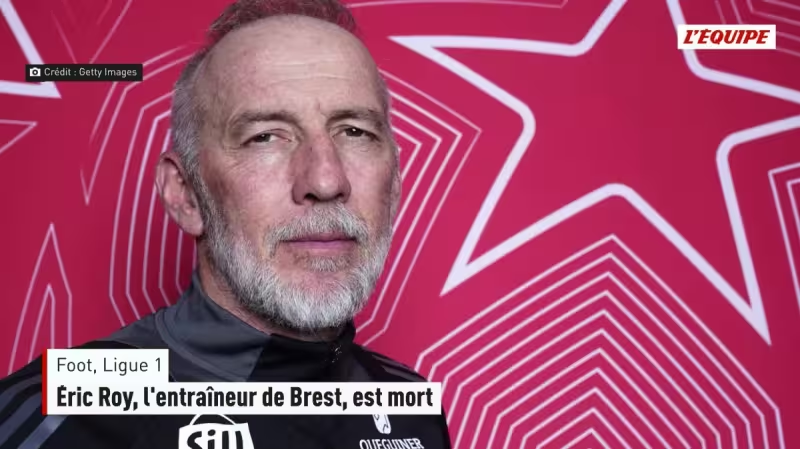
Éric Roy died on Wednesday, June 17, at the age of 58, his family announced on Instagram.
In a short statement posted by sa compagne et ses enfants, the family wrote: "Nous avons la très grande tristesse de vous annoncer le décès de notre papa et mari, Éric Roy." They added, "Depuis trois ans et demi, Papa se battait contre un cancer du pancréas," and described him as "profondément bienveillant, tendre, droit et honnête."

Roy had been the head coach of Stade Brestois for three and a half years, arriving at the club in January 2023 and guiding Brest to a milestone qualification — the first Champions League place in the club's history.
The timeline of his career is long and varied. Born in Nice in 1967, Roy was a professional midfielder who played for OGC Nice, Sporting Toulon, Olympique Lyonnais and Olympique de Marseille, reaching the 1999 UEFA Cup final with Marseille. He later moved into coaching and management, serving as Nice's coach in 2010–2011 and working as a sporting director at Nice, RC Lens and Watford. Roy also appeared regularly as a consultant for France Télévisions, beIN Sports and RMC Sport.
What makes Roy's death especially striking for the football community is that he continued to lead Brest during a private fight with pancreatic cancer lasting more than three years. His family spelled out that medical struggle in their Instagram message, saying he had been battling the illness for the same span as his tenure with the club.
Those closest to Roy are directly affected: his partner and children, the staff and players at Stade Brestois, and the club's supporters who watched a side they had never seen in Europe reach a new height under his guidance.
The contrast between public success and private suffering is the central tension in this story. While Roy was delivering results on the field — finishing a period at Brest capped by Champions League qualification — he did so without disclosing his illness. The dual fact of high achievement and concealed disease raises immediate questions about how responsibilities were managed inside the club and what colleagues and players knew.
Sources published the announcement this Wednesday; beyond the family statement, no further details about Roy's final days, the course of his treatment, or arrangements for a funeral or public tribute were provided.
Roy's death leaves a measured but clear void: a coach whose recent achievements brought Stade Brestois to continental competition has died after a long private illness. The family has set the public record only so far as to confirm his passing and the length of his struggle; they have not released additional particulars, and no dates for memorial events have been announced.
For now the most consequential unanswered question is also the simplest — how did Roy balance the demands of a top-flight coaching job while fighting pancreatic cancer in secret, and who within the club helped shoulder that burden? The family’s statement ends the season but leaves open the practical and human details of his final months.



